




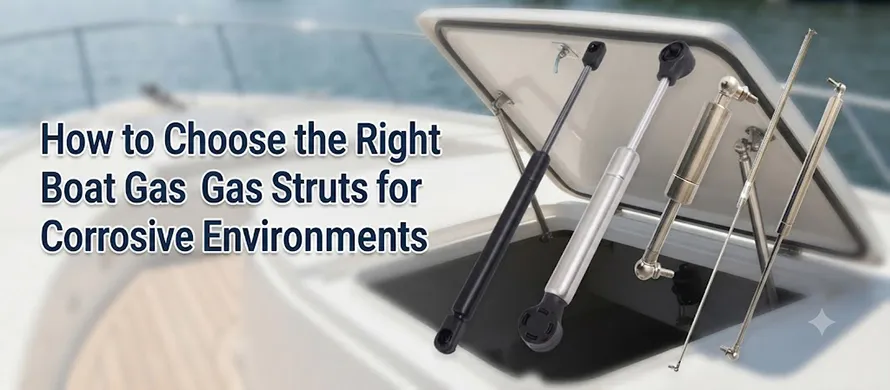



If you have ever lifted a heavy boat engine cover, opened a marine access door, or operated industrial machinery, you have used a stainless gas shock. These small components do the heavy lifting for you.
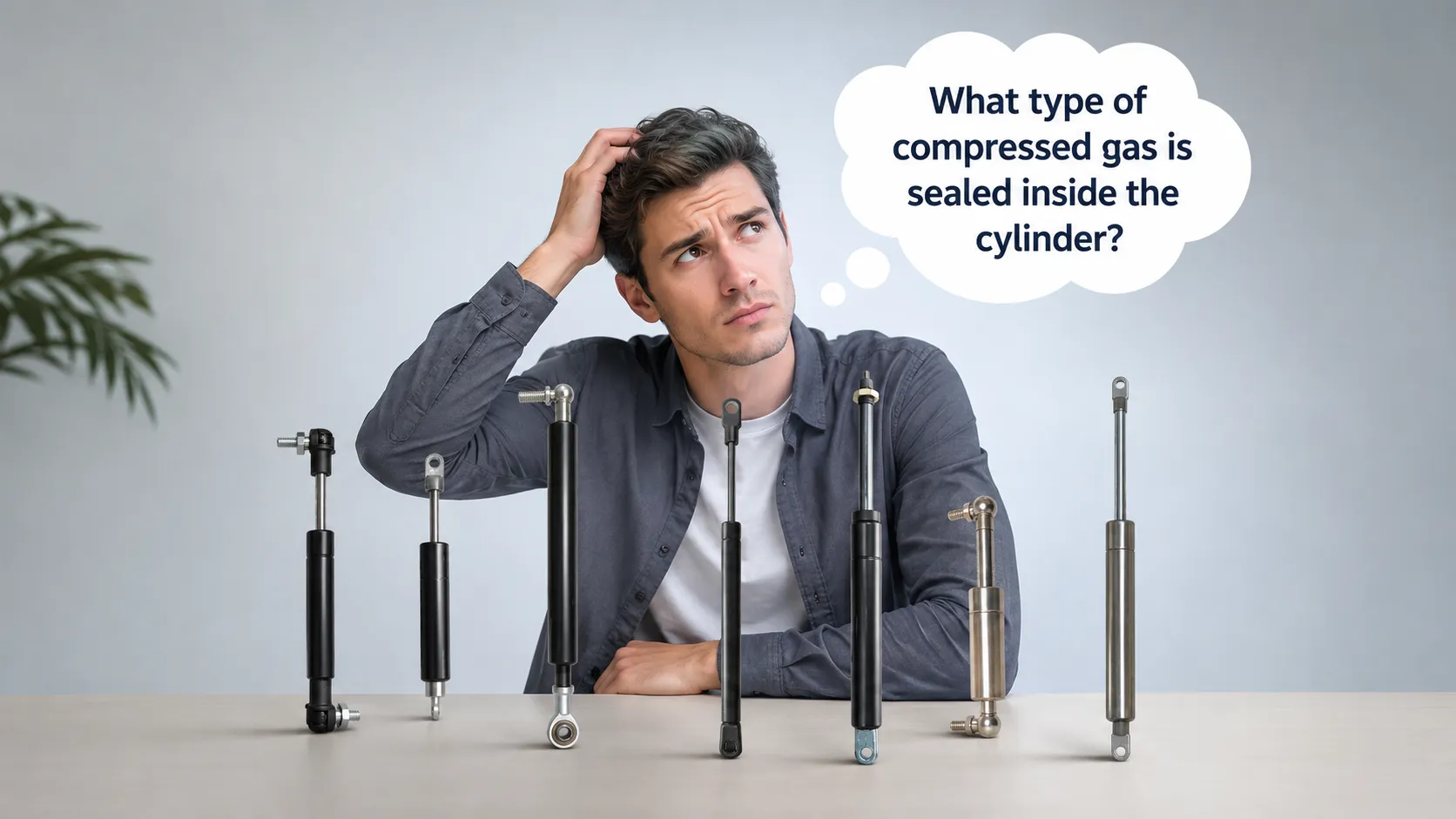
But what is actually hidden inside that sealed stainless steel cylinder?
It looks like a simple metal rod, but the inside is highly pressurized. Let’s look at exactly what gas is used inside a stainless gas shock, and why it matters.
High-Purity Nitrogen Gas (N2) as the Primary Medium
The primary medium used to generate force inside a quality stainless gas shock is highly compressed Nitrogen gas (N2).
While nitrogen makes up about 78% of the air we breathe, industrial gas springs require it to be filtered to a near-pure state (typically 99.99%). Once sealed inside the stainless steel cylinder, this gas is packed under immense pressure—often exceeding 100 to 150 bars—to deliver a steady, predictable counter-force throughout the entire stroke.
Technical Reasons for Choosing Nitrogen Over Compressed Air
Design engineers specify pure nitrogen rather than regular compressed air for three critical engineering reasons:
- Prevention of Internal Corrosion: Regular air contains oxygen and moisture, which cause internal rust, destroying pistons and tearing seals. Because nitrogen is an inert gas, it eliminates internal oxidation. This keeps the internal mechanism just as rust-free as the external stainless steel housing.
- Thermal and Pressure Stability: Regular air expands in heat and contracts in cold, causing severe force fluctuations. Nitrogen maintains a highly stable, flat force curve across extreme temperatures. This guarantees consistent lifting performance year-round, regardless of the weather.
- Elimination of Combustion Risks: Rapid cycles generate high internal friction and heat. Mixing regular oxygen with lubricating oils under high pressure creates a combustion risk, known as the dieseling effect. Nitrogen is non-flammable, making the cylinder 100% safe under heavy workloads.
The Dual Role of the Internal Hydraulic Oil Layer
While nitrogen gas handles the lifting force, a precise volume of specialized hydraulic oil is also sealed inside the cylinder. This oil performs two vital functions:
- Continuous Lubrication: It keeps the internal rubber seals lubricated so the piston rod can glide with minimal friction.
- End-Position Damping: As the stainless gas shock reaches full extension, the oil flows through the piston valving to slow the movement down. This dynamic cushioning protects your hinges and structural pivot points from slamming open violently.
Community Discussion: Want to see what fellow engineers say about these internal dampening mechanics? Check out the active community breakdown here: Reddit Discussion on Stainless Steel Gas Spring Internals.
Why Structural Integrity Dictates Gas Retention
Containing high-pressure nitrogen over millions of cycles requires flawless hardware. This is where material quality becomes critical.
Utilizing high-grade 304 or 316L stainless steel prevents cylinder flexing and micro-pitting. Paired with a micro-polished internal bore, this housing stops gas leaks entirely. As a result, your stainless gas shock maintains a consistent force output without softening over time.
Next Steps for R&D and Sourcing Teams
Selecting the right gas shock involves more than just understanding its internal pressure. Ambient temperatures, stroke speed, and mounting angles all impact performance. To ensure a perfect fit for your application, review our complete engineering checklist: Factors to Consider When Selecting Stainless Steel Gas Shocks.
张航
Stay in the loop