







Table of contents
Share Post

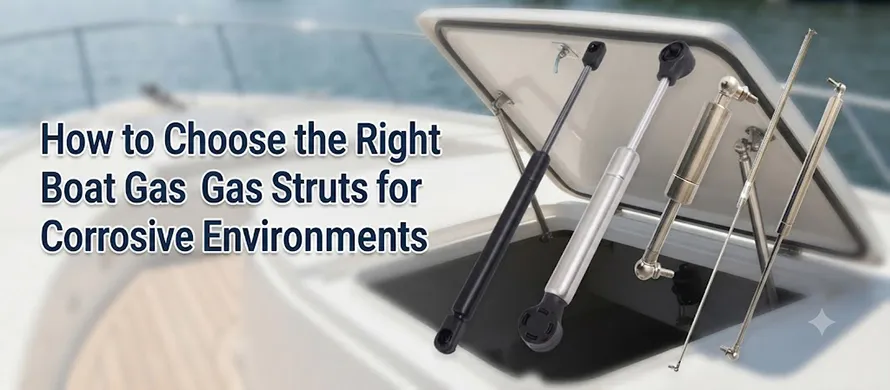
In the demanding world of naval architecture and luxury yacht maintenance, the standard response to failed marine gas spring systems is often:

Just use a higher grade stainless steel.

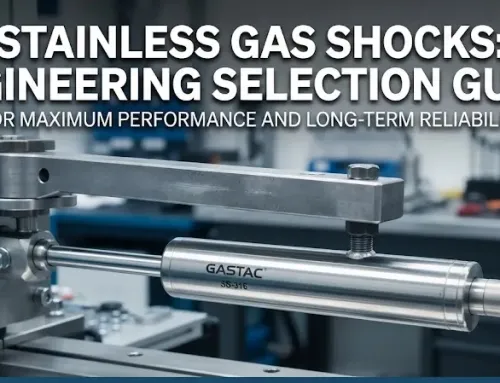
While high-quality stainless steel marine gas struts are essential for surviving harsh saltwater environments, material selection alone cannot prevent the most common cause of premature failure.

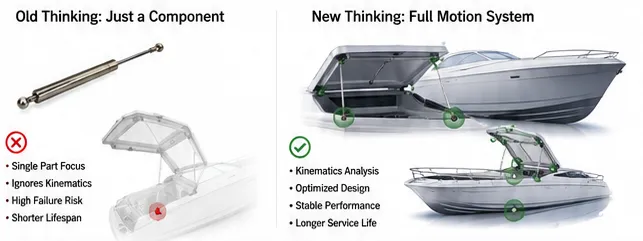
If your hatch covers squeak, mounting brackets deform, or gas struts lose pressure within months, the real problem is often not corrosion — but poor kinematic design, incorrect mounting geometry, and excessive side loading.

Gas Strut Cross Reference: Marine Grade Specifications

Before diving into the engineering, it is essential to select a platform built for the sea. Below are our standard technical specifications for marine gas springs. All models listed are available in full 316L Stainless Steel.

6-15 Stainless Steel Gas Strut Size Chart

Product CodeStroke (mm)Extended Length (mm)Rod / Tube Ø (mm)Force (N)
GST615040155401556 / 1550–400
GST615060225602256 / 1550–400
GST615080235802356 / 1550–400
GST615080255802556 / 1550–400
GST6151002751002756 / 1550–400
GST6151203151203156 / 1550–400
GST6151253301253306 / 1550–400
GST6151503751503756 / 1550–400
GST6151603901603906 / 1550–400
GST6151754301754306 / 1550–400
GST6152105052105056 / 1550–400

8-18 Stainless Steel Gas Strut Size Chart

Product CodeStroke (mm)Extended Length (mm)Rod / Tube Ø (mm)Force (N)
GST8181203101203108 / 18100–700
GST8181603901603908 / 18100–700
GST8181704101704108 / 18100–700
GST8182105102155108 / 18100–700
GST8182205252255258 / 18100–700
GST8182555852555858 / 18100–700
GST8182656102656108 / 18100–700
GST8182806302806308 / 18100–700
GST8183157103157108 / 18100–700

10-22 Stainless Steel Gas Strut Size Chart

Product CodeStroke (mm)Extended Length (mm)Rod / Tube Ø (mm)Force (N)
GST102225558525558510 / 22100–1100
GST102230570030570010 / 22100–1100
GST102230571030571010 / 22100–1100
GST102236082036082010 / 22100–1000
GST102240093040093010 / 22100–1100
GST10224501050450105010 / 22100–1100
GST10225001150500115010 / 22100–1100
GST10225601280560128010 / 22100–1100
GST10226001400600140010 / 22100–1100

14-28 Stainless Steel Gas Strut Size Chart

Product CodeStroke (mm)Extended Length (mm)Rod / Tube Ø (mm)Force (N)
GST14285001100500110014 / 28100–2000
GST14285451200545120014 / 28100–2000
GST14286001300600130014 / 28100–2000
GST14286501400650140014 / 28100–2000
GST14287001550700155014 / 28100–2000
GST14287501630750163014 / 28100–2000
GST14288001800800180014 / 28100–2000

How to Measure Your Marine Gas Struts?

Before diving into the engineering, it is essential to select a platform built for the sea. Below are our standard technical specifications for marine gas springs. All models listed are available in full 316L Stainless Steel.

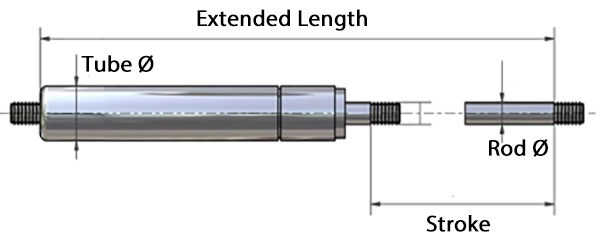
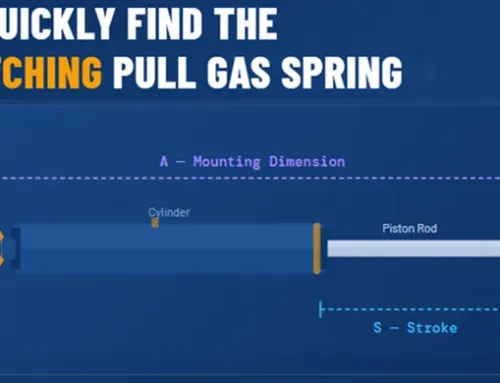
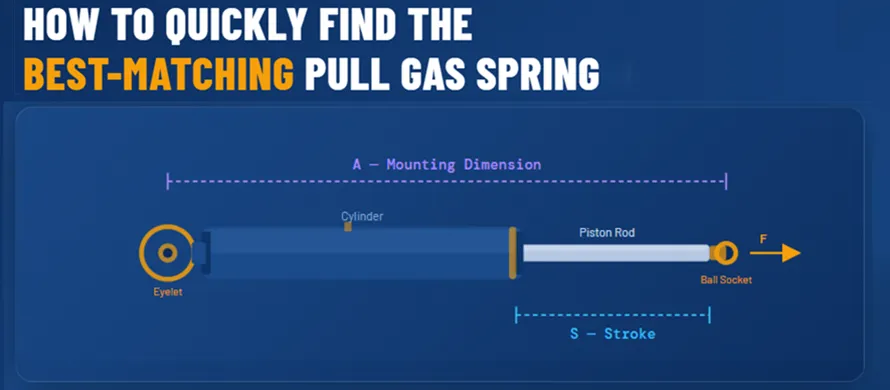
  • Extended Length: Measure from the center of one end-fitting to the center of the other when the strut is fully open.

  • Stroke: The maximum distance the rod can travel into the tube.

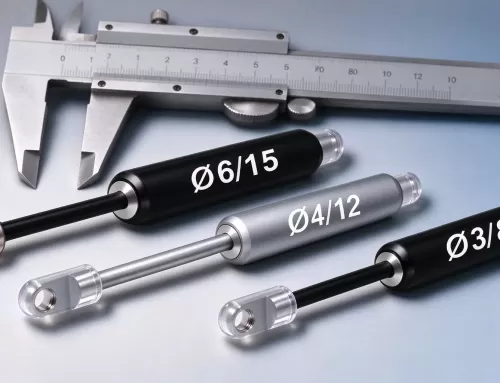
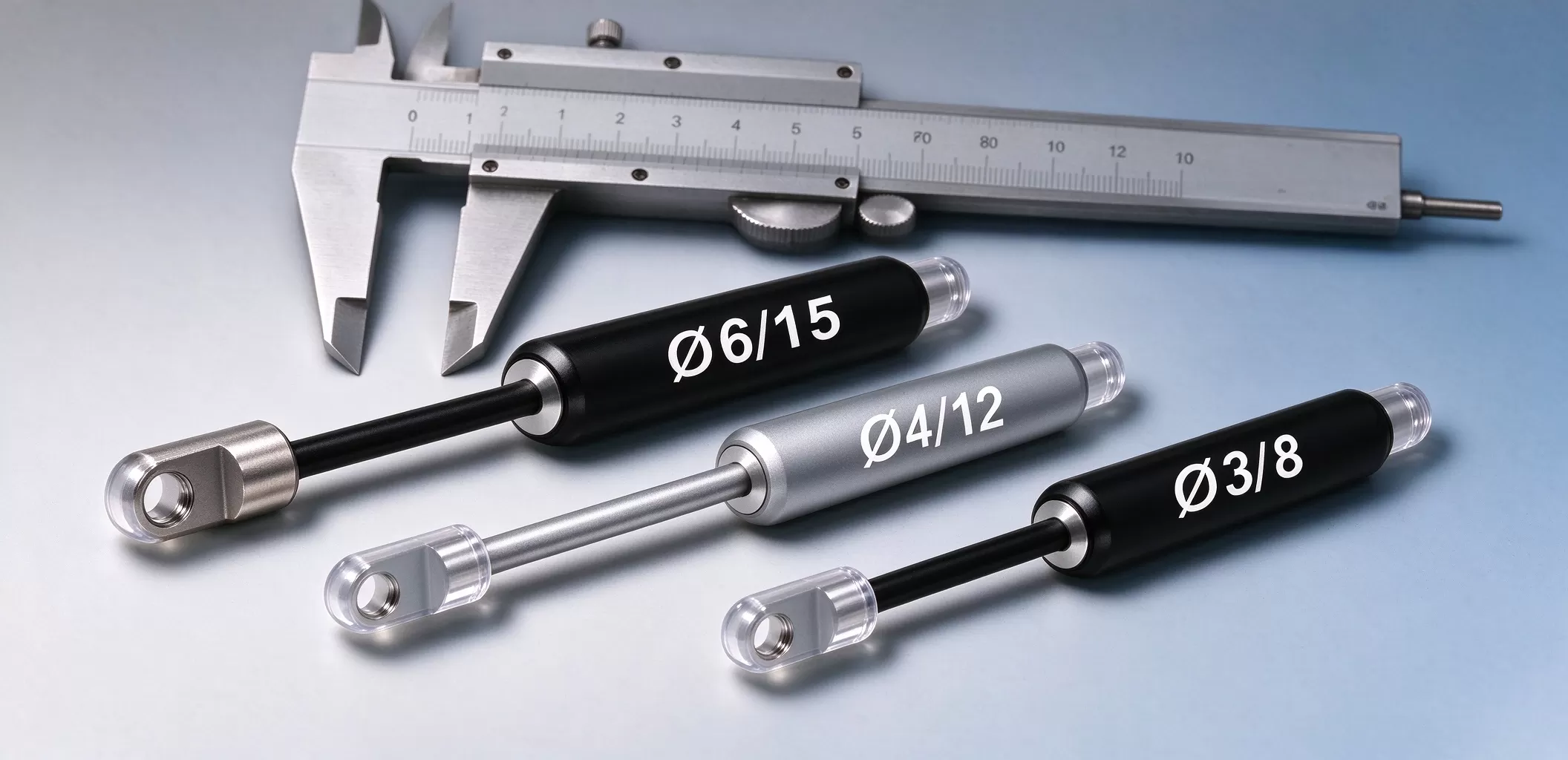
  • Tube & Rod Diameter: Essential for clearance and force capacity (e.g., 8/18mm or 10/22mm).

  • Force: The required pressure measured in Newtons (N) to support your specific hatch weight.

Marine Stainless Steel Gas Strut 2 1

The Material Myth: Why 316L is Only Half the Battle

Most buyers focus exclusively on the “Marine Grade” label. They ensure their marine gas springs are made of 316L stainless steel to fight the chemical war against oxidation. This is essential, but it is a passive defense.

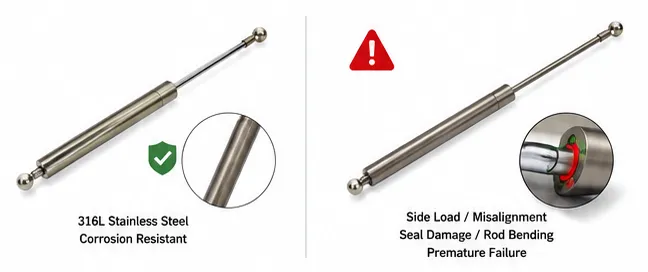
Marine gas struts are dynamic mechanical links. A gas strut that is perfectly resistant to rust will still fail catastrophically if it is subjected to Side Loading or End-Point Shock. When the geometric alignment is off by even 5mm, the internal seals experience uneven wear, leading to gas leakage that no amount of premium steel can prevent.

Precision Kinematics: The Secret to “Silent” Operation

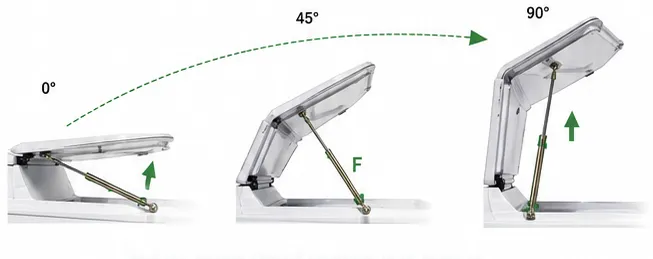
When we talk about the kinematics of marine gas shocks, we are looking at the relationship between the center of gravity (CoG), the pivot points, and the force curve.

The Pivot Point Paradox

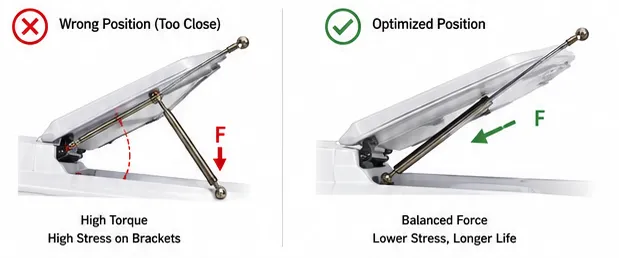
A common mistake in yacht design is placing the mounting points based on convenience rather than physics. If the mounting geometry is poorly calculated:

  • The initial opening force becomes too high, straining the fiberglass deck.
  • The strut reaches its “dead center” too early, causing the hatch to slam or fail to stay open under wind loads.

Dynamic Damping vs. Hydraulic Slam

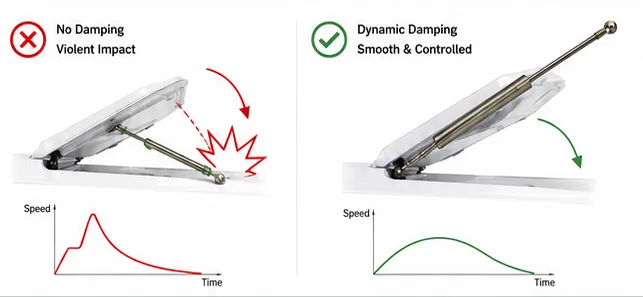
High-end marine gas springs utilize dynamic damping. Unlike standard shocks that might “bounce” at the end of their stroke, professional-grade marine gas shocks are engineered to slow down as they reach full extension. This prevents the “whiplash” effect that shatters hinges and rattles the vessel’s structure.

Installation Geometry: The GASTAC Way vs. Common Mistakes

Even the highest-grade stainless steel marine gas struts will fail prematurely if the installation geometry is flawed. The core of kinematic design isn’t just “lifting weight”—it’s about the scientific distribution of stress throughout the entire movement arc.

Why Installation Orientation Defines Lifespan?

FeatureThe Wrong Way (Common Mistakes)The GASTAC Way (Expert Optimization)
Orientation Rod Facing Up: Internal seals remain dry as oil settles at the bottom of the tube, leading to friction and gas leakage. Rod Facing Down: Gravity ensures the oil constantly lubricates the main seal, significantly extending the airtight lifespan.
Leverage Ratio Too Close to Hinges: While it saves space, it creates massive endpoint stress that can tear brackets or crack fiberglass. Optimized Pivot Points: Precision calculation based on the Center of Gravity (CoG) ensures pressure remains stable and manageable.
Operation Results in a "heavy" initial lift and a violent slam when closing, causing metal fatigue in hinges. Provides a "smooth-as-silk" opening and an elegant, dampened closing that protects the vessel’s structure.

High-Performance Marine Gas Springs Applications

When we talk about the kinematics of marine gas shocks, we are looking at the relationship between the center of gravity (CoG), the pivot points, and the force curve.

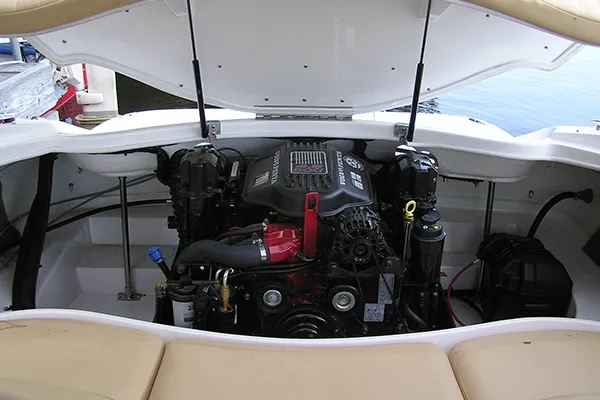
Boat Engine Covers

  • The Challenge: Extreme heat cycles and immense weight. Engine covers require high-force support that won’t lose pressure due to high-temperature seal expansion.
  • The Solution: GASTAC’s high-pressure marine gas shocks feature specialized heat-resistant internal components and a progressive force curve to make lifting 100kg+ covers feel effortless.

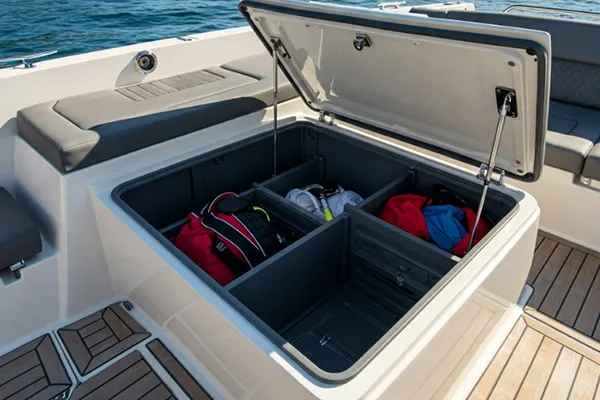
Yacht Storage Compartments

  • The Challenge: Often located in cramped quarters where mounting space is limited, yet smooth, quiet operation is expected for luxury interiors.
  • The Solution: Compact stainless steel marine gas struts with optimized end-point damping, ensuring storage lids open elegantly without “snapping” the hinges.

Marine Access Doors

  • The Challenge: These doors face constant vibration and must stay securely open even in heavy swells to prevent injury to the crew.
  • The Solution: Heavy-duty marine gas springs with a “locking” or high-friction internal design that maintains position despite the vessel’s pitch and roll.

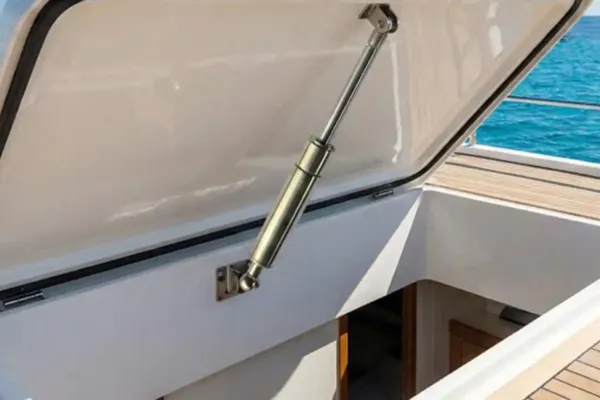
Deck Hatches

  • The Challenge: Direct exposure to UV rays and foot traffic. Salt crystals can accumulate on the rod, acting like sandpaper on the seals.
  • The Solution: Our marine gas struts come with integrated scraper seals and UV-stable coatings, ensuring the rod stays clean and the gas stays inside the tube.

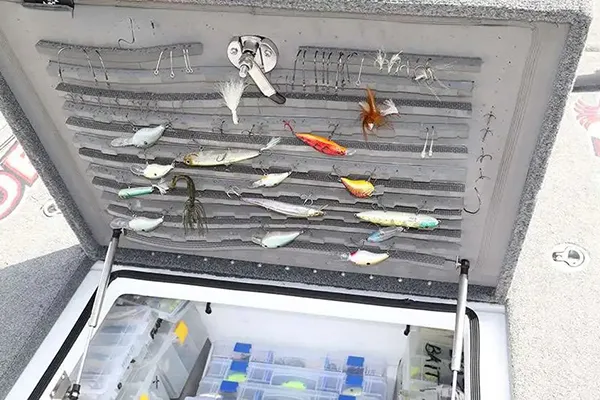
Fishing Boat Lids

  • The Challenge: Frequent, high-speed opening and closing in blood, bait, and brine environments.
  • The Solution: Full 316L construction with a high-flow internal valve design, allowing for rapid cycling without losing the “cushion” effect at the end of the stroke.

Boat Windows

  • The Challenge: Precision is key. Windows need a very specific force to hold at various angles without blocking the view or being too hard to close.
  • The Solution: Fine-tuned, small-diameter marine gas shocks that offer a linear force delivery, providing consistent support across the entire 90-degree opening arc.

Beyond the Surface: The Internal Engineering of Marine Gas Struts

Different areas of a vessel require different kinematic approaches. We optimize our marine gas struts for the following specific environments:

  • Integrated Grease Chambers: Essential for maintaining seal lubrication even when the boat sits idle for months.
  • Wiper Systems: To clear salt crystals from the rod before they can be pulled into the main seal during compression.

  • Side-Load Compensation: Using ball eyelet end fittings to allow for the natural hull-flexing that occurs in heavy seas.

The True Cost of “Cheap” Marine Gas Springs

When a marine gas strut fails at sea, the cost isn’t just the $80 replacement part. The real cost includes:

  • Labor: The technician’s time to reach the vessel.
  • Collateral Damage: Fractured gelcoat or bent hinges caused by a failing strut.
  • Safety Risks: The danger of a heavy engine room hatch falling on a crew member during maintenance.

By investing in a solution that prioritizes Kinematic Design alongside material science, fleet managers can reduce their Total Cost of Ownership (TCO) by up to 40% over a five-year period.

Validated by Data: Engineering Peace of Mind

In the marine industry, verbal promises are cheap. GASTAC provides a “Chain of Evidence” through rigorous laboratory data and real-world application success.

Authority & Certification (Trust Signals)

  • 1000+ Hours Salt Spray Certified: GASTAC stainless steel marine gas struts have undergone grueling continuous salt spray testing (ASTM B117). Under extreme simulated corrosive environments, our products maintain zero rust and zero performance degradation.

  • ISO 9001:2015 Certified Manufacturing: Every gas spring that leaves our facility undergoes 100% pressure testing and geometric calibration, ensuring a failure rate of less than 0.5%.

Authority & Certification (Trust Signals)

  • Client Background: A prestigious Mediterranean yacht builder whose engine room hatch supports were failing every 6 months due to internal pressure loss.
  • The Diagnosis: While the original struts were 316 stainless steel, the damping curve did not match the kinematics of the heavy hatch, causing the seals to overload during every opening cycle.
  • The GASTAC Solution: We recalculated the kinematic path and replaced the units with custom-valved marine gas springs featuring “Dynamic Damping.”
  • The Result: The maintenance cycle successfully extended from 6 months to over 24 months. This not only slashed TCO (Total Cost of Ownership) for the owner but also eliminated the safety risk of a heavy hatch falling during engine inspections.

Engineering the Perfect Marine Gas Springs Lift

Choosing the right marine gas springs is an exercise in engineering, not just shopping. While 316L stainless steel ensures your equipment looks good, it is the kinematic precision that ensures it works flawlessly.

Before your next refit, don’t just ask for a quote. Ask for a Force Calculation and a Geometric Layout.

Are You Facing Premature Strut Failure?

Our engineering team doesn’t just sell hardware; we provide motion solutions. Whether you need custom-valved marine gas shocks or a complete kinematic audit of your yacht’s hatches, we are here to help.

张航

Stay in the loop

Subscribe to our free newsletter.

Leave A Comment