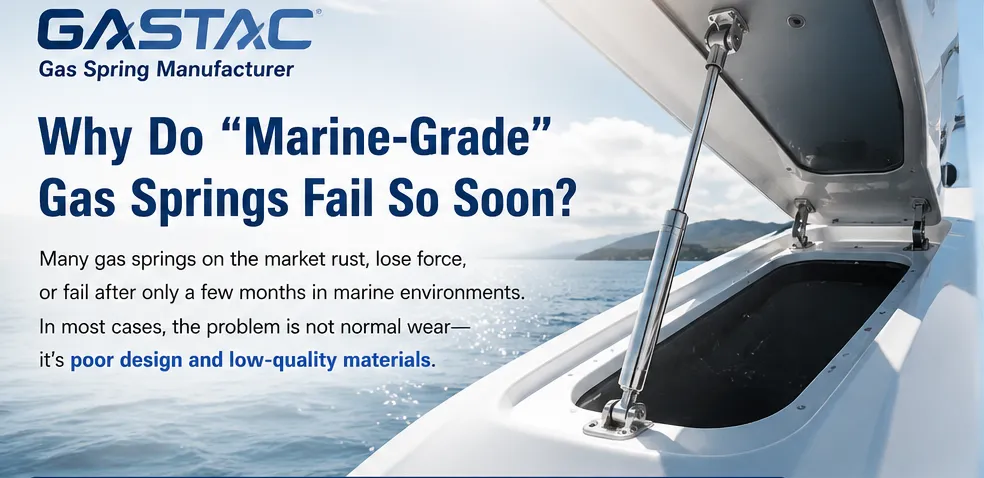









At GASTAC Gas Spring Manufacturer, we regularly receive inquiries from customers asking why their so-called marine-grade stainless steel gas springs begin rusting, losing force, or failing after only a few months of use on boats, yachts, and offshore equipment.
In most cases, premature failure is not caused by normal wear. The real problem is that many products on the market are not truly designed for harsh marine environments. Low-grade stainless steel, poor sealing systems, and inferior internal components often lead to rapid corrosion and pressure loss.
As a professional manufacturer of marine stainless steel gas struts, GASTAC focuses on long-term corrosion resistance, stable damping performance, and reliable operation in saltwater environments.
What are Stainless Steel Gas Springs?
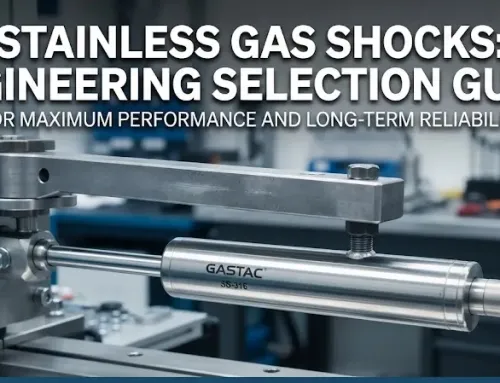
Stainless steel gas springs are gas-filled support cylinders manufactured primarily from stainless steel materials to provide lifting, supporting, counterbalancing, and controlled motion in harsh or corrosive environments.
They are called stainless steel gas springs because the main external components — including the tube, rod, end fittings, and internal metal parts — are made from stainless steel rather than standard carbon steel.
Marine Environments Are Extremely Aggressive
Saltwater conditions are one of the most demanding environments for any gas spring system. Marine applications continuously expose stainless gas springs to:
- Salt spray exposure – coastal air constantly deposits salt on metal surfaces, increasing corrosion risk
- High humidity and moisture – persistent damp conditions and condensation gradually affect seals and material stability
- UV radiation – prolonged sunlight exposure accelerates surface aging and material fatigue
- Continuous vibration – ongoing movement in vehicles or machinery can impact internal pressure consistency
- Temperature changes – frequent hot and cold cycles influence gas pressure stability and seal performance
- Heavy daily cycling – repeated opening and closing places continuous mechanical load on the gas spring system
Without proper material selection and sealing protection, even stainless products can fail very quickly.
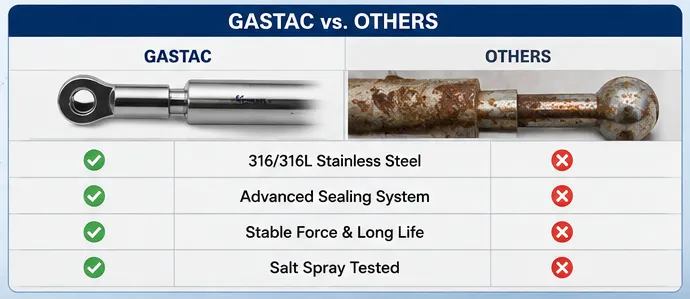
Many low-cost products advertised as “marine stainless” only use partial stainless construction. Some manufacturers simply replace the outer tube while keeping ordinary steel internal components, which eventually corrode from the inside out. This is one of the main reasons why many stainless steel gas shocks stop working after only a short period of marine use.
Why 316L Stainless Steel is the Marine Standard
While many manufacturers offer “stainless steel” struts, the grade of the metal determines the lifespan of the application.
- 304 Grade: Suitable for freshwater or indoor use. In salt spray environments, it will develop “tea staining” (surface rust) within weeks.
- 316L Grade: Contains molybdenum, which provides superior resistance to pitting and crevice corrosion in chloride-rich environments.
- Salt Spray Testing: Professional-grade marine struts should exceed 1,000 hours of salt spray testing according to ISO 9227 or ASTM B117 standards.
| Performance Factor | 304 Stainless Steel | 316 Stainless Steel |
|---|---|---|
| Saltwater corrosion resistance | Moderate – limited in harsh marine conditions | Excellent – designed for chloride-rich environments |
| Pitting corrosion resistance | Lower resistance, prone to localized corrosion | High resistance to pitting and surface attack |
| Marine suitability | Light coastal or indoor marine use | Full marine and offshore applications |
| Service life in salt spray | Shorter under continuous exposure | Significantly extended lifespan |
| Maintenance requirement | Higher inspection and replacement frequency | Lower maintenance demand |
Why Choose Stainless Steel Gas Springs Instead of Standard Gas Springs?
Choosing stainless steel gas springs over standard gas springs is mainly about durability, reliability, and long-term performance in demanding environments.
| Key Property | Standard Gas Springs | Stainless Steel Gas Springs |
|---|---|---|
| Corrosion Resistance | 24–96 hours salt spray test | 240 hours or longer salt spray test |
| Service Life | 30,000 – 100,000 cycles | 50,000 – 200,000+ cycles |
| Environmental Suitability | Indoor or mild conditions only | Marine, coastal, outdoor, and industrial environments |
| Reliability Under Harsh Conditions | Performance degradation over time | Stable performance under vibration, humidity, and temperature variation |
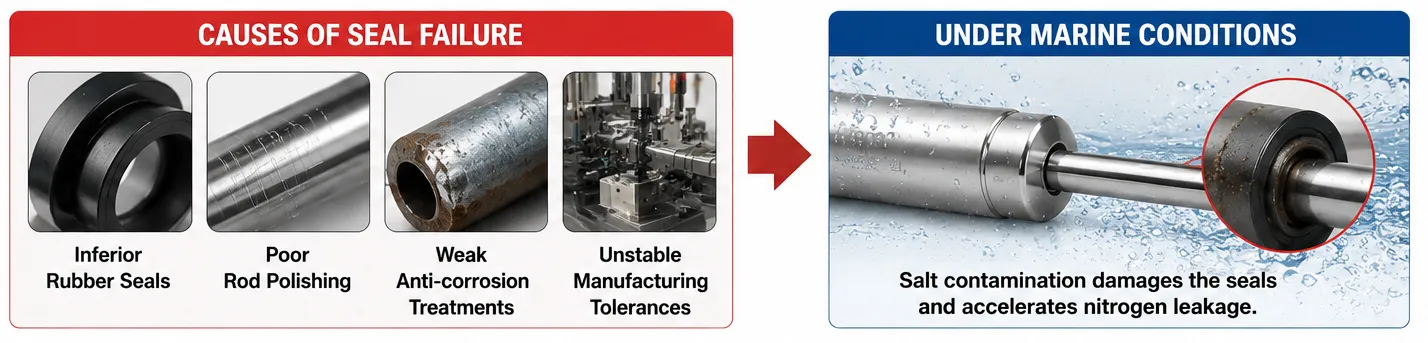
Seal Failure Causes Most Gas Spring Pressure Loss
A gas spring depends entirely on internal nitrogen pressure. Once the sealing system fails, performance rapidly declines. Many low-cost stainless gas shocks use:
- Inferior rubber seals
- Poor rod polishing
- Weak anti-corrosion treatments
- Unstable manufacturing tolerances
Under marine conditions, salt contamination damages the seals and accelerates nitrogen leakage. Typical failure symptoms include:
- Hatch no longer stays open
- Reduced lifting force
- Jerky movement
- Oil leakage around the rod
- Unstable extension speed
At GASTAC, our marine stainless steel gas springs use precision sealing systems specifically engineered for high-humidity and saltwater environments to improve long-term reliability.
Internal Components Matter More Than Exterior Appearance
Many products appear stainless on the outside but contain carbon steel internal parts. This is a major hidden issue in the marine gas spring industry.
Once internal rust develops, the gas spring quickly loses stability and service life.
At GASTAC, we focus not only on external corrosion resistance but also on the durability of internal structural components used in marine stainless steel gas struts.
Improper Installation Can Shorten Service Life
Even high-quality stainless gas springs can fail prematurely if installed incorrectly. Common installation mistakes include:
- Rod mounted upward
- Incorrect force selection
- Excessive side loading
- Improper mounting geometry
Correct installation typically requires the piston rod to face downward in the closed position so lubrication oil can continuously protect the sealing system. GASTAC engineering team regularly helps customers select:
- Proper force ratings
- Correct stroke length
- Suitable mounting brackets
- Optimal installation angles
Proper configuration significantly improves the service life of marine stainless steel gas shocks.
How GASTAC Improves Marine Gas Spring Durability
As a professional gas spring manufacturer, GASTAC focuses on several critical areas to improve marine product performance.
- Marine-Grade Stainless Steel Materials: We provide 316 stainless steel options for demanding offshore environments.
- Advanced Sealing Technology: GASTAC sealing systems are designed to reduce saltwater contamination and nitrogen leakage.
- Precision Manufacturing: Stable tolerances and smooth rod finishing help reduce seal wear and improve operating consistency.
- Corrosion-Resistant Internal Structures: We optimize both external and internal components for long-term durability.
- Customized Engineering Support: Different hatch weights and opening angles require different force calculations. GASTAC team helps customers select appropriate specifications for each application.
GASTAC Stainless Steel Gas Springs Customization Range Table
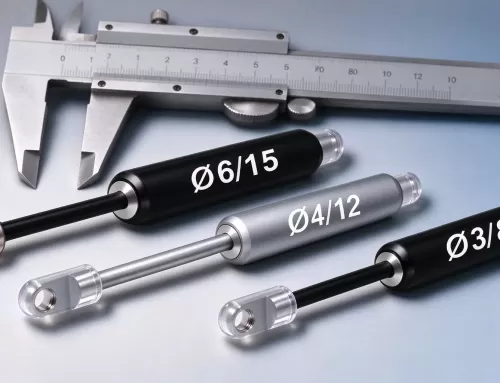
GASTAC stainless steel gas springs can be fully customized to match specific application requirements, ensuring optimal performance, durability, and installation compatibility across different working conditions.
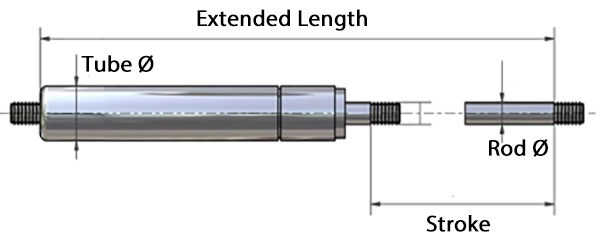
| Gas Spring Size | Stroke (Rod) Length Min / Max (in 5mm increments) | Tube Length Min / Max (in 1mm increments) | Force Min / Max (in 5N increments) | Thread Type |
|---|---|---|---|---|
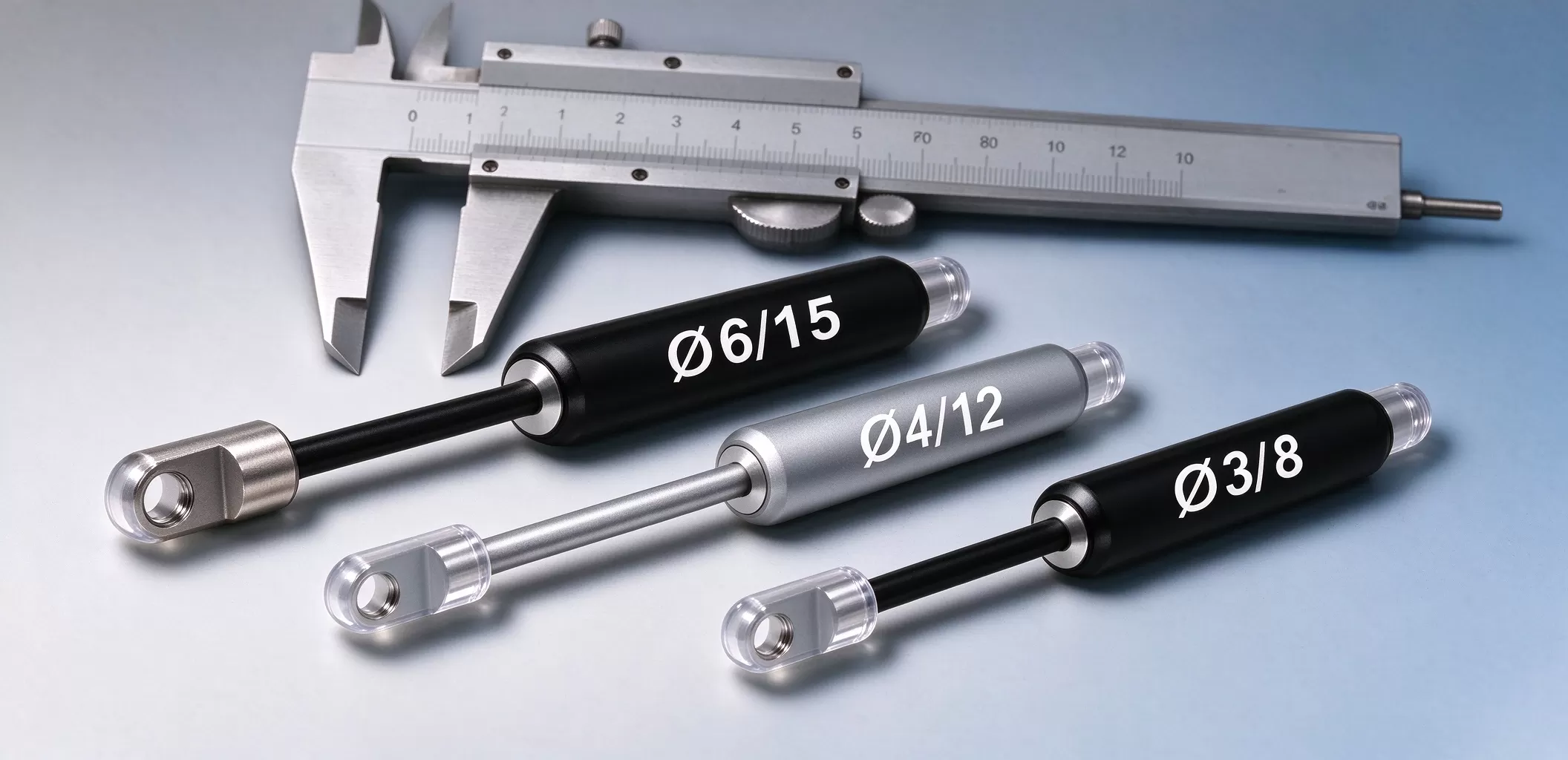
| 6-15 | 25-560 | 55-590 | 50-400 | M5 x 0.8 |
| 8-18 | 25-1000 | 60-1300 | 100-700 | M6 x 1.0 |
| 10-22 | 25-1200 | 85-1300 | 100-1100 | M8 x 1.25 |
| 14-28 | 25-1200 | 100-1300 | 100-2000 | M10 x 1.5 |
Below are the best-selling stainless steel gas spring specifications across different application ranges:

6-15 Stainless Steel Gas Strut Size Chart
| Product Code | Stroke (mm) | Extended Length (mm) | Rod / Tube Ø (mm) | Force (N) |
|---|---|---|---|---|
| GST615040155 | 40 | 155 | 6 / 15 | 50–400 |
| GST615060225 | 60 | 225 | 6 / 15 | 50–400 |
| GST615080235 | 80 | 235 | 6 / 15 | 50–400 |
| GST615080255 | 80 | 255 | 6 / 15 | 50–400 |
| GST615100275 | 100 | 275 | 6 / 15 | 50–400 |
| GST615120315 | 120 | 315 | 6 / 15 | 50–400 |
| GST615125330 | 125 | 330 | 6 / 15 | 50–400 |
| GST615150375 | 150 | 375 | 6 / 15 | 50–400 |
| GST615160390 | 160 | 390 | 6 / 15 | 50–400 |
| GST615175430 | 175 | 430 | 6 / 15 | 50–400 |
| GST615210505 | 210 | 505 | 6 / 15 | 50–400 |
8-18 Stainless Steel Gas Strut Size Chart
| Product Code | Stroke (mm) | Extended Length (mm) | Rod / Tube Ø (mm) | Force (N) |
|---|---|---|---|---|
| GST818120310 | 120 | 310 | 8 / 18 | 100–700 |
| GST818160390 | 160 | 390 | 8 / 18 | 100–700 |
| GST818170410 | 170 | 410 | 8 / 18 | 100–700 |
| GST818210510 | 215 | 510 | 8 / 18 | 100–700 |
| GST818220525 | 225 | 525 | 8 / 18 | 100–700 |
| GST818255585 | 255 | 585 | 8 / 18 | 100–700 |
| GST818265610 | 265 | 610 | 8 / 18 | 100–700 |
| GST818280630 | 280 | 630 | 8 / 18 | 100–700 |
| GST818315710 | 315 | 710 | 8 / 18 | 100–700 |
10-22 Stainless Steel Gas Strut Size Chart
| Product Code | Stroke (mm) | Extended Length (mm) | Rod / Tube Ø (mm) | Force (N) |
|---|---|---|---|---|
| GST1022255585 | 255 | 585 | 10 / 22 | 100–1100 |
| GST1022305700 | 305 | 700 | 10 / 22 | 100–1100 |
| GST1022305710 | 305 | 710 | 10 / 22 | 100–1100 |
| GST1022360820 | 360 | 820 | 10 / 22 | 100–1000 |
| GST1022400930 | 400 | 930 | 10 / 22 | 100–1100 |
| GST10224501050 | 450 | 1050 | 10 / 22 | 100–1100 |
| GST10225001150 | 500 | 1150 | 10 / 22 | 100–1100 |
| GST10225601280 | 560 | 1280 | 10 / 22 | 100–1100 |
| GST10226001400 | 600 | 1400 | 10 / 22 | 100–1100 |
14-28 Stainless Steel Gas Strut Size Chart
| Product Code | Stroke (mm) | Extended Length (mm) | Rod / Tube Ø (mm) | Force (N) |
|---|---|---|---|---|
| GST14285001100 | 500 | 1100 | 14 / 28 | 100–2000 |
| GST14285451200 | 545 | 1200 | 14 / 28 | 100–2000 |
| GST14286001300 | 600 | 1300 | 14 / 28 | 100–2000 |
| GST14286501400 | 650 | 1400 | 14 / 28 | 100–2000 |
| GST14287001550 | 700 | 1550 | 14 / 28 | 100–2000 |
| GST14287501630 | 750 | 1630 | 14 / 28 | 100–2000 |
| GST14288001800 | 800 | 1800 | 14 / 28 | 100–2000 |
Stainless Steel Gas Springs Marine Applications
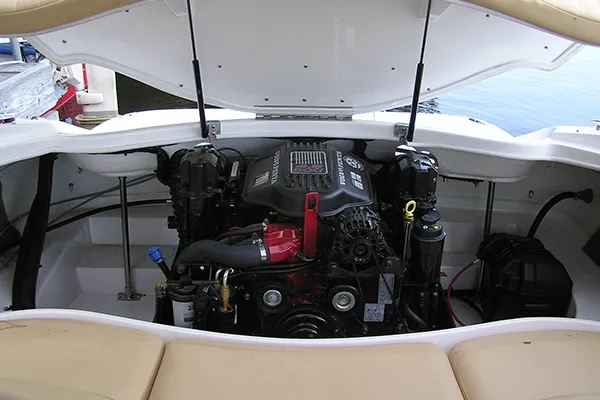
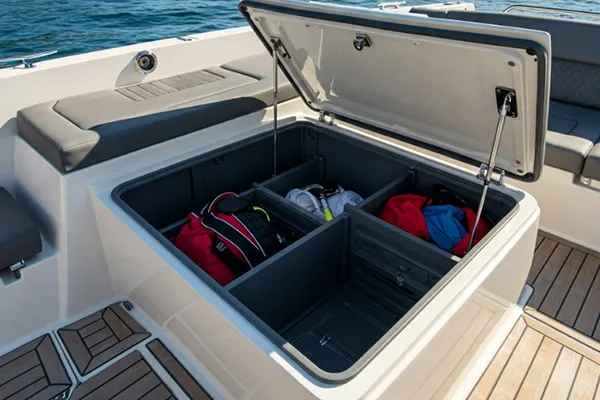
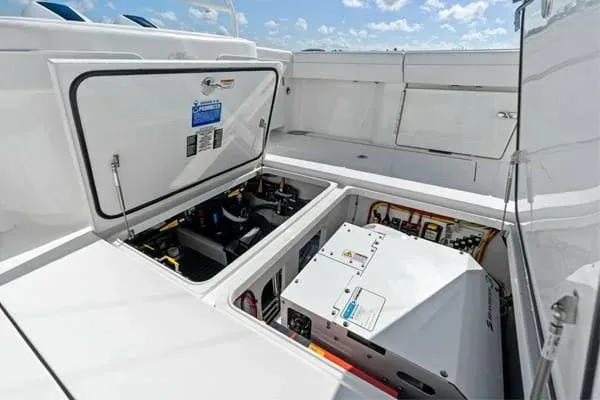
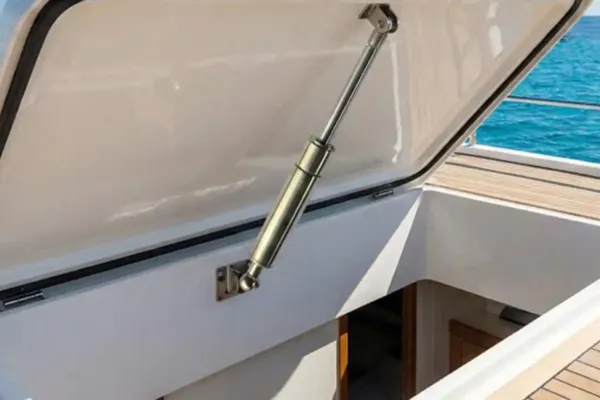
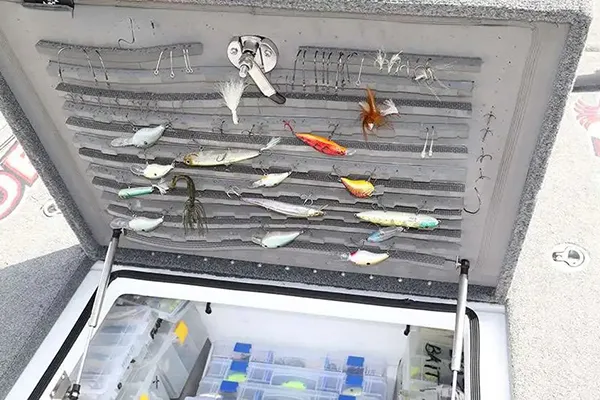
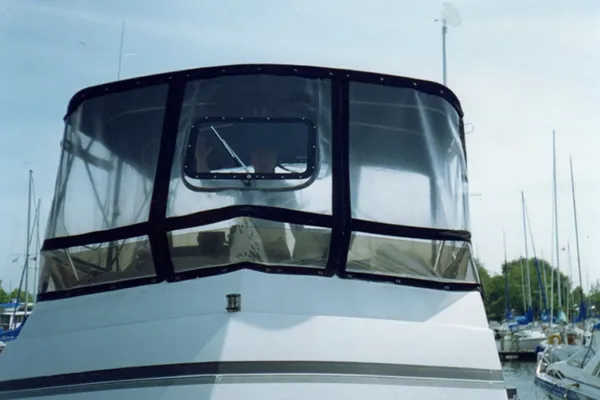
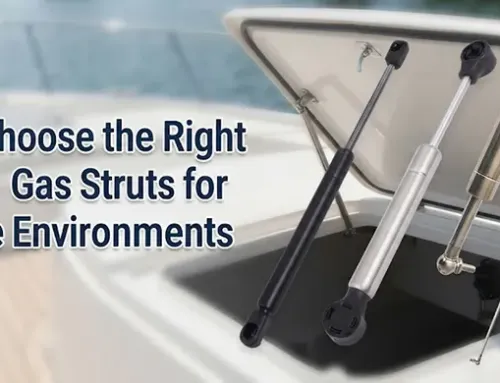
GASTAC marine stainless steel gas struts are widely used in:
These applications require reliable lifting performance and long-term corrosion resistance under continuous exposure to harsh environments.
Final Recommendation from GASTAC
At GASTAC Gas Spring Manufacturer, we always emphasize that selecting the right stainless steel gas springs, stainless gas struts, or stainless gas shocks is not just about size or force—it is about matching material, structure, and environment together. For marine applications in particular, correct selection directly determines whether the product lasts a few months or several years.
If you have any doubts regarding thrust calculations, stroke selection, or corrosion resistance requirements, we recommend consulting an experienced GASTAC gas spring manufacturer to ensure that the designed system is optimally configured for your specific application.
张航
Stay in the loop