








Table of contents
Share Post
How to Choose Hydraulic Gas Springs for Industrial Applications

Selecting the right hydraulic gas springs for industrial applications is not just a technical step—it directly impacts equipment safety, operational efficiency, and product lifespan. Unlike standard gas struts, industrial applications require:

  • Higher load capacity
  • Controlled motion (damping)
  • Long-term reliability under repeated use

This guide explains how engineers and B2B buyers can accurately select the right hydraulic gas struts, while avoiding common mistakes.

What Are Hydraulic Gas Springs?

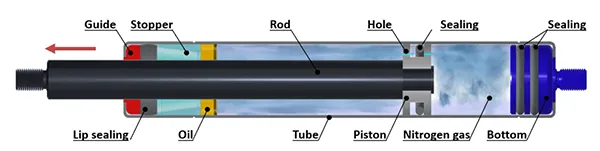
Hydraulic gas springs are sealed motion-control devices that use compressed nitrogen gas combined with internal hydraulic oil damping to deliver controlled extension and retraction. Structurally, they consist of a high-pressure cylinder (pressure tube) filled with gas and oil, a precision-ground piston rod, and an internal piston assembly with calibrated orifices/valves that regulate oil flow during movement. As the rod moves, nitrogen provides the output force, while hydraulic oil is forced through the piston’s flow channels, generating damping that ensures smooth, stable, and non-slamming motion.

Hydraulic Gas Springs vs Gas Springs

Hydraulic gas springs and standard gas springs are both used for controlled lifting and positioning, but they differ significantly in internal structure, motion behavior, and application precision.

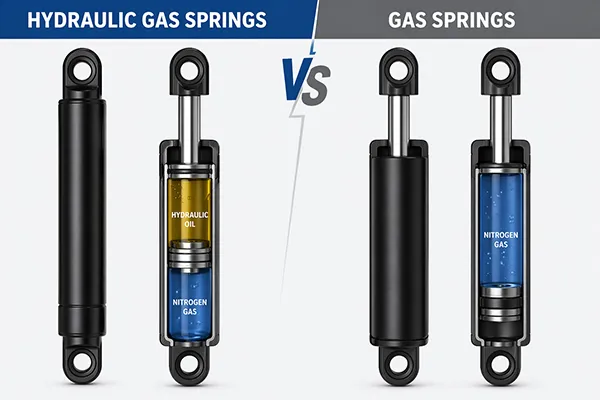
  • Gas Springs (Standard): Use compressed nitrogen gas only to generate force. They provide basic lifting support and relatively simple motion control.

  • Hydraulic Gas Springs: Combine compressed gas + hydraulic oil damping system, allowing both force support and precise motion control (speed damping).

Hydraulic Gas Springs Industrial Applications

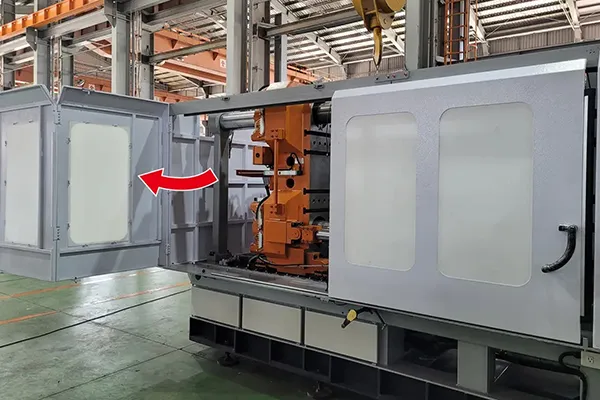
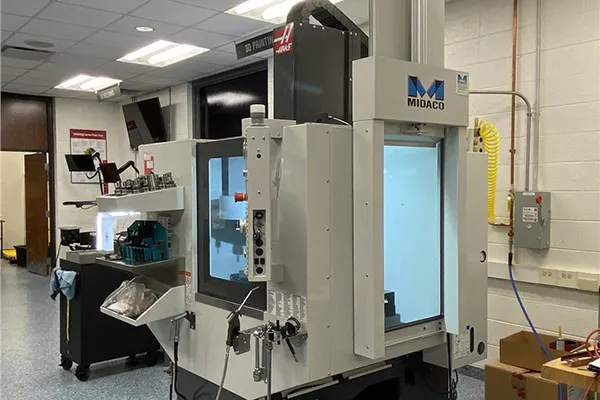
Hydraulic gas springs are widely used in industrial environments where controlled motion, operator safety, and long-term reliability are critical. By combining force support with precise damping, they ensure that heavy components can be lifted, positioned, and lowered smoothly without sudden movement or impact. Typical applications include:

Industrial Machinery & Equipment

Automation & Production Lines

Electrical & Control Cabinets

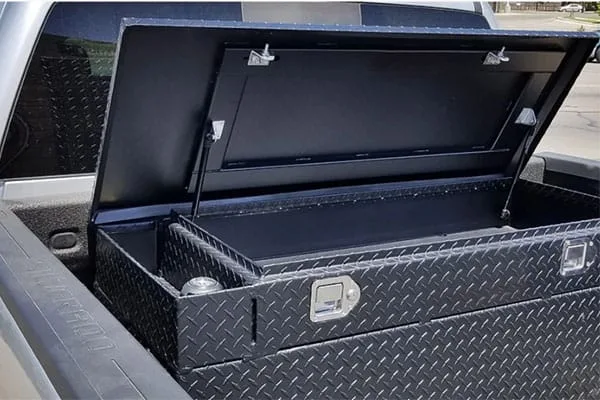
Toolboxes

Transport & Commercial Vehicles

Medical & Ergonomic Equipment

Furniture & Storage Systems

Common Selection Mistakes (Costly for Buyers)

  • 1. Incorrect Force Estimation: Leads to unsafe operation or usability issues
  • 2. Ignoring Mounting Geometry: Most common real-world failure cause
  • 3. Choosing Non-Hydraulic Type: Results in uncontrolled motion
  • 4. Overlooking Durability Requirements: Short lifespan in harsh environments

How to Choose the Right Hydraulic Gas Springs?

Choosing the right hydraulic gas spring is critical for ensuring safe operation, smooth motion, and long service life. The selection process is mainly based on matching the application requirements with key technical parameters rather than choosing by appearance or size alone.

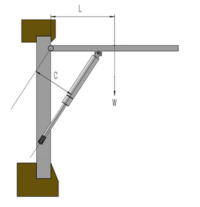
1. Determine Required Force (Load Capacity)

The most important factor is the force rating (N). It must match the weight of the object and its pivot geometry. For accurate selection, you can use the Gas Struts Force Calculator to quickly determine the correct force based on your application .

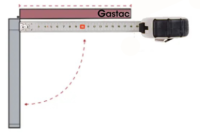
2. Check Installation Dimensions

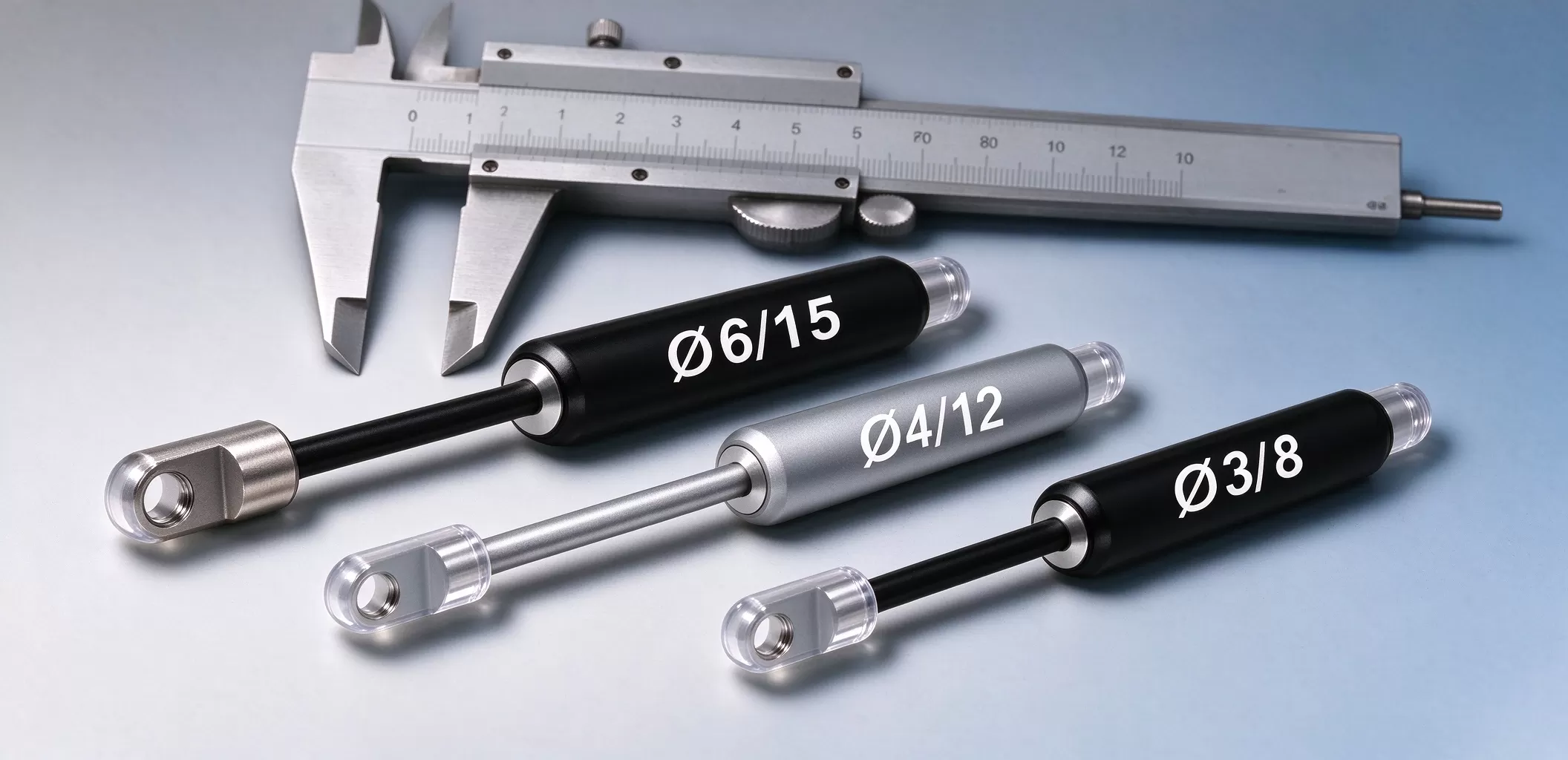
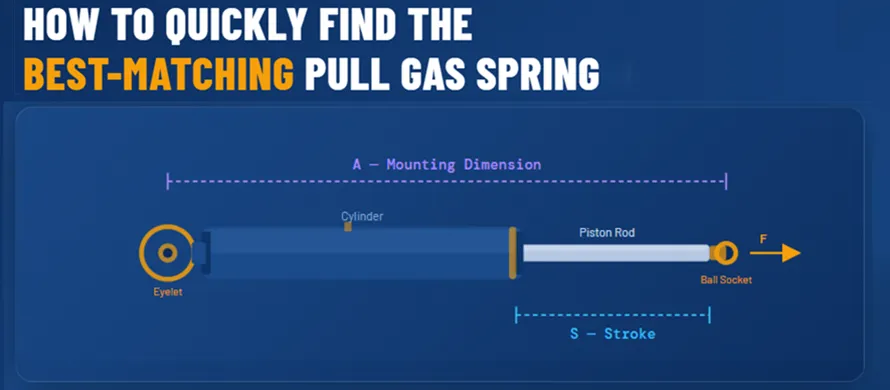
Check Installation Dimension is essential to ensure the gas strut fits correctly within the available mounting space. Before installation, the extended and compressed lengths must be carefully verified to confirm that the strut can operate smoothly without overextension or compression issues. You can also refer to how to measure gas struts to compare and perform the measurement step by step on your own.

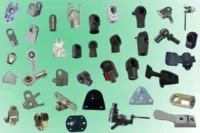
3. Select Proper Gas Spring End Fittings

Select Proper End Fittings ensures the gas strut is securely and correctly connected to the mounting points, providing stable and reliable operation during use. You can choose the appropriate end fitting for gas struts via End Fitting for Gas Spring.

Gas Strut End Fittings 600x400 1

4. Understand Damping Requirements

Understand Damping Requirements is important to control the speed and smoothness of the gas strut’s movement. Proper damping helps prevent sudden impacts, reduces noise, and ensures safe, stable operation during opening and closing cycles.

5. Consider Environmental Conditions

Consider Environmental Conditions is important to ensure the gas strut performs reliably in different working environments. Factors such as temperature, humidity, corrosion risk, and exposure to dust or chemicals can all affect durability and performance, so the correct material and surface treatment should be selected accordingly.

How to Choose the Right OEM Supplier?

For industrial buyers, supplier selection is as important as product selection. Choosing the right OEM supplier for hydraulic gas springs is not just about price—it directly affects product reliability, safety performance, and long-term supply stability. A qualified OEM partner should be able to consistently deliver products that meet technical specifications, industrial standards, and application requirements while also providing strong engineering and customization support.

1. Manufacturing Capability

  • In-house production vs. outsourced assembly
  • Advanced production equipment and automation level
  • Ability to control quality across the full process

2. Quality Control System

  • ISO-certified quality management (e.g., ISO 9001)
  • Batch testing for force consistency and sealing performance
  • Leakage, fatigue, and life-cycle testing standards

4. Material & Component Quality

  • High-grade steel for cylinder and rod
  • Reliable sealing materials for pressure retention
  • Corrosion-resistant surface treatments (e.g., coating, plating)

5. Production Stability & Capacity

  • Consistent lead times for bulk orders
  • Scalable production for long-term supply agreements
  • Ability to handle urgent or large-volume orders

6. Industry Experience

  • Proven applications in automotive, industrial, or machinery sectors
  • Case studies or long-term OEM partnerships
  • Understanding of different market standards

7. After-Sales & Technical Service

  • Engineering consultation support
  • Replacement and maintenance guidance
  • Fast response for quality or application issues

Replacement Guide for Hydraulic Gas Springs

Replacing hydraulic gas springs is a critical maintenance task that ensures equipment safety, smooth motion control, and stable performance. Over time, gas springs lose pressure, damping efficiency, or sealing integrity, which can lead to failure in lifting or positioning systems. A correct replacement process helps extend equipment lifespan and maintain operational reliability.

When Should Gas Springs Be Replaced?

Hydraulic gas springs should be replaced when the following signs appear:

  • Loss of lifting force or weak support
  • Sudden or uncontrolled dropping movement
  • Oil or gas leakage on the cylinder surface
  • Uneven or unstable motion
  • Visible rod corrosion or surface damage
  • Increased noise during operation

Step-by-Step Replacement Hydraulic Gas Springs

  • Step 1: Secure the moving part to prevent sudden dropping.
  • Step 2: Remove the old gas strut from both ends.
  • Step 3: Check the new strut specification and compatibility.
  • Step 4: Install the new gas strut onto the mounting points.
  • Step 5: Test the operation for smooth movement and proper support.

GASTAC Hydraulic Gas Springs for Industrial Applications

GASTAC Hydraulic Gas Springs for Industrial Applications are designed to deliver reliable force control, smooth motion, and long service life in demanding industrial environments. As a specialized gas springs manufacturer, GASTAC focuses on providing engineered solutions that meet precise performance requirements across different applications.
  • OEM hydraulic gas springs for industrial use
  • Precise force and damping customization
  • High durability sealing technology
  • Consistent quality for bulk supply
  • Competitive pricing for global B2B clients

Whether for machinery, vehicles, or heavy-duty systems, GASTAC delivers engineered solutions tailored to industrial requirements.

Request Engineering Support or Quote

To receive a tailored recommendation, provide:
  • Application type
  • Load weight
  • Installation dimensions
  • Quantity

Our team will assist with:

  • ✔ Force calculation
  • ✔ Model selection
  • ✔ Custom solution design

张航

Stay in the loop

Subscribe to our free newsletter.

Leave A Comment