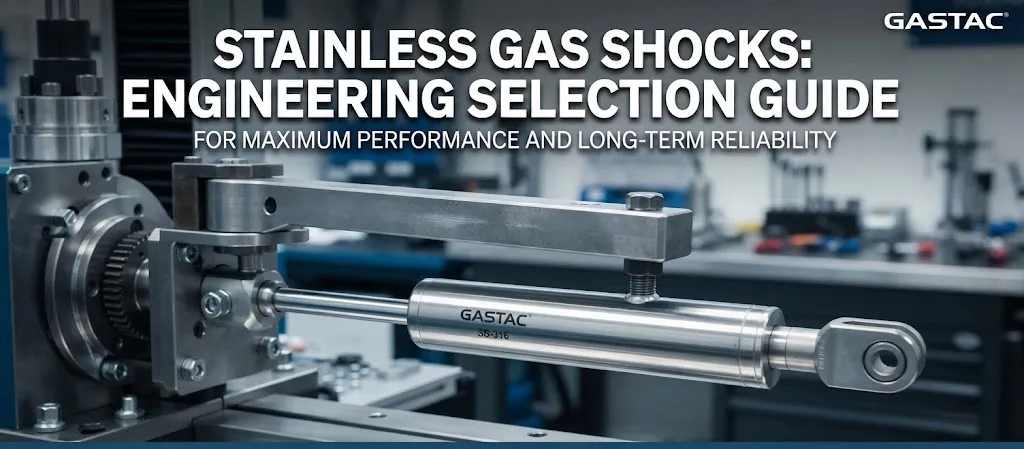
Stainless gas shocks are the unsung heroes of motion control in challenging environments. Whether you design marine hatches, food processing equipment, medical devices, or outdoor enclosures, you know the frustration when ordinary steel components succumb to rust, seizing, and premature failure. Upgrading to premium stainless gas shocks isn't just about better materials—it's about ensuring reliable operation, reducing downtime, and lowering long-term costs.
Often referred to interchangeably as stainless gas struts or stainless gas springs, these devices use compressed nitrogen to deliver smooth, progressive force with minimal progression (typically only 25–30% increase during compression). Their corrosion-resistant construction makes them the preferred choice for any application exposed to moisture, salt spray, chemicals, or frequent washdowns. In this guide, we distill decades of engineering experience and market intelligence to help you select, install, and maximize the value of stainless gas struts in your projects.
We'll cover material science (304 vs. 316), temperature effects, real‑world application cases, installation best practices, and the total cost of ownership—all backed by data from leading industry reports and our own testing at GASTAC, a trusted manufacturer of stainless gas springs worldwide.
What Are Stainless Gas Shocks? — Definition and Core Technology
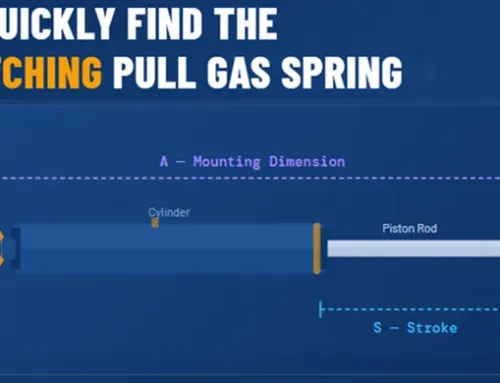
A stainless gas shock (synonymous with stainless gas strut or stainless gas spring) is a sealed mechanical unit containing high‑pressure nitrogen gas and a small amount of damping oil. The piston rod, cylinder, and seals are all manufactured from corrosion‑resistant stainless steel alloys, ensuring long‑term durability even in aggressive environments.
Unlike mechanical coil springs, which offer a linear or progressive rate, stainless gas springs provide a nearly constant force over their stroke, with a characteristic progression of only 25–30%. This makes them ideal for applications requiring smooth, controlled opening and closing of lids, panels, hatches, and access doors.
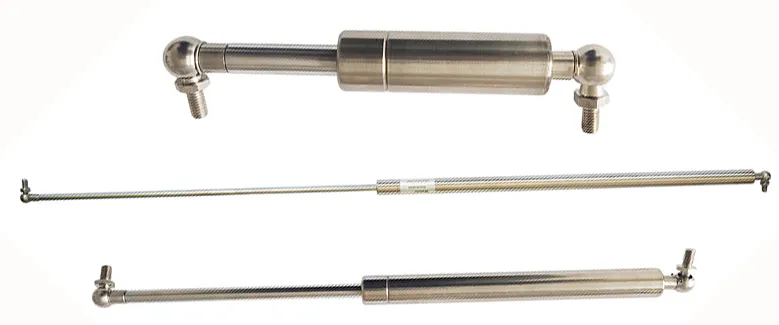
The key advantage of stainless gas struts lies in their resistance to pitting, crevice corrosion, and stress corrosion cracking—issues that plague carbon steel and even plated components in humid or saline conditions. This is why major OEMs in marine, pharmaceutical, and food industries now specify stainless gas springs as standard for critical applications.
Why Choose Stainless Gas Struts? — 4 Proven Advantages
1. Superior Corrosion Resistance – The Self‑Healing Shield
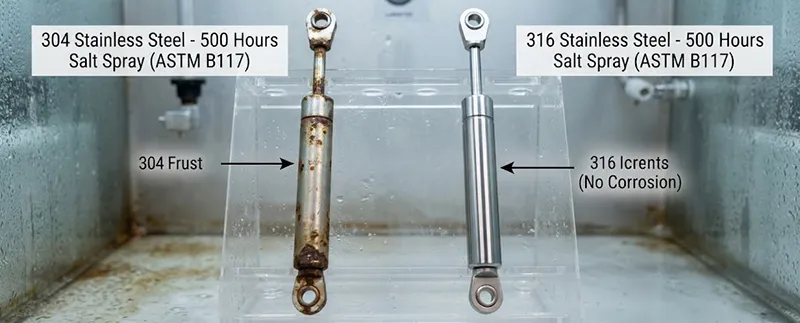
All stainless gas shocks contain at least 10.5% chromium, which forms a passive oxide layer that repairs itself when scratched. This self‑healing property ensures that stainless gas struts maintain their structural integrity even after mechanical damage or exposure to chlorides. In salt spray tests (ASTM B117), 316L stainless gas springs easily exceed 1000 hours without red rust, while carbon steel units fail within 200 hours.
2. Extreme Temperature Stability
Temperature directly affects gas spring force—for every 10°C drop, output force decreases by about 3.5%. But the bigger risk is material embrittlement. Carbon steel exhibits a ductile‑to‑brittle transition at sub‑zero temperatures, which can lead to catastrophic cylinder fracture. Austenitic stainless gas springs (304/316) have a face‑centered cubic structure that remains tough down to cryogenic levels (< -150°C), ensuring safe operation in freezer warehouses, arctic equipment, and aerospace applications.
3. Hygienic Design for Food & Medical Use
Stainless gas struts feature smooth, non‑porous surfaces that resist bacterial growth and are easy to clean with harsh disinfectants. This makes them the only viable choice for FDA‑compliant food processing machinery, hospital beds, and surgical tables. The use of food‑grade damping oil is also available upon request.
4. Lower Lifetime Maintenance
Because stainless gas shocks resist corrosion and wear, they require far less frequent replacement. Maintenance teams report that stainless gas springs often outlast the equipment they are installed on, reducing both spare parts inventory and unplanned downtime.
304 vs. 316: Selecting the Right Stainless Gas Springs Material
When choosing stainless gas springs, the single most critical decision is the alloy grade. The difference between 304 and 316 comes down to one element: molybdenum (Mo), which is present in 316 (2–3%) but absent in 304. This seemingly small addition has a dramatic impact on performance in chloride‑rich environments.
| Property | 304 Stainless (V2A) | 316 Stainless (V4A / 316L) |
|---|---|---|
| Molybdenum | None | 2–3% |
| Nickel | ~8–10.5% | ~10–14% |
| Chloride pitting resistance | Low | High (PRE* > 25) |
| Resistance to acids | Moderate | Superior |
| Typical cost premium | Baseline | +20‑30% |
When to choose 304 stainless gas shocks: Indoor equipment, office furniture, light industrial machinery, freshwater environments, and applications with minimal chemical exposure. It offers excellent value where corrosion risk is low.
When to choose 316 stainless gas struts: Marine hardware, coastal infrastructure, food processing, pharmaceutical cleanrooms, chemical plants, and any setting with saltwater, chlorinated cleaners, or aggressive washdowns. The molybdenum barrier effectively blocks chloride attack, making 316 stainless gas springs last 4‑5 times longer than 304 in these conditions.
Temperature Effects on Stainless Gas Shocks – What Every Engineer Must Know
Temperature variations are often overlooked during selection, yet they directly affect the force output and safety of stainless gas struts. The "3.5% rule" is a useful guideline: for every 10°C decrease in temperature, the extension force (F1) drops by approximately 3.5%. Conversely, high temperatures increase internal pressure and can accelerate seal degradation.
However, the more critical issue is material toughness at low temperatures. Carbon steel and many low‑alloy steels undergo a ductile‑to‑brittle transition near -20°C to -40°C, risking catastrophic fracture under the high internal pressure (often >150 bar). Stainless gas springs made from austenitic grades (304/316) maintain their impact toughness down to -150°C and below, making them the only safe choice for cold storage, outdoor winter operations, and aerospace applications.
For extreme high‑temperature environments (above +80°C), special seals (e.g., FKM or PTFE) can be specified. GASTAC offers tailored sealing solutions to ensure your stainless gas shocks perform reliably across a wide temperature window.
Applications of Stainless Gas Struts Across Key Industries
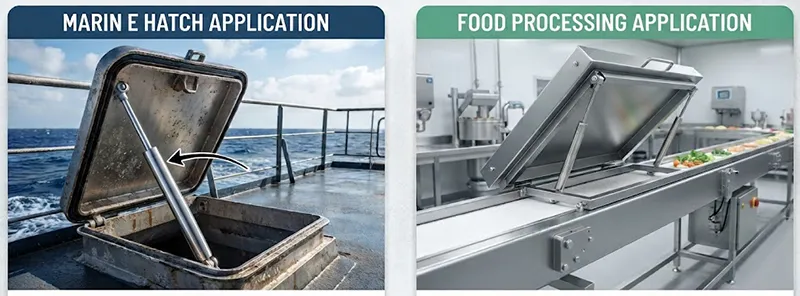
Stainless gas shocks have become indispensable in several demanding sectors. Below are the most common use cases where stainless gas springs consistently outperform standard alternatives:
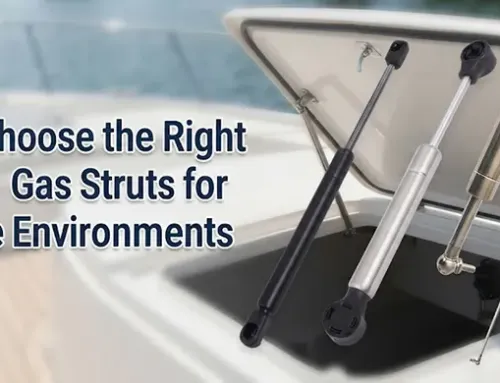
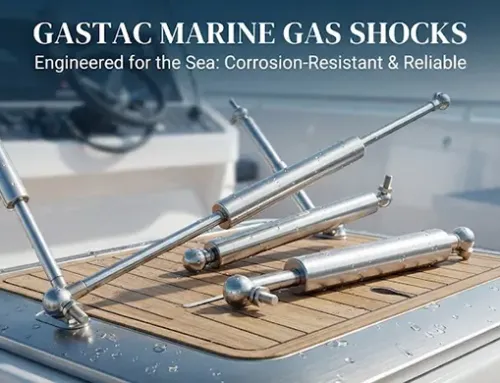
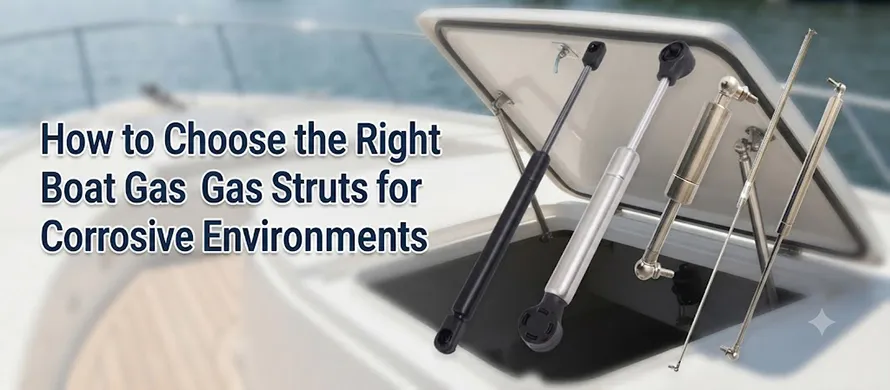
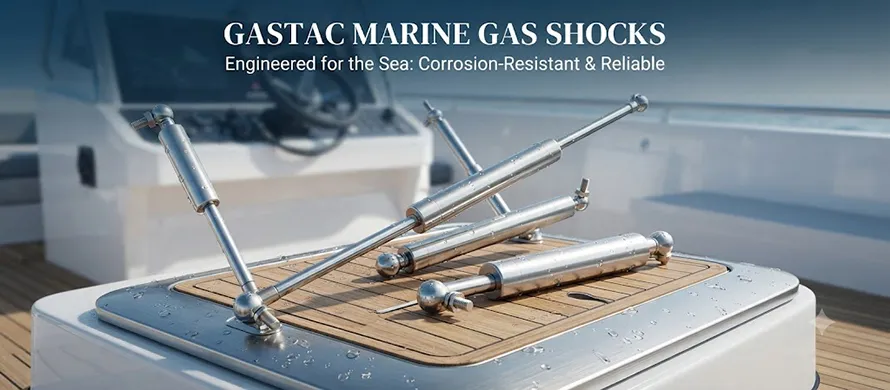
- Marine & Offshore: Boat hatches, engine covers, swim platforms, and locker doors – 316 stainless is the norm to resist saltwater corrosion.
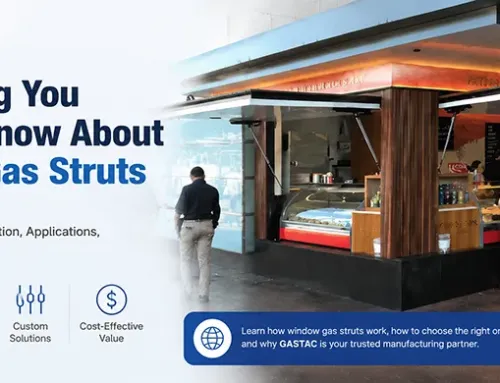
- Food & Beverage: Mixing vats, conveyor covers, ovens, and packaging machines – hygienic design and resistance to acidic cleaners.
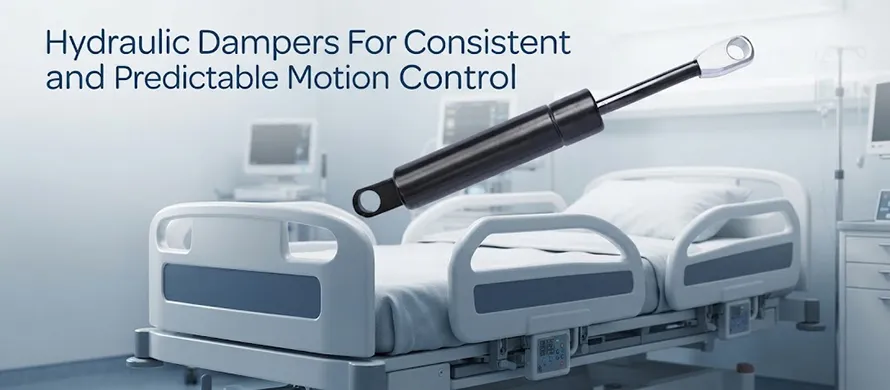
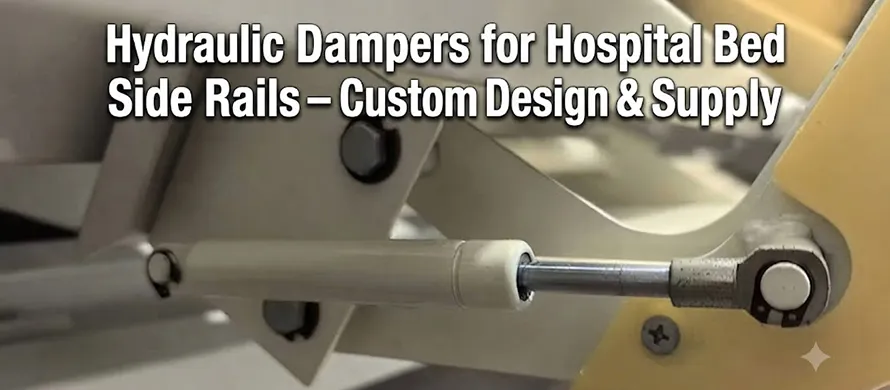
- Medical & Pharmaceutical: Hospital beds, examination tables, surgical lights, and sterile cabinets – smooth motion and easy sterilization.
- Industrial Equipment: Outdoor enclosures, solar panel trackers, agricultural machinery, and access panels exposed to weather.
- Automotive & Transportation: Tailgates, hoods, and luggage compartment lids for premium vehicles where corrosion resistance is a selling point.
Installation and Maintenance Best Practices for Stainless Gas Springs
Even the best stainless gas shocks will underperform if installed incorrectly. Follow these guidelines to maximize service life:
Installation Essentials
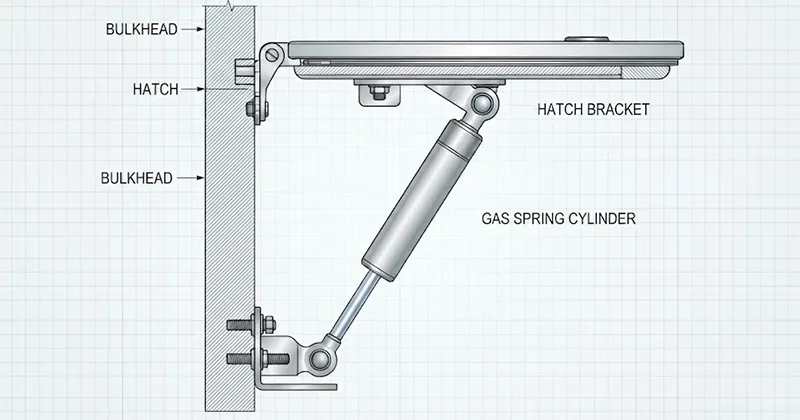
- Orientation: For compression‑type stainless gas struts, the piston rod must face downward. This ensures the damping oil lubricates the rod seals and piston, preventing dry running and premature wear.
- Alignment: The centre lines of the end fittings should be in a straight line to avoid side loads. Use ball‑joint ends or clevises to accommodate minor misalignments.
- Mounting hardware: Use stainless steel brackets and fasteners to avoid galvanic corrosion between dissimilar metals.
- No‑load handling: Always install and remove the stainless gas spring when the lid/panel is in the fully open (unloaded) position.
Maintenance – Simple but Essential
Stainless gas shocks are typically maintenance‑free, but a visual inspection every 6‑12 months is recommended:
- Check for oil leakage around the rod seal.
- Inspect the piston rod for scratches, dents, or signs of corrosion.
- Test the force – if the lid drops too quickly or fails to stay open, the gas spring may be losing charge.
Never attempt to disassemble or modify a gas spring – internal pressure can exceed 300 bar, posing serious safety risks. Always replace with a new unit from a reputable manufacturer.
Cost‑Benefit Analysis – Are Stainless Gas Shocks Worth the Investment?
It's true that stainless gas springs carry a higher upfront price – typically 20‑30% more than 304 and 2‑3 times the cost of carbon steel equivalents. However, the total cost of ownership (TCO) often favours stainless, especially in aggressive environments.
Direct costs of failure: When a standard gas spring fails, you pay for replacement parts, technician labour, and production downtime – which can easily exceed the initial price difference. In outdoor installations, ordinary gas springs have an annual failure rate of about 15%, whereas stainless gas struts reduce that figure to less than 5%.
In marine settings, 316 stainless gas shocks last 4‑5 times longer than 304, and many times longer than carbon steel. Over a 10‑year equipment lifecycle, the cumulative savings in replacements, labour, and lost productivity make stainless the clear economic winner.
Quick decision guide:
- For high‑salinity or chemical environments → 316 stainless is the only prudent choice.
- For standard outdoor or indoor use → 304 stainless provides excellent value without over‑specification.
Why Partner with a Leading Stainless Gas Shocks Manufacturer – GASTAC
Since 2007, GASTAC (Ningbo GASTAC Gas Spring Co., Ltd.) has been a trusted global supplier of premium stainless gas springs. We are certified to IATF 16949 and ISO 9001:2015, with all products carrying a 2‑year warranty. Our extensive manufacturing experience and in‑house testing facilities ensure consistent quality and on‑time delivery.
Our Stainless Gas Spring Portfolio
We offer stainless gas shocks in 304 and 316L, covering a wide range of sizes:
| Series | Rod Ø (mm) | Tube Ø (mm) | Stroke (mm) | Force range (N) |
|---|---|---|---|---|
| Mini | 4 | 12 | 25‑85 | 20‑90 |
| Compact | 6 | 15 | 50‑200 | 50‑450 |
| Standard | 8 | 18 | 90‑200 | 100‑700 |
| Heavy‑Duty | 10 | 22 | up to 380 | 500‑1200+ |
We support full OEM/ODM customization – force, stroke, end fittings, and special coatings are available to meet your exact requirements. Our engineering team provides technical support from concept to installation.

Ready to Specify Your Stainless Gas Shocks?
Whether you need a standard size or a fully custom solution, GASTAC is your reliable partner. Let's discuss your application and find the optimal stainless gas struts for your project.
📧 sales@gastac.com │ 📞 +86-574-87008309 │ 💬 +86-13626842823
* From selection to delivery – we support you every step of the way.
Stay in the loop