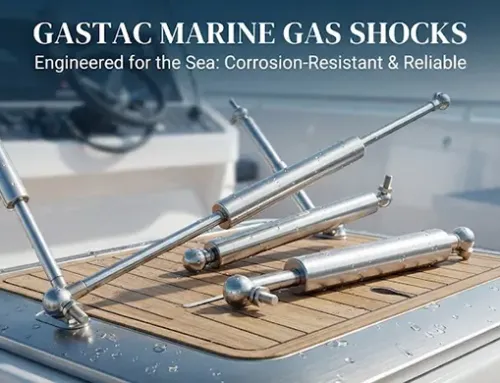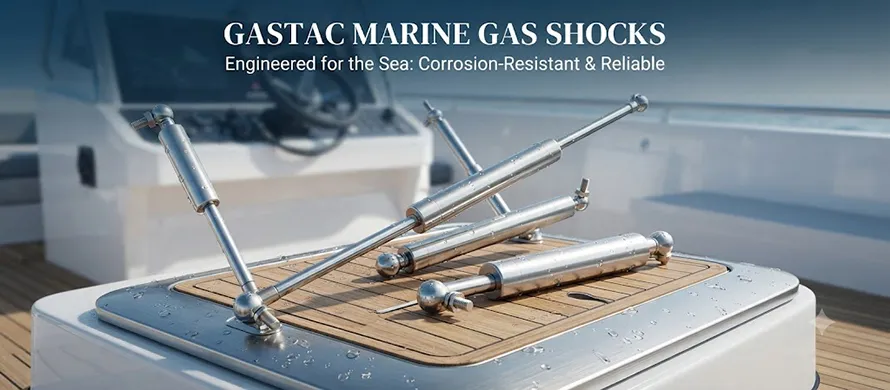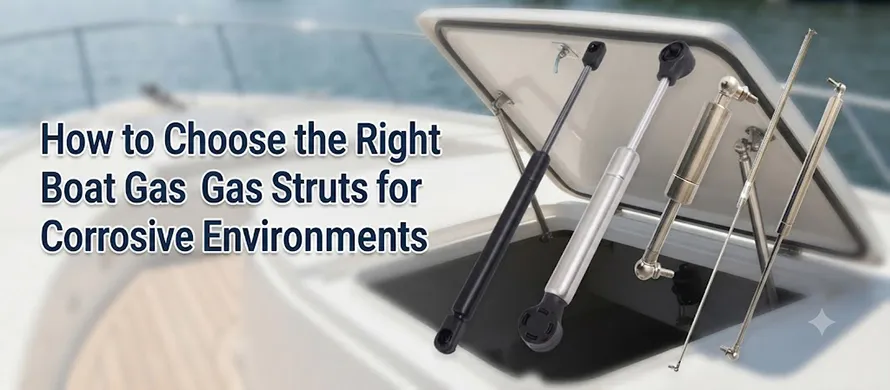
As summer approaches, recreational boating, offshore fishing, and marine operations become increasingly active worldwide. Boat gas struts have become an essential component for modern vessels, providing reliable lifting support and controlled movement for engine hatches, storage compartments, fish box covers, and access panels.
For boat manufacturers, OEMs, and marine equipment suppliers, selecting the right gas strut is critical to ensuring safety, durability, and smooth operation in demanding marine environments. Different applications require different solutions, from compact gas springs for cabin doors to heavy-duty stainless steel gas struts for offshore engine hatches exposed to saltwater.
As a professional gas spring manufacturer in China, GASTAC delivers customized marine gas strut solutions in carbon steel, 304 stainless steel, and 316 stainless steel materials. This guide explores how boat builders can select the right gas springs based on vessel types, applications, and technical requirements.
Why Use Boat Gas Struts for Marine Applications
Manually opening and supporting heavy boat hatches, engine covers, and storage compartments is not only inconvenient, but it can also create safety and operational challenges during marine activities. On modern boats, many access panels are made from fiberglass or composite materials, which can become difficult to lift and control due to their size, weight, and installation position. Without a reliable gas strut support system, boat users and operators may experience:
- Increased effort required to open heavy engine hatches, fish box covers, and storage compartments
- Risk of hatch covers suddenly closing due to waves, wind, or unstable operating conditions
- Reduced convenience when frequently accessing onboard equipment and storage areas
- Increased wear on hinges, latches, and supporting hardware caused by uncontrolled movement
- Limited accessibility during fishing, maintenance, and daily boating operations
Properly selected boat gas struts help distribute the weight of hatches and covers, allowing smooth opening and closing while reducing physical effort. They ensure continuous operation during fishing, maintenance, and daily marine activities, improving efficiency, safety, and overall user experience.
Environmental Challenges Facing Boat Gas Struts
Boat gas struts are constantly exposed to harsh marine environments where corrosion, weathering, and mechanical stress can affect their performance and service life. Unlike standard gas springs, marine applications require materials and designs that can withstand continuous exposure to seawater, humidity, sunlight, and vibration. The main environmental challenges affecting boat gas struts include:
- Saltwater exposure: Chloride ions in seawater accelerate corrosion and damage metal surfaces over time.
- High humidity: Continuous moisture exposure creates conditions that promote electrochemical corrosion.
- UV radiation: Sunlight can degrade protective coatings and sealing materials.
- Temperature fluctuations: Repeated expansion and contraction may cause microcracks and reduce sealing performance.
- Constant vibration and movement: Marine operation creates continuous mechanical stress and surface wear.
- Wind-driven moisture and contaminants: Salt spray and airborne particles can accumulate on exposed components and accelerate corrosion.
Properly selected boat gas struts help distribute the weight of hatches and covers, allowing smooth opening and closing while reducing physical effort. They ensure continuous operation during fishing, maintenance, and daily marine activities, improving efficiency, safety, and overall user experience.
Choosing the Right Material for Boat Gas Struts
Material selection is a critical factor when designing boat gas struts for marine applications. Different vessels operate in different environments, from freshwater lakes to coastal areas and offshore saltwater conditions. Choosing the right material ensures the best balance between corrosion resistance, service life, and cost efficiency.
Carbon Steel Boat Gas Struts
Carbon steel gas struts are mainly made of iron and carbon, with carbon acting as the primary strengthening element. As a cost-effective material option, they are widely used for protected marine applications. With proper surface treatments such as coating or plating, carbon steel gas struts can provide reliable performance for freshwater boats and enclosed compartments where direct saltwater exposure is limited.
304 Stainless Steel Boat Gas Struts
304 stainless steel gas struts are mainly composed of iron, approximately 18% chromium, and 8% nickel, which provide a stable passive layer for improved corrosion resistance. As one of the most commonly used stainless steel grades, 304 stainless steel gas struts offer a good balance between durability, appearance, and cost. They are suitable for coastal boats and components exposed to regular moisture and salt spray.
316 Stainless Steel Boat Gas Struts
316 stainless steel gas struts are mainly composed of iron, chromium, nickel, and molybdenum (Mo). Based on the composition of 304 stainless steel, 316 stainless steel adds approximately 2–3% molybdenum, which improves its resistance to chloride corrosion and harsh marine environments. This makes 316 stainless steel gas struts suitable for offshore boats and exposed components where continuous seawater exposure requires maximum durability.
| Boat Gas Strut Type | Material | Corrosion Resistance | Typical Applications |
|---|---|---|---|
| Carbon Steel Gas Struts | Carbon steel (Iron + Carbon) with protective coating | Depends on surface treatment; suitable corrosion resistance when properly protected. Typically offers 72 to 144 hours of salt spray resistance | Suitable for freshwater boats, protected compartments, cabin storage, and covered hatches with limited saltwater exposure |
| 304 Stainless Steel Gas Struts | 304 stainless steel (Chromium + Nickel) | Good resistance to moisture, humidity, and general marine corrosion. Salt spray resistance approaching 200 hours | Suitable for coastal boats, storage hatches, cockpit lockers, console doors, and applications with regular salt spray exposure |
| 316 Stainless Steel Gas Struts | 316 stainless steel (304-based composition with added 2–3% Molybdenum) | Excellent resistance to chloride corrosion and seawater exposure. Salt spray resistance exceeding 500 hours | Recommended for offshore boats, yachts, engine hatches, fish boxes, and exposed deck applications in harsh marine environments |
Where are Boat Gas Struts Used?
Boat gas struts are widely used on different movable components of boats, including engine hatches, fish boxes, storage compartments, deck hatches, cabin doors, and cockpit lockers. These applications require reliable lifting assistance, controlled movement, and secure positioning to improve safety, convenience, and operational efficiency during marine activities.
Gas Sruts for Boat Engine Hatches
Engine hatches are one of the most important applications for boat gas struts. These large covers are usually constructed from fiberglass or composite materials and provide access to the engine compartment for inspection and maintenance. Because engine hatches are often large and heavy, manually lifting them can require significant effort. A properly selected gas strut helps reduce lifting force, provides controlled movement, and keeps the hatch securely open during operation.
| Parameter | Specification / Details |
|---|---|
| Force | 300–1000N. Suitable for engine hatches weighing approximately 30–100kg, depending on hatch size, mounting position, and the number of gas struts installed. |
| Stroke Length | 250–400mm. Selected according to the required hatch opening angle and available installation space. |
| Extended Length | 600–900mm. Determined by the mounting distance between the hatch and fixed mounting points. |
| Tube & Rod Diameter | 18/8mm to 28/14mm. 22/10mm is commonly used for standard engine hatches, while larger vessels may require heavier-duty configurations. |
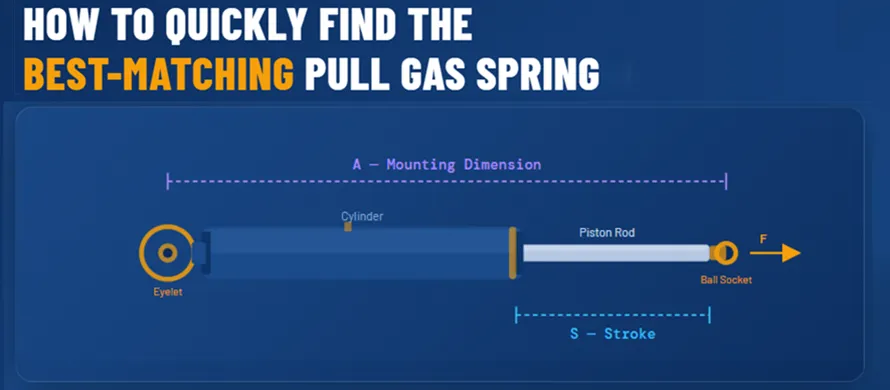
| End Fittings for Gas Springs | Ball socket fittings or eyelet fittings are commonly used for boat hatch applications to allow smooth rotation and reliable operation. |
| Material | 304 stainless steel or 316 stainless steel are recommended for engine hatches exposed to marine environments. |
Gas Sruts for Boat Fish Boxes and Livewells
Fish boxes and livewells are essential features on fishing boats and offshore vessels. Their covers are frequently opened during fishing activities and need to remain securely open while users store, remove, or organize equipment and catches. Because these covers are located on the deck, they are often exposed to seawater, salt spray, and continuous moisture. A properly selected boat gas strut provides smooth lifting assistance, prevents sudden closing, and improves convenience during fishing operations.
| Parameter | Specification / Details |
|---|---|
| Force | 150–500N. Suitable for fish box and livewell covers weighing approximately 10–40kg, depending on cover size, hinge position, and installation angle. |
| Stroke Length | 150–300mm. Selected according to the required opening angle and available mounting space. |
| Extended Length | 350–650mm. Determined by the distance between the hatch mounting points. |
| Tube & Rod Diameter | 18/8mm to 22/10mm. A 18/8mm configuration is suitable for smaller covers, while 22/10mm provides additional durability for larger fishing boat hatches. |
| End Fittings for Gas Springs | Ball socket fittings are commonly used for fish boxes and livewells because they allow smooth movement during frequent opening and closing cycles. |
| Material | Material: 316 stainless steel is recommended for fish boxes and livewells due to direct exposure to seawater, salt spray, and continuous moisture. |
Gas Sruts for Storage Compartments
Storage compartments are widely used on recreational boats, fishing boats, and yachts for storing safety equipment, tools, fishing gear, and personal items. These covers are opened frequently during daily use and require smooth lifting assistance and stable holding performance. Boat gas struts help reduce the effort required to lift storage lids and keep them securely open, improving accessibility and convenience during operation.
| Parameter | Specification / Details |
|---|---|
| Force | 100–400N. Suitable for storage compartment covers weighing approximately 5–30kg, depending on lid size and mounting position. |
| Stroke Length | 100–250mm. Compact stroke lengths are commonly selected due to limited installation space inside storage compartments. |
| Extended Length | 250–550mm. Selected according to the distance between mounting points. |
| Tube & Rod Diameter | 18/8mm or 22/10mm. Suitable for standard storage lids and frequent opening cycles. |
| End Fittings for Gas Springs | Ball socket fittings or eyelet fittings can be selected according to the hinge structure and installation requirements. |
| Material | 304 stainless steel is recommended for exposed storage compartments, while carbon steel gas struts with protective coating can be used for enclosed and protected compartments. |
Gas Sruts for Deck Hatches
Deck hatches provide access to cabins, equipment areas, and storage spaces below the deck. These covers are exposed to sunlight, rain, salt spray, and changing marine conditions, requiring reliable support during repeated operation. Boat gas struts help control hatch movement, prevent sudden closing, and keep the hatch safely open when accessing areas below the deck.
| Parameter | Specification / Details |
|---|---|
| Force | 200–600N. Suitable for deck hatches weighing approximately 15–60kg, depending on hatch size, structure, and installation position. |
| Stroke Length | 200–350mm. Provides sufficient opening angle for common deck hatch designs. |
| Extended Length | 450–750mm. Selected according to the hatch dimensions and mounting distance. |
| Tube & Rod Diameter | 18/8mm to 22/10mm. Larger deck hatches may require stronger configurations for long-term durability. |
| End Fittings for Gas Springs | Ball socket fittings are commonly used to allow smooth movement and reduce stress during hatch operation. |
| Material | 316 stainless steel is recommended for exposed deck hatches due to direct contact with seawater, salt spray, and outdoor marine conditions. |
Gas Sruts for Cabin Doors
Cabin doors require controlled opening and reliable positioning, especially in confined interior spaces where uncontrolled movement may affect safety and convenience. Boat gas struts provide smooth assistance when opening doors and help maintain the door in the required position during use, improving accessibility inside the cabin.
| Parameter | Specification / Details |
|---|---|
| Force | 150–400N. Suitable for cabin doors weighing approximately 10–40kg, depending on door size and hinge position. |
| Stroke Length | 150–300mm. Selected according to door opening angle and available installation space. |
| Extended Length | 350–600mm. Determined by the mounting geometry of the door structure. |
| Tube & Rod Diameter | 18/8mm or 22/10mm. Standard configurations provide sufficient performance for most cabin doors. |
| End Fittings for Gas Springs | Eyelet fittings or ball socket fittings are commonly selected depending on the door mounting design. |
| Material | 304 stainless steel is recommended for cabin doors due to the relatively protected installation environment and good corrosion resistance. |
Gas Sruts for Cockpit Lockers
Cockpit lockers are frequently used for storing boating equipment, fishing tools, and accessories. Their covers require reliable support because they are opened regularly during boating activities. Boat gas struts improve user convenience by providing controlled lifting assistance and preventing locker covers from closing unexpectedly.
| Parameter | Specification / Details |
|---|---|
| Force | 150–500N. Suitable for cockpit locker covers weighing approximately 10–40kg, depending on cover size and mounting position. |
| Stroke Length | 150–300mm. Selected according to the required opening angle and available installation space. |
| Extended Length | 350–650mm. Determined by the mounting distance between the cover and fixed bracket. |
| Tube & Rod Diameter | 18/8mm to 22/10mm. Suitable for most cockpit locker applications. |
| End Fittings for Gas Springs | Ball socket fittings are commonly used because they allow flexible movement during repeated opening and closing. |
| Material | 316 stainless steel is recommended for cockpit lockers exposed to seawater, rain, and salt spray on open decks. |
Boat Manufacturers and Models Using Boat Gas Struts
As a professional gas spring manufacturer, GASTAC provides reliable and cost-effective Boat Gas Struts solutions for boat builders worldwide. Based on different vessel structures, hatch designs, and marine operating conditions, GASTAC designs and manufactures gas springs that meet the quality requirements of various boat manufacturers and models.
From fishing boats and center consoles to yachts and cruisers, GASTAC supports OEM customers with customized gas spring solutions featuring consistent performance, competitive pricing, and long service life in demanding marine environments.
Boat Gas Struts for Boston Whaler
Boston Whaler is an American marine manufacturer specializing in fishing boats, center consoles, and family recreational vessels. Its models are designed for coastal cruising, sport fishing, and offshore operation, where engine hatches, fish boxes, storage compartments, and deck access covers are frequently exposed to seawater, salt spray, and harsh marine conditions.
GASTAC designs Boat Gas Struts for Boston Whaler models with 2026 new corrosion-resistant manufacturing processes. For offshore vessels operating in saltwater environments, GASTAC provides 316 stainless steel Boat Gas Struts with 500+ hours salt spray protection to improve corrosion resistance and long-term reliability.
Boat Gas Struts for Grady-White
Grady-White is an American marine manufacturer specializing in premium offshore fishing boats and center console vessels. Its boats are designed for offshore anglers and demanding fishing environments, where large engine hatches, fish boxes, livewells, and storage compartments require strong and reliable support.
GASTAC designs Boat Gas Struts for Grady-White vessels with a wide force range from 100N to 2000N, covering applications from lightweight storage lids to heavy-duty offshore hatches. This allows different boat models and hatch structures to achieve stable lifting and holding performance.
Boat Gas Struts for Beneteau
Beneteau is a French marine manufacturer specializing in sailing yachts, cruising boats, and powerboats. Its vessels are designed for coastal cruising, Mediterranean navigation, and long-distance recreational sailing, with gas struts commonly used for cabin doors, deck hatches, storage compartments, and engine access covers.
GASTAC designs Boat Gas Struts for Beneteau models with 2026 new material technology using high-strength precision seamless stainless steel tubing. The cylinder is manufactured without welded seams, improving structural strength and reliability for yacht and cruising applications.
Boat Gas Struts for Jeanneau
Jeanneau is a French marine manufacturer specializing in sailing yachts, motorboats, and cruising vessels. Its boats are widely used for recreational cruising and coastal navigation, where larger cabin structures, deck hatches, and movable marine components require reliable support solutions.
GASTAC designs Boat Gas Struts for Jeanneau models with advanced manufacturing processes supporting stroke lengths exceeding 1 meter and extended lengths over 2 meters. This capability provides suitable gas spring solutions for large vessel structures requiring long-distance support.
Boat Gas Struts for Sea Ray
Sea Ray is an American marine manufacturer specializing in luxury cruisers, sport boats, and yachts. Its vessels focus on comfort, performance, and premium onboard design, with gas struts commonly installed on engine hatches, seating systems, storage areas, and access panels.
GASTAC designs Boat Gas Struts for Sea Ray models with service life testing exceeding 100,000 operations under full-load conditions. This ensures stable performance and long-term durability for frequently operated hatch and access systems.
Boat Gas Struts for Ranger Boats
Ranger Boats is an American marine manufacturer specializing in fishing boats, bass boats, and performance fishing vessels. Its boats are mainly designed for fishing activities, where storage compartments, livewells, casting decks, and seating systems require reliable gas spring performance under different weather conditions.
GASTAC designs Boat Gas Struts for Ranger Boats with temperature stability from -30°C to +80°C, maintaining stable force output without pressure fluctuation across changing outdoor conditions. This ensures reliable operation for fishing boats used in different climates.
After understanding the different requirements of various marine manufacturers, the following table summarizes some of the popular boat manufacturers and models that commonly require Boat Gas Struts solutions from GASTAC.
| Boat Manufacturer | Popular Boat Models / Series | Boat Type |
|---|---|---|
| Boston Whaler | Montauk Series | Center Console Fishing Boats |
| Outrage Series | Offshore Fishing Boats | |
| Vantage Series | Dual Console Boats | |
| Conquest Series | Cabin Cruiser / Offshore Fishing Boats | |
| Grady-White | Fisherman Series | Center Console Fishing Boats |
| Freedom Series | Dual Console Boats | |
| Canyon Series | Offshore Center Console Boats | |
| Canyon Offshore Series | Offshore Fishing Boats | |
| Beneteau | Antares Series | Motor Cruisers |
| Gran Turismo Series | Sport Cruisers | |
| Flyer Series | Day Boats / Runabouts | |
| Swift Trawler Series | Long-range Cruising Boats | |
| Jeanneau | Merry Fisher Series | Motor Cruisers / Fishing Boats |
| Leader Series | Sport Cruisers | |
| NC Series | Crossover Motorboats | |
| Sun Odyssey Series | Sailing Yachts | |
| Sea Ray | Sundancer Series | Cruisers |
| SLX Series | Luxury Sport Boats | |
| SPX Series | Bowrider / Sport Boats | |
| SDX Series | Deck Boats | |
| Ranger Boats | Z520 Series | Bass Fishing Boats |
| Z521 Series | Tournament Bass Boats | |
| RT Series | Aluminum Fishing Boats | |
| VX Series | Performance Fishing Boats |
Why Choose GASTAC as Your Boat Gas Struts Manufacturer
GASTAC specializes in gas spring manufacturing with experience supplying automotive, medical, industrial, furniture, and marine applications. With in-house production capabilities, GASTAC provides Boat Gas Struts solutions covering stainless steel gas springs, standard gas springs, and customized gas spring requirements.
From material selection and production control to OEM customization and delivery management, GASTAC supports boat manufacturers with reliable gas spring solutions for different vessel models and marine applications.
Experienced Marine Gas Spring Manufacturer
GASTAC provides 7–15 days delivery for standard products and 15–25 days delivery for customized products. With MOQ starting from 50 pieces and ≥99% delivery performance, GASTAC supports stable supply.
Wide Range of Gas Spring Solutions
GASTAC manufactures stainless steel gas springs, traction gas springs, lockable gas springs, dampers, automotive gas springs, and standard compression gas springs to meet different application requirements.
Certified Quality Control System
GASTAC follows IATF 16949:2016, ISO 9001:2015, RoHS, and REACH standards. Every Boat Gas Strut is 100% inspected before shipment, with cycle life testing performed according to product requirements.
Flexible OEM Customization Service
GASTAC supports Boat Gas Struts customization including dimensions, force ratings, colors, fitting types, and surface treatments. CAD review, force calculation, joint development, and private label services are also available.
Reliable Delivery and Production Support
GASTAC provides 7–15 days delivery for standard products and 15–25 days delivery for customized products. With MOQ starting from 50 pieces and ≥99% delivery performance, GASTAC supports stable supply.
Professional Support and Long-Term Cooperation
GASTAC provides 3-year warranty, lifetime technical support, and 24-hour response service. With experience across automotive, medical, industrial, and furniture industries, GASTAC builds long-term partnerships.
Stay in the loop