Locking Gas Springs for Ambulance Stretcher
Secure Position Locking
Zero-drift locking holds the adjusted position under load — no sag, no slip, no unexpected movement.
Salt Spray Tested
Salt spray tested for 72, 96 and 144 hours, supporting 2-, 3- and 5-year service life targets with ease.
Cycle Tested
Durability verified to 30,000 cycles at 180 mm displacement under a 200 mm stroke, at a constant 20°C.
Which Locking Gas Strut Type Should You Choose?
Locking gas springs hold an adjusted position fixed under load, combining the lifting support of a standard gas spring with a locking mechanism that fixes the piston rod along its stroke. Unlike a plain gas spring that only pushes or damps, a locking gas spring lets the user set a position and keep it — no drifting, no accidental movement.
Lockable gas springs are not one-size-fits-all. The type you choose determines whether your application feels smooth and cushioned, holds absolutely still, or gives your users fingertip control. The sections below explain how each type locks and help you match the right model to your equipment.

Elastic Locking Gas Spring
Elastic locking gas springs deliver a controlled, cushioned hold at the locked position, making them the right choice where a slight rebound is required. The compressible nitrogen-oil medium absorbs peak loads and damps impact forces, protecting both the equipment structure and the operator.
Typical applications: seat backrest angle adjustment, medical equipment height positioning, and armrest height and angle adjustment.

Rigid Locking Gas Strut in Extended Direction
Rigid locking in the extension direction is the right choice when any rebound after locking must be avoided, especially where safety and stable positioning are critical. The incompressible oil column blocks the piston mechanically once the valve closes, so the extended position holds firm under load with no sag or drift.
Typical applications: seat backrest angle adjustment, hospital bed tilt adjustment, and leg supports for wheelchairs and passenger seats.

Rigid Lockable Gas Spring in Compressed Direction
Rigid locking in the compression direction is the right choice for light-duty applications that may face very high forces after locking, where any further compression must be prevented. The incompressible oil column blocks the piston mechanically once the valve closes, so the compressed position holds firm with no rebound.
Typical applications: tilt adjustment of massage, treatment and transport beds including stretchers; tilt adjustment of steering columns in construction and agricultural machinery; height adjustment of hospital bedside tables, overbed tables and server tables; and height adjustment of bistro tables, desks and coffee tables.

Gas Strut with Lock
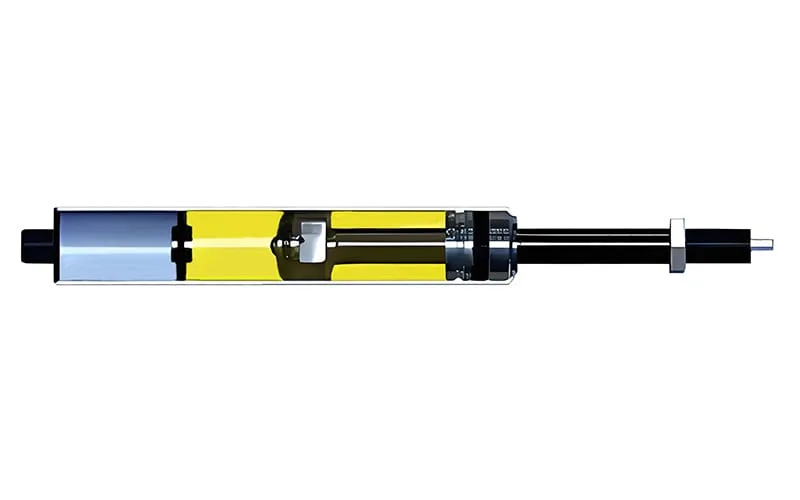
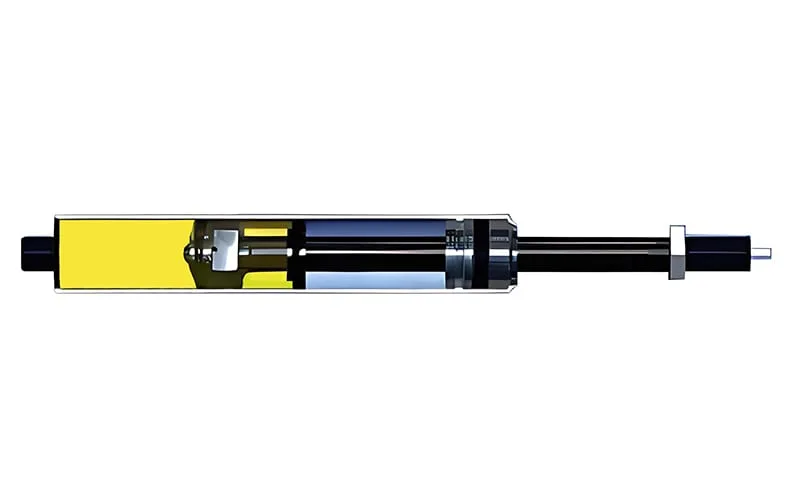
This is a standard gas strut fitted with an external metal shroud . When the piston rod fully extends, the heavy shroud drops or shifts over the edge of the cylinder due to gravity, creating a solid mechanical block that prevents the rod from compressing. The lock engages only at the maximum stroke position, and acts as a safety backup in case the gas spring loses force or fails. This makes it suitable for forklift applications, where the locked position ensures the load will not drop suddenly if the gas spring loses pressure or fails. To close, lift the shroud manually to realign it with the cylinder. It is grouped under locking gas springs because it locks the stroke, even though the base unit is an ordinary gas strut.

Elastic Locking Gas Spring
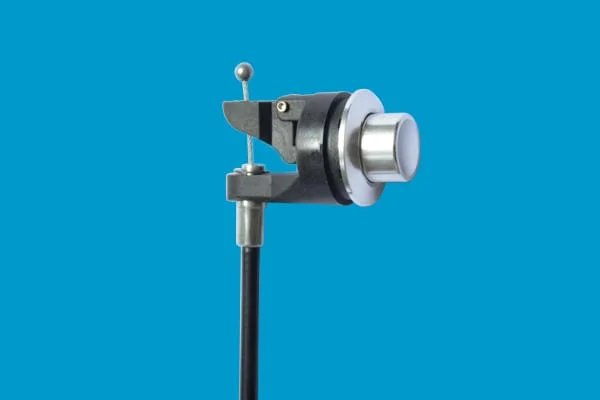
This is an ordinary gas spring with an internal locking structure, not a distinct spring category. It serves the same safety function as the Gas Strut with Lock — preventing the load from dropping if the gas spring loses force or fails — but uses an internal spring-loaded latch instead of an external metal shroud. When fully extended, the latch clicks into a locking slot, creating a solid mechanical stop. Pulling the release button disengages the latch so the spring can compress again.
Choose this version when the external shroud of a Gas Strut with Lock cannot provide enough support. It is grouped under locking gas springs because the locking function defines the classification, not the base spring. Suitable for forklift applications, where the locked position keeps the load from dropping suddenly if the gas spring loses pressure or fails.
Locking Gas Spring Specifications
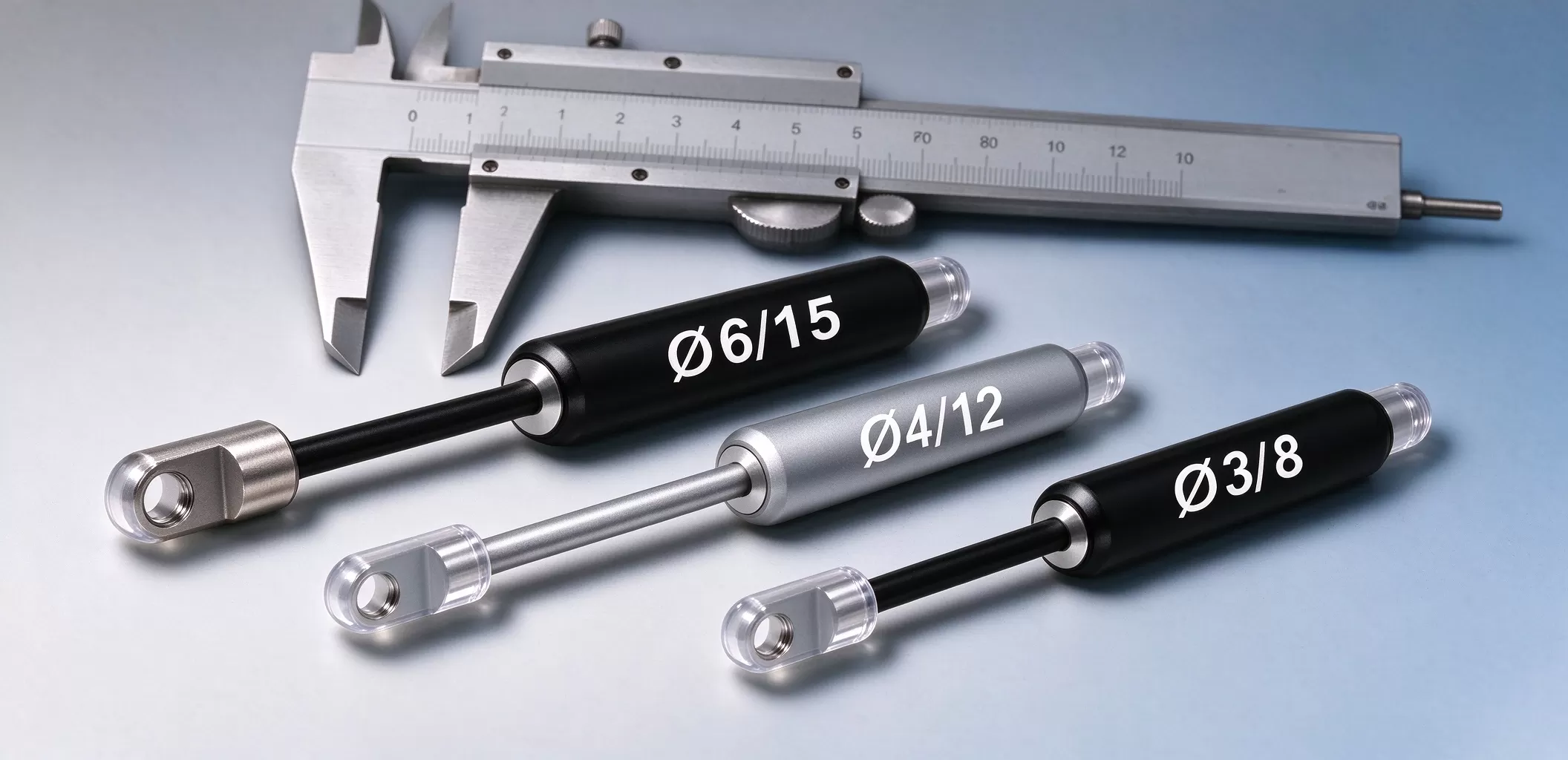
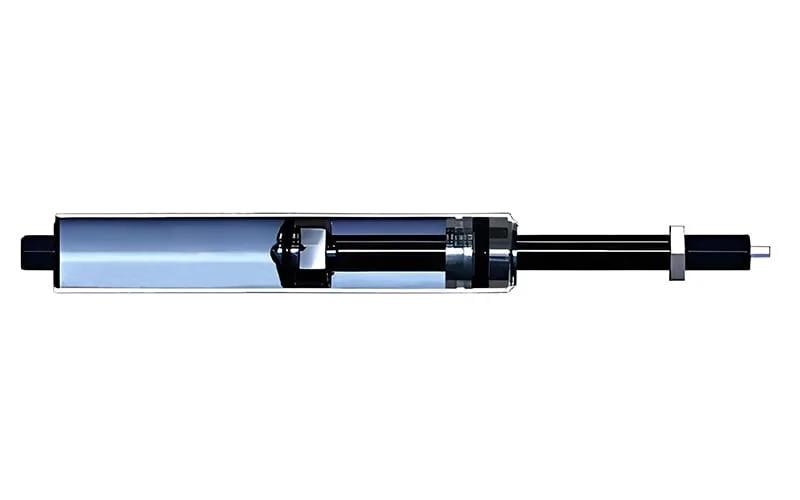
GASTAC locking gas springs are available in the following series. Elastic Locking and Rigid Locking use a 10 mm rod and 22/28 mm tube, with stroke 20–280 mm and force 200–1,000 N (45–225 lbf). Gas Strut with Lock and Locking Gas Spring with Release Button use 8/10/14 mm rods and 18/22/28 mm tubes, with stroke 110–330 mm and force 100–1,500 N (22–337 lbf). The tables below list the standard combinations for each type. Custom force, stroke, end fittings and locking direction are available on request — contact us with your drawing or application details and we will confirm the right configuration.
Elastic Locking Gas Spring Size Chart
Elastic Locking Gas Spring Size Chart
Rigid locking gas struts are available in two configurations: extension-lock and compression-lock. Both configurations use the same rod and tube dimensions, stroke range and force range. The only difference is the direction in which the piston rod is positively blocked. The locking direction must be specified at the time of order.
Lockable Gas Struts with Locking Device
The Gas Strut with Lock and the Locking Gas Spring with Release Button serve the same function and share identical specifications. The only difference lies in the locking structure: one uses a lock, the other uses a release button. The standard combinations for both versions are the same and are listed below.
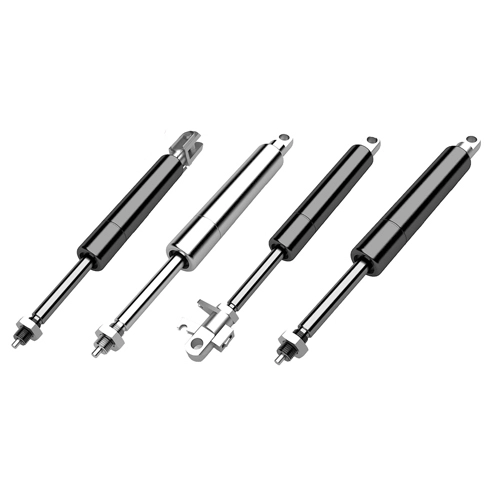
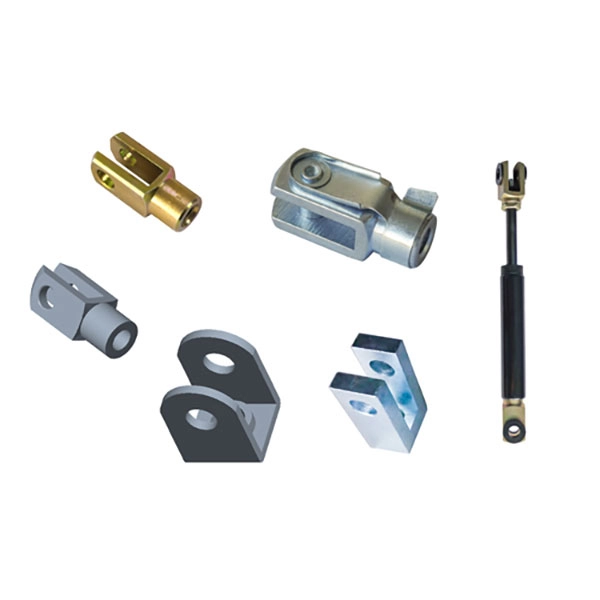
Available Locking Gas Spring Designs




Locking Gas Shock Cross Reference
Use our Locking Gas Shock Cross Reference tool to find the exact GASTAC equivalent for your application. GASTAC provides cross-reference products with specifications identical to the original brand. Under the same fatigue testing conditions, our gas springs deliver the same quality and reliable performance you expect.
You can search in two ways: by OEM part number (Suspa or Stabilus) for a direct replacement, or by physical dimensions if you don't have the original number.
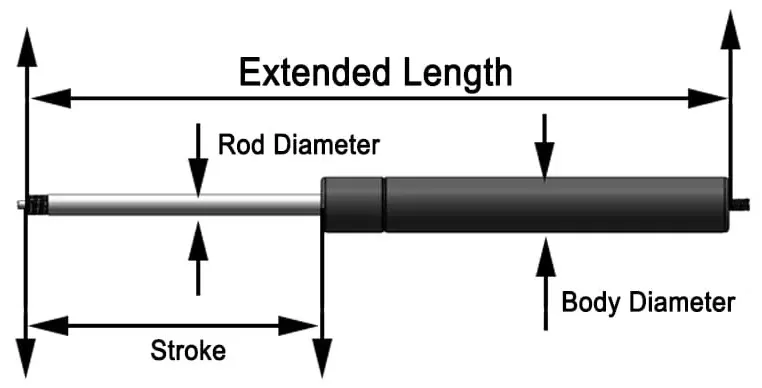
XXX Locking Gas Spring
- Cross ReferenceXXX
- Rod / Body ØXXX
- StrokeXXX
- Extended LengthXXX
- Compressed LengthXXX
- Force F1XXX