




- OEM Brand Cross-Reference Gas Struts: Technical Specifications Matrix
- Deep Dive: Six Critical Marine Application Categories
- Why 316L Stainless Steel Boat Hatch Shocks Are More Important?
- Engineering Calculation: Determining Force for Custom Hatches
- Advanced Quality Standards Gas Shock for Boat Hatch
- Proper Installation for Maximum Lifecycle
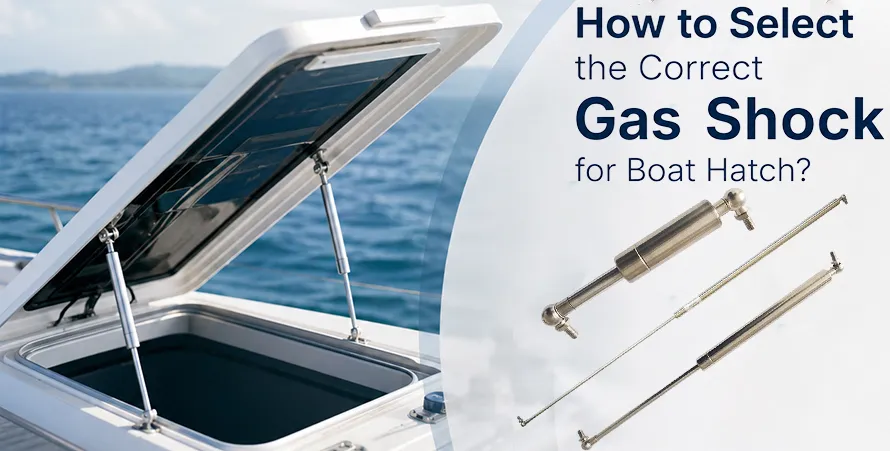
In marine engineering, the mechanical integrity of a vessel’s access points relies heavily on the precision of its support components. Selecting a gas shock for boat hatch applications is not merely a matter of finding a matching length; it is a critical calculation of kinematic force, mounting geometry, and material survivability.
Whether you are retrofitting boat hatch shocks for a fishing fleet or specifying stainless steel gas struts for boat hatches for a luxury yacht, understanding the OEM requirements of leading brands like Boston Whaler, Cobia, and Wellcraft is essential for maintaining original factory performance.
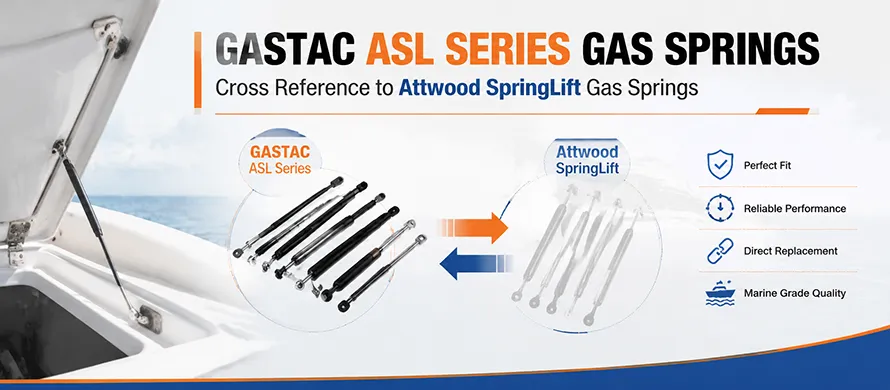
OEM Brand Cross-Reference Gas Struts: Technical Specifications Matrix
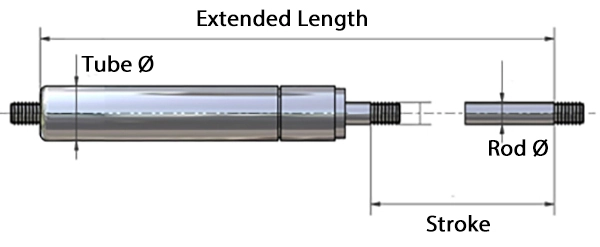
Unlike generic aftermarket solutions, major boat builders specify unique pressure ratings (PSI) and stroke lengths to match their specific hatch weights and hinge geometries. Below is a technical reference for a replacement gas strut for boat hatch across elite manufacturers.

| Boat Brand | Primary Application | Extended Length (Inch) | Stroke (Inch) | Force (Lbs) |
|---|---|---|---|---|
| Boston Whaler | Anchor Locker / Console | 7.5/10/12/15 | 2/3/4/5 | 5/10/20/30/40/60/90 |
| Cobia | Fishing Boat Lids / Livewells | 7.5/10/15 | 2/3/4/5 | 5/10/20/30/40/60/90 |
| Maverick | Poling Skiff Hatches | 7.5/10/15 | 2/3/4/5 | 5/10/20/30/40/60/90 |
| Four Winns | Engine Room / Sun Pad | 7.5/10/15 | 2/3/4/5 | 5/10/20/30/40/60/90 |
| Key West | Deck Storage / Steps | 7.5/10/15 | 2/3/4/5 | 5/10/20/30/40/60/90 |
| Wellcraft | Transom Door / Fish Box | 7.5/10/15 | 2/3/4/5 | 5/10/20/30/40/60/90 |
Engineering Tip: When searching for boat hatch shocks, always prioritize the Newton (N) or Pound (Lbs) rating stamped on the original cylinder to ensure the torque remains within the design limits of the fiberglass hinges.
Deep Dive: Six Critical Marine Application Categories
The performance requirements for a gas strut for boat hatch vary significantly based on its location and frequency of use. A one-size-fits-all approach often leads to premature component failure.
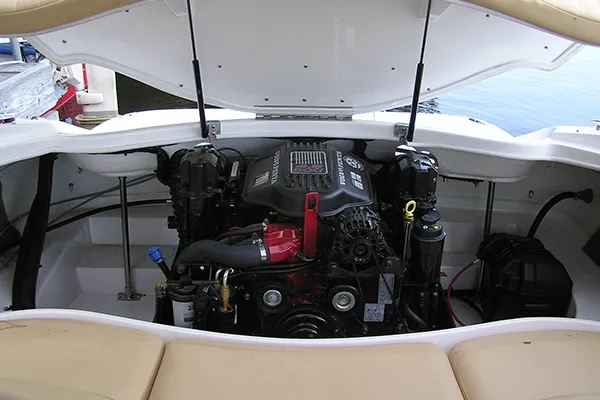
① Boat Engine Covers (Heavy Duty)
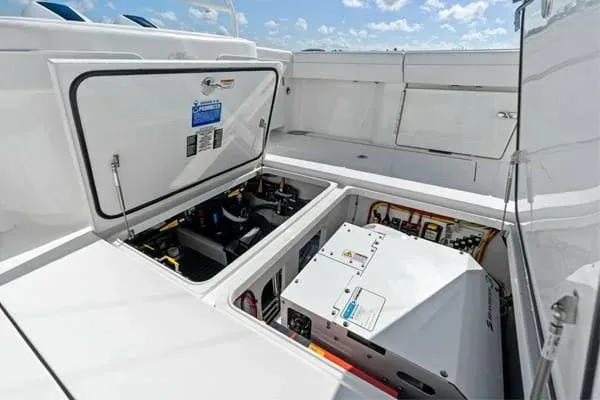
Engine covers represent the highest load-bearing application. Due to constant engine vibration and thermal expansion, these boat hatch shocks require reinforced internal valving and high-temperature resistant seals to prevent nitrogen leakage.
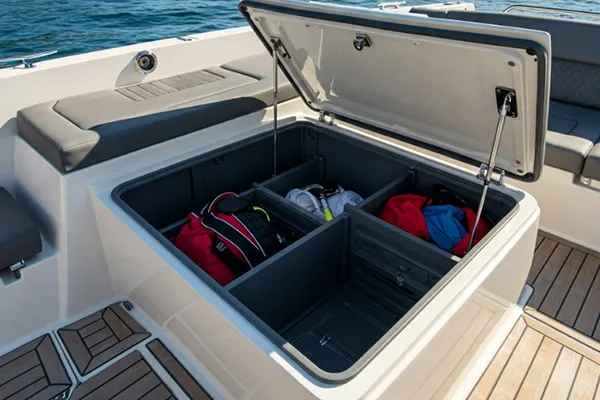
② Yacht Storage Compartments (Precision Damping)
For luxury yacht interiors, the focus is on “Soft-Close” technology. The stainless steel gas struts for boat hatches in these areas often feature an end-of-stroke damping zone (the last 15-20mm) to prevent the hatch from slamming against the finished gelcoat.
③ Marine Access Doors (Kinetic Consistency)
Access doors often operate on a horizontal plane. The engineering challenge here is ensuring a consistent force curve that assists the user without requiring excessive force to close, maintaining ergonomic safety in rough seas.

④ Deck Hatches (High Load & Foot Traffic)
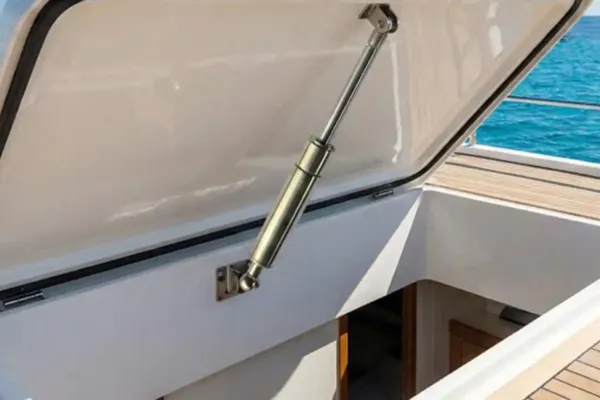
Deck hatches are subject to “Green Water” loads and potential foot traffic. These boat hatch shocks must utilize oversized ball joints (10mm or 13mm) and 316L stainless steel housings to resist both mechanical stress and extreme salt spray.
⑤ Fishing Boat Lids (High Cycle Life)
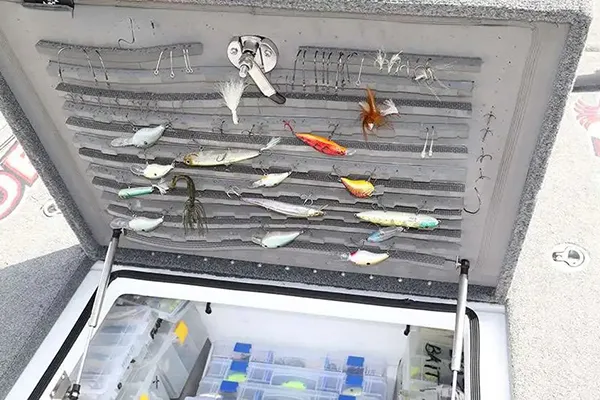
Livewell and fish box lids are opened hundreds of times per excursion. These stainless steel gas struts for boat hatches must be rated for high-cycle durability (50,000+ cycles) and feature debris-resistant rod scrapers to prevent fish scales or salt crystals from damaging the seals.
Why 316L Stainless Steel Boat Hatch Shocks Are More Important?
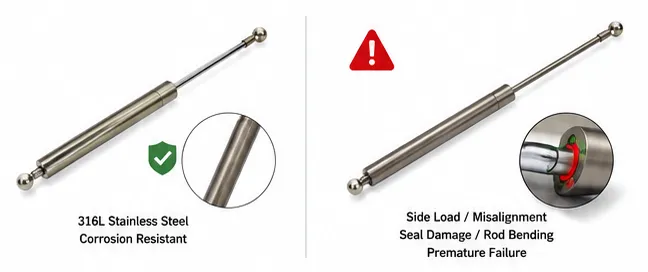
In marine environments, “stainless” is a relative term. Most standard gas strut for boat hatch replacements use 304-grade steel or nitride-coated carbon steel, which fail ASTM B117 salt spray tests within months due to pitting corrosion.
True stainless steel gas struts for boat hatches utilize 316L Grade Alloy, which offers a higher PREN (Pitting Resistance Equivalent Number). This is crucial because microscopic pitting on the piston rod acts like a saw, shredding the internal rubber seals every time the hatch is cycled, leading to a sudden loss of gas pressure.

Engineering Calculation: Determining Force for Custom Hatches
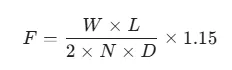
If you are designing a new hatch or replacing an unmarked gas shock for boat hatch, use the following kinematic formula to calculate the required Force ($F$):

- W: Weight of the hatch lid.
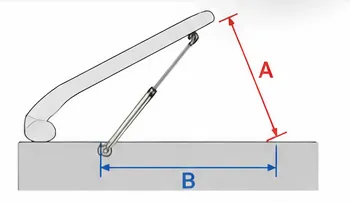
- L: Distance from the hinge to the center of gravity.
- N: Number of struts being installed.
- D: Perpendicular distance from the hinge to the strut mounting point.
- 1.15: A 15% safety factor to account for seal friction and wind resistance.

Advanced Quality Standards Gas Shock for Boat Hatch
A standard gas shock for boat hatch might claim “marine grade,” but professional procurement requires verification of the following:
- ASTM B117 Salt Spray Testing: 316L stainless steel units should exceed 1,000 hours with zero red rust.
- Cycle Life Testing: OEM-grade boat hatch shocks are rated for 50,000 to 100,000 cycles.
- Internal Lubrication: Use of aerospace-grade low-pour-point oils to ensure the seals remain lubricated even in sub-zero winter storage.
Proper Installation for Maximum Lifecycle
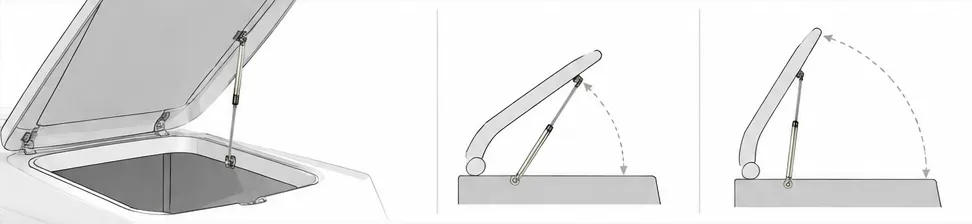
To ensure your boat hatch shocks reach their maximum service life, the “Rod-Down” installation is the industry standard.
By mounting the gas shock with the piston rod pointing downwards when the hatch is closed, the internal lubrication oil rests against the main seal. This keeps the seal supple and prevents the nitrogen gas from escaping—the most common cause of failure in a gas strut for boat hatch.

Technical Summary for Procurement
When sourcing stainless steel gas struts for boat hatches, the following checklist ensures OEM-level quality:
- Material: 316L Stainless Steel Construction.
- Certification: ISO 9001 and Salt Spray Test Reports (1,000+ hours).
- End Fittings: Marine-grade composite or 316SS ball joints.
- Brand Compatibility: Verified specs for Boston Whaler, Cobia, Wellcraft, etc.
Proper Installation for Maximum Lifecycle
To ensure your boat hatch shocks reach their maximum service life, the “Rod-Down” installation is the industry standard.
By mounting the gas shock with the piston rod pointing downwards when the hatch is closed, the internal lubrication oil rests against the main seal. This keeps the seal supple and prevents the nitrogen gas from escaping—the most common cause of failure in a gas strut for boat hatch.

Technical Summary for Procurement
When sourcing stainless steel gas struts for boat hatches, the following checklist ensures OEM-level quality:
- Material: 316L Stainless Steel Construction.
- Certification: ISO 9001 and Salt Spray Test Reports (1,000+ hours).
- End Fittings: Marine-grade composite or 316SS ball joints.
- Brand Compatibility: Verified specs for Boston Whaler, Cobia, Wellcraft, etc.
张航
Stay in the loop