Table of contents
Share Post
Why Is It Called Stainless Gas Shocks Rather Than Something Else

When engineering components for high-stakes environments, nomenclature is never arbitrary. In the industrial manufacturing and marine sectors, a stainless steel gas spring is called exactly that for a reason: it represents a fundamental shift in metallurgy, engineering, and environmental resilience compared to standard carbon steel counterbalancing hardware.

To understand why the industry explicitly categorizes these components as stainless steel gas springs—rather than just gas struts or heavy-duty dampers—we must look at the underlying material science and operational mechanics.

1. The Carbon Steel Baseline vs. The Stainless Steel Standard

Standard gas springs are typically manufactured from high-grade carbon steel, often finished with a QPQ (Quench-Polish-Quench) nitriding or hard chrome plating to provide basic wear and corrosion resistance. While excellent for controlled indoor machinery or automotive hoods, carbon steel has a fatal vulnerability: it relies entirely on its surface coating. Once that coating is scratched or compromised, oxygen and moisture immediately attack the base iron, leading to catastrophic structural failure.

A stainless steel gas spring, however, derives its name from its chemical composition. It is built entirely from alloys that contain a minimum of 10.5% chromium. This chromium reacts naturally with ambient oxygen to form a microscopic, self-healing layer of chromium oxide (Cr2O3) on the surface. This is known as the passive layer.

If an industrial worker scratches a stainless steel rod, the material doesn’t rust; it instantly reforms its protective shield. It is called “stainless” because resistance to degradation is baked into the very DNA of the metal, not just painted on.

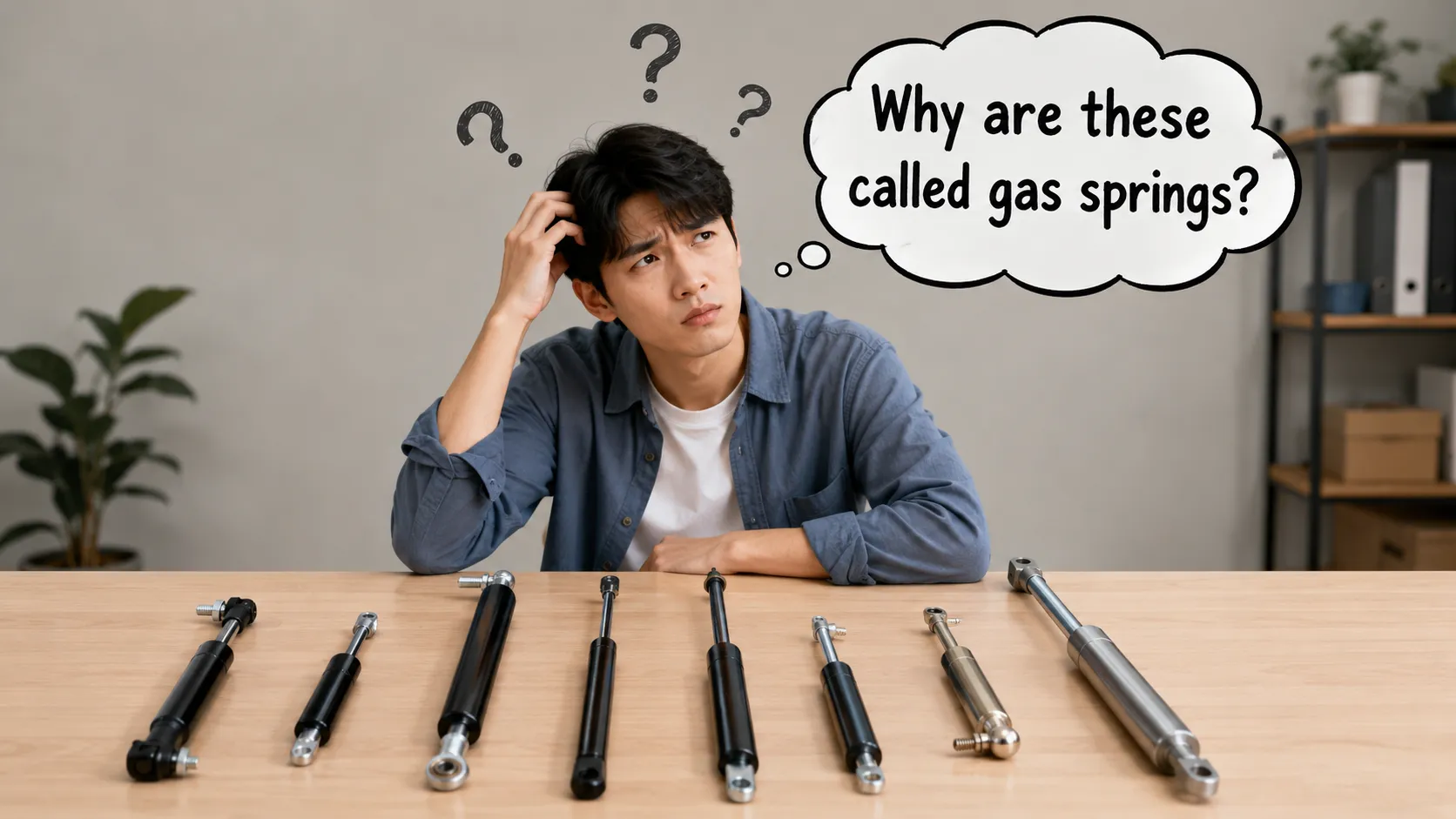
2. Deconstructing the Componentry: 304 vs. 316L Grades

In precision engineering, calling a component simply stainless steel isn’t descriptive enough. High-performance gas springs are categorized by the exact grade of stainless steel utilized in their sub-components:

  • Grade 304 Stainless Steel (The Structural Choice): Known for its excellent tensile strength and basic corrosion resistance, 304 stainless steel is typically used for the cylinder body, end fittings, and internal valving in standard industrial environments. It provides the mechanical rigidity needed to contain internal nitrogen pressures that often exceed 150 bars.
  • Grade 316L Stainless Steel (The Marine & Medical Standard): For extreme environments, premium gas springs upgrade the piston rod and critical seals to Grade 316L. The “L” stands for low carbon (which prevents carbide precipitation during welding), but the true secret weapon is Molybdenum. The addition of molybdenum gives 316L exceptional resistance to chloride pitting, making it the industry standard for marine hatches exposed to saltwater, offshore oil rigs, and medical cleanrooms requiring aggressive chemical sterilization.

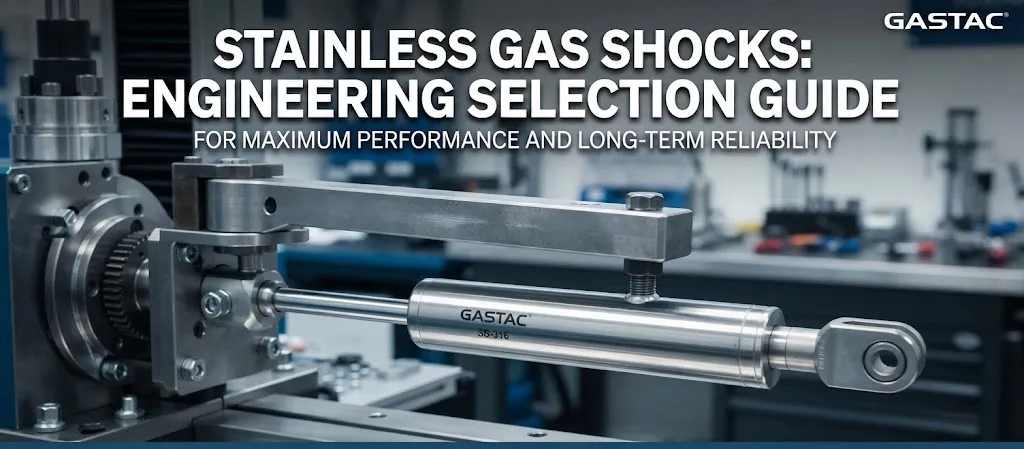
However, choosing between 304 and 316L is just the first step in the blueprint phase. Factors like ambient temperature fluctuations, critical stroke velocities, and mounting orientations also dictate whether your assembly will succeed or suffer from premature gas migration. For a comprehensive matrix on these operational variables, you can reference our engineering guide on the factors to consider when selecting stainless steel gas shocks.

3. Kinematics and Internal Pressure Containment

It is called a gas spring because it relies on the thermodynamics of compressed nitrogen gas (N2) within a sealed chamber rather than a mechanical coil.

When you specify a stainless steel gas spring, you are choosing a material capable of maintaining structural integrity under immense internal stress:

  • Zero Volume Degradation: Unlike carbon steel which can suffer from internal pitting over millions of cycles (leading to micro-leaks of gas pressure), stainless steel cylinders maintain a flawless internal bore.

  • Rod Surface Finish: The efficiency of a gas spring relies on the hydraulic seals keeping the nitrogen contained. Stainless steel piston rods can be micro-polished to an incredibly low surface roughness ($R_a$). This ultra-smooth surface minimizes seal friction, ensures a near-flat force curve ($F_1$ output), and guarantees smooth dynamic damping at the end of the stroke without tearing the internal seals over time.

4. Application Realities: Where the Name Matters

We don’t call them standard springs because they are engineered for spaces where failure is not an option. You will find true stainless steel gas springs specified in:

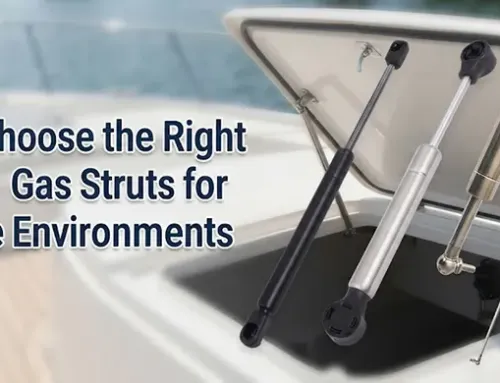
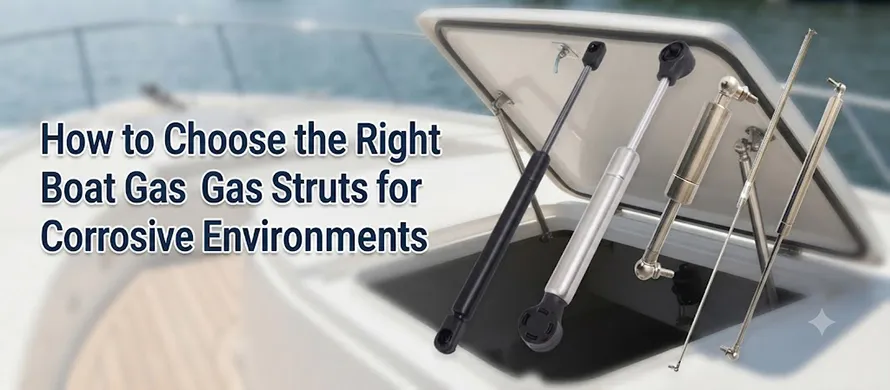
  • Marine & Yachting: Saltwater environments destroy carbon steel in weeks. Stainless steel gas struts ensure boat hatches, engine covers, and radar arches operate smoothly without bleeding rust onto the fiberglass.
  • Food & Pharmaceutical Processing: Components must withstand high-pressure washdowns with caustic acids. Carbon steel coatings would peel and contaminate the batch; stainless steel remains completely inert.
  • Heavy Industrial Automation: Where exposure to corrosive chemicals or fluctuating outdoor temperatures requires a component that won’t experience material fatigue or explosive decompression due to structural rust.

Key Takeaways for Specifying Stainless Gas Shocks

A stainless steel gas spring isn’t named for marketing appeal; it is a technical classification. The name tells a design engineer that selecting premium stainless gas shocks guarantees self-healing corrosion resistance, a micro-polished finish for extended seal life, and the precise kinematic performance of a flat nitrogen force curve—even in the most punishing environments on Earth.

张航

Stay in the loop

Subscribe to our free newsletter.

Leave A Comment