Tension Gas Springs Guide: Working Principle, Applications, and Selection Tips
Published On: 12/17/20253.8 min readCategories: NewsBy 吴, 文禄
Tension Gas Springs Guide: Working Principle, Applications, and Selection Tips
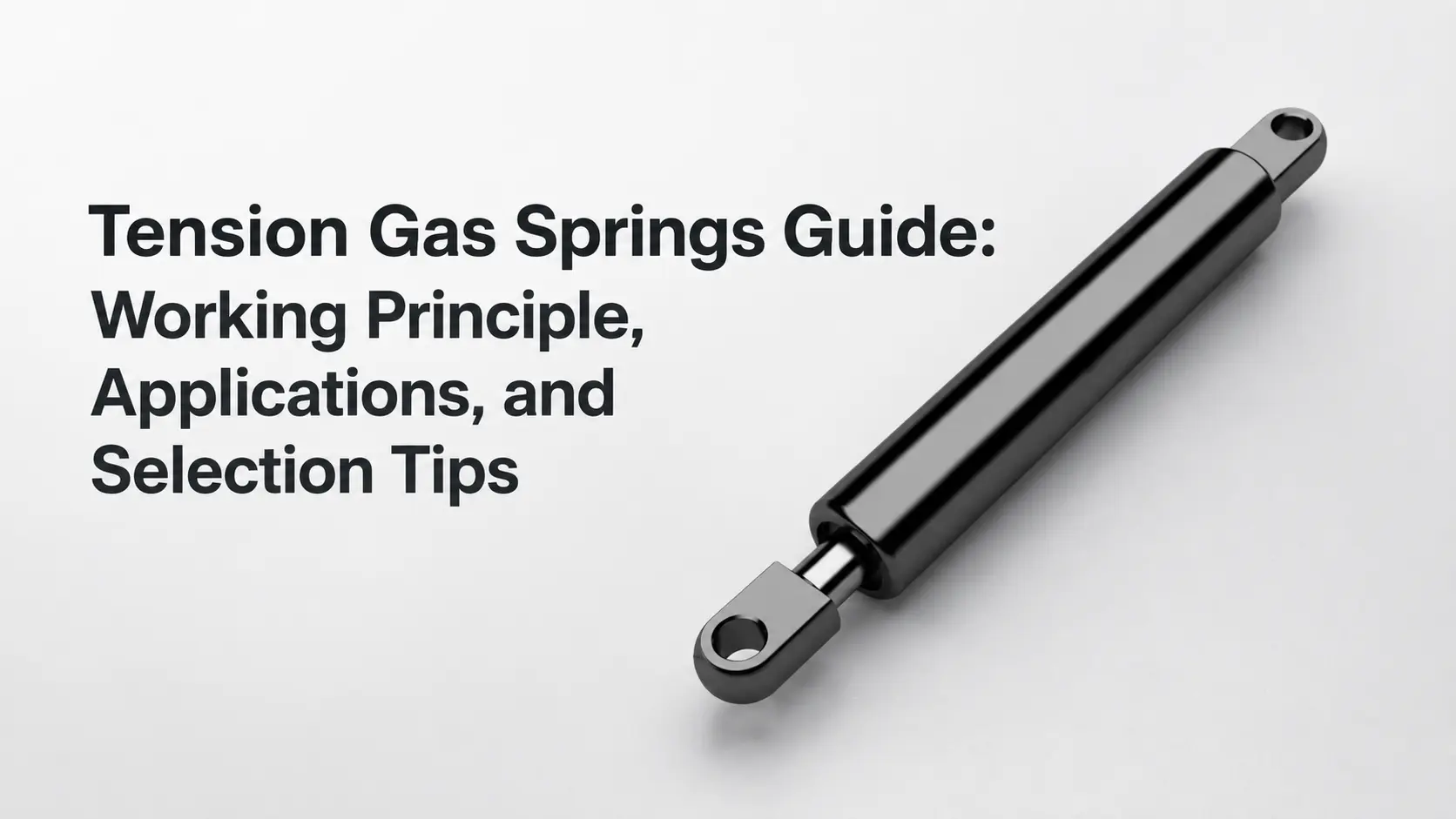
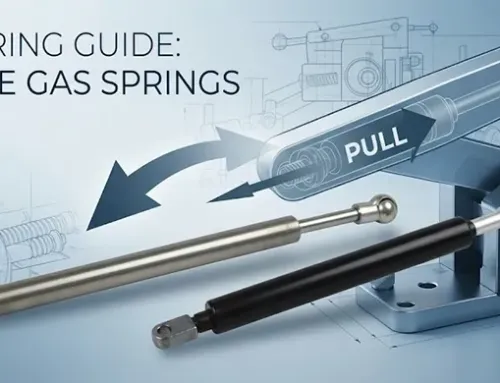
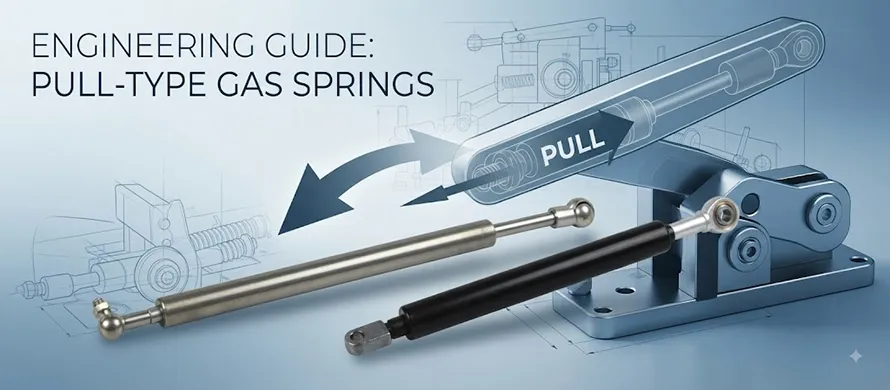
Unlike compression gas springs that push the piston rod outward, tension gas springs retract the rod to generate a controlled pulling force. Also known as traction or pulling gas springs, they are commonly used to close panels, return components, and maintain tension in mechanical systems. This guide explains how pull gas struts work, where they are used, how they compare with compression gas springs, and which specifications to consider when selecting one.
What Are Tension Gas Springs?
Tension gas struts are a type of gas spring designed to generate pulling force rather than pushing force. Unlike standard compression gas springs, which extend outward to lift or support a load, a tension gas strut usually stays retracted at rest and provides inward force when the piston rod is pulled out by an external load. This makes it suitable for applications where a part needs to be pulled back, closed smoothly, returned to position, or kept under controlled tension. For a closer look at their design, operating principle, and uses, learn more about how pull gas springs and struts work.
How Do Tension Gas Springs Work?
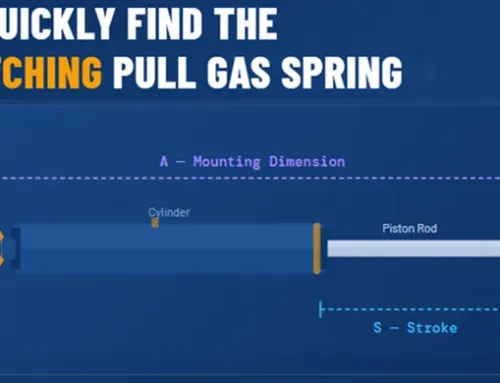
Inside a pull type gas strut, the pressure tube, piston rod, piston, seals, and nitrogen gas work together to create controlled inward movement. At rest, the rod stays inside the cylinder. When the rod is pulled outward, internal gas pressure increases and creates resistance. Once the external force is reduced, the stored pressure pulls the rod smoothly back into the cylinder. For a more detailed explanation of the internal mechanism and force cycle, learn more about how tension gas springs work.
1
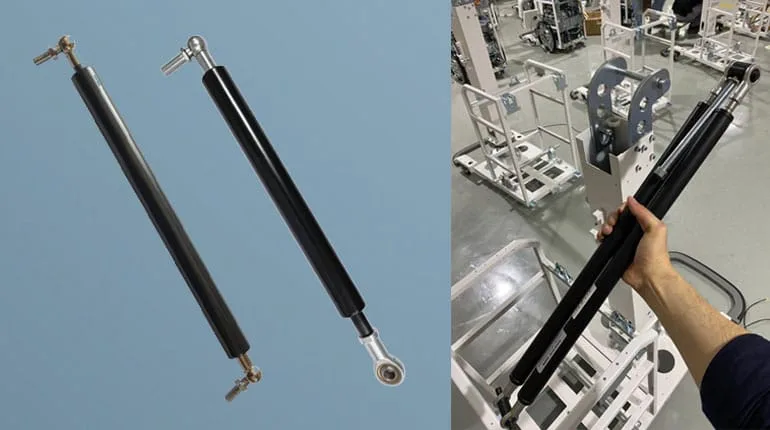
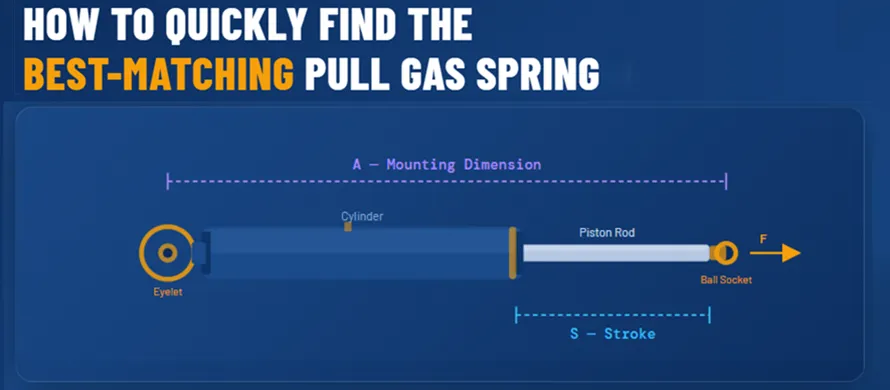
Internal structure: A typical tension gas strut includes a pressure tube, piston rod, piston, seals, nitrogen gas, and end fittings.
2
Rod movement: The rod is pulled outward by the connected component during operation.
3
Gas pressure: The internal gas pressure helps resist sudden movement and creates the return force.
4
Controlled return: When the external force decreases, the rod is pulled back inward smoothly.
What Is the Difference Between Tension and Compression Gas Springs?
The main difference between tension and compression gas springs is the direction of force. A compression gas spring extends the piston rod to lift, open, or support a load, while a tension gas strut retracts the rod to pull, close, return, or maintain tension. Pull type gas struts are therefore better suited to applications that require controlled inward pulling force.
Comparison Item
Tension Gas Springs
Compression Gas Springs
Force Direction
Pulling force / inward force
Pushing force / outward force
Rod Position at Rest
The piston rod normally stays retracted inside the cylinder.
The piston rod normally stays extended outside the cylinder.
Reaction to External Force
The rod is pulled outward, then returns inward when the external force is reduced.
The rod is pushed inward, then extends outward when the external force is reduced.
Main Function
Closing, returning, pulling, or tensioning.
Lifting, opening, supporting, or holding.
What Are Tension Gas Springs Used For?
1
Bottom-hinged doors and access panels that need controlled pulling force during opening or closing.
2
Covers and lids that must be pulled open, pulled shut, or returned smoothly.
3
Mechanical assemblies that require stable tension, controlled return movement, or force compensation.
4
Belt drive systems where the spring works as a tensioner to help maintain proper belt tension.
5
Custom industrial mechanisms that need a pulling force instead of an outward pushing force.
Key Specifications and Selection Tips
When selecting a tension gas spring, confirm the pulling force, stroke, length, material, end fittings, and working environment. These factors affect installation fit, pulling performance, and motion control. If you are unsure which model is suitable, share your application details with us, and our team can help recommend the right solution.
Specification
Why It Matters
Pulling Force
Ensures proper closing, return, or tensioning force.
Stroke
Defines the movement distance of the rod.
Length
Helps confirm installation space.
Rod and Tube Size
Affects strength, stability, and durability.
Material
Depends on corrosion resistance and working conditions.
End Fittings
Affect mounting and connection compatibility.
Working Environment
Temperature, humidity, vibration, and corrosion affect selection.
Which Manufacturers Offer Tension Gas Springs?
1
ACE Controls: Pull-type gas springs with adjustable valve technology, force ranges up to 5,000 N, and stainless steel options.
2
Bansbach easylift: Offers undamped, damped, and lockable gas traction springs with customizable force and stroke.
3
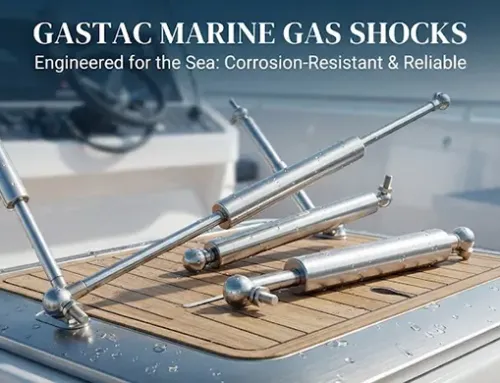
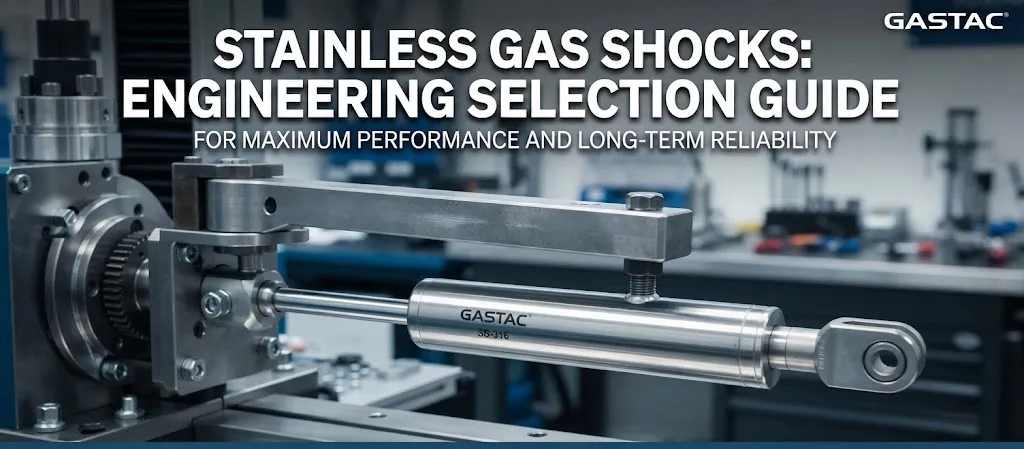
HAHN Gasfedern: Provides standard, damped, and lockable tension gas struts in steel, AISI 304, and AISI 316 stainless steel.
4
Gastac: Offers standard and custom pull gas struts with selectable force, stroke, dimensions, steel or stainless steel materials, and end fittings.
5
Industrial Gas Springs: Supplies custom tension gas struts in different force, stroke, rod, tube, and material configurations.
What Makes Gastac Stand Out?
As a professional gas spring manufacturer, GASTAC can provide different custom options for tension gas springs according to your application requirements. Available options may include the following. Contact us to discuss your custom pull gas strut needs.Steel or stainless steel material options
1
Custom solutions: Pulling force, stroke, dimensions, materials, and end fittings can be customized.
2
Quality assurance: Products undergo strict inspection and are backed by a two-year after-sales warranty.
3
Fast delivery: Efficient production and logistics support reliable delivery for standard and custom orders.
4
Global experience: With more than 20 years of export experience, GASTAC serves customers across Europe, the Americas, Southeast Asia, South Korea, Australia, Russia, and South Africa.
5
Certified manufacturing: GASTAC holds ISO 9001:2015 and IATF 16949 certifications.
Frequently Asked Questions About Tension Gas Springs
What information is needed to select the right model?
Provide the required pulling force, stroke, extended and retracted lengths, mounting points, end fittings, and working environment. For replacements, also provide the original part number or product photos.
Can the pulling force be adjusted?
Only models equipped with a release valve can be adjusted. The adjustment normally reduces the force and should be performed gradually according to the manufacturer’s instructions.
Can a pull type gas strut
be installed in any direction?
It depends on the model and damping design. Follow the installation instructions, keep the mounting points aligned, and avoid side loads on the piston rod.
Do tension gas springs require maintenance?
Most models are sealed and maintenance-free. Keep the piston rod clean, do not grease or oil it, and inspect the unit regularly for leakage or damage.
How long does a pull gas strut last?
Service life depends on the load, operating frequency, temperature, alignment, and environment. Correct sizing and installation help extend its life. GASTAC also provides a two-year after-sales warranty.