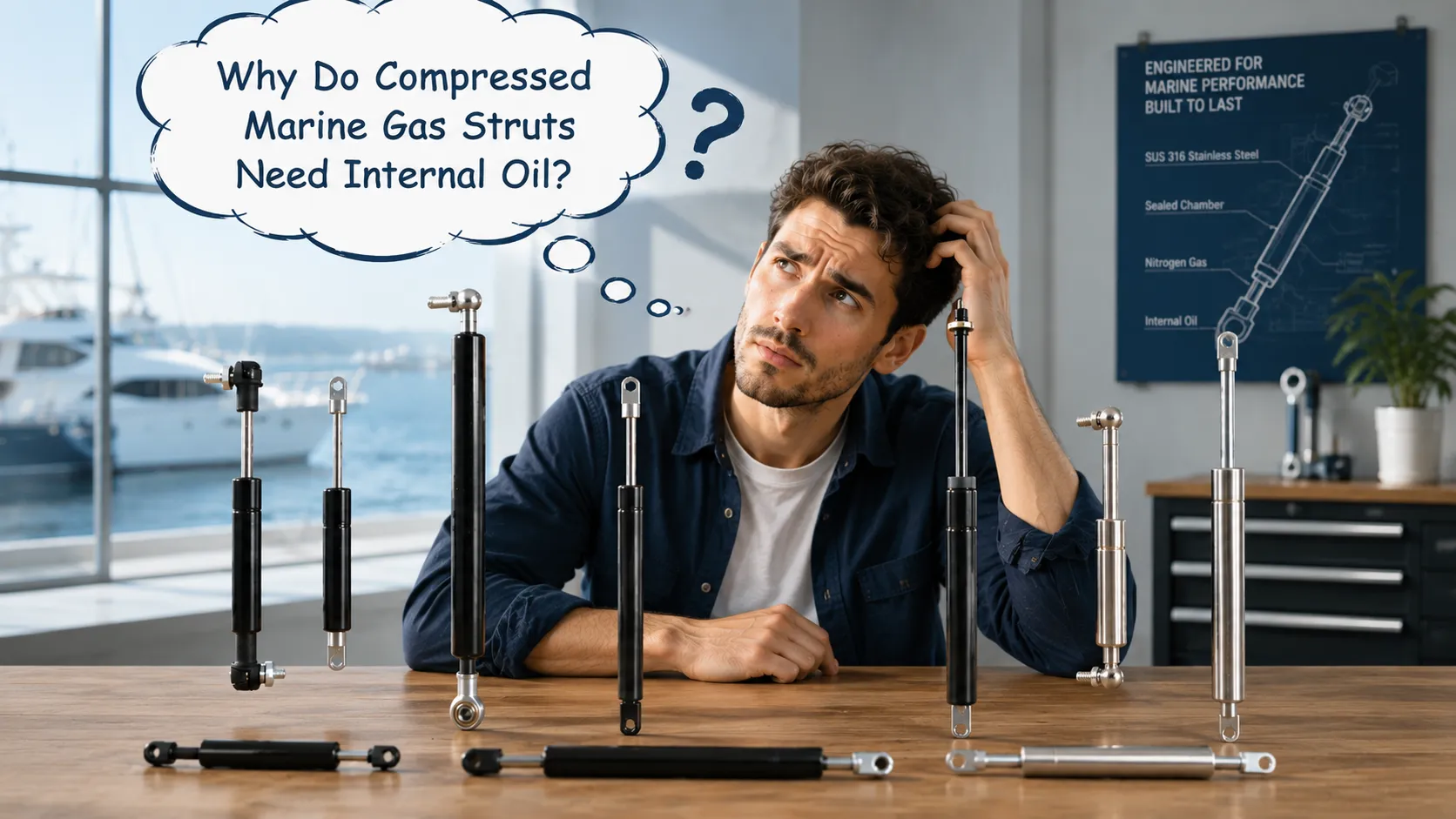





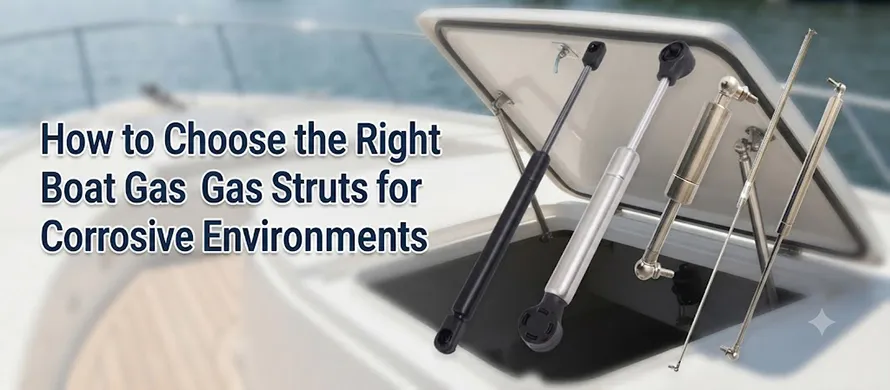



To the casual observer, marine gas struts are simply a pressurized cylinder filled with nitrogen gas that provides lifting force for heavy boat hatches, engine covers, and storage compartments. If the compressed gas is doing all the heavy lifting, the inclusion of internal hydraulic oil might seem redundant, or even counterintuitive.
However, from an engineering standpoint, a marine gas strut cannot function without fluid. While nitrogen gas provides the energy storage and lifting force, the internal oil performs two critical, non-negotiable functions: mechanical lubrication and velocity control.
Here is a detailed breakdown of why a gas-driven marine component relies heavily on internal oil to survive and perform in harsh environments.
1. Dynamic Seal Lubrication: Preventing Catastrophic Gas Loss
The primary engineering challenge of any gas strut is containment. The internal chamber is typically pressurized with nitrogen gas up to 150 bar (2,175 psi) or higher. To keep this extreme pressure from escaping, high-performance elastomer seals—such as double-lip Viton or Nitrile rubber—are packed tightly around the moving piston rod.
If these seals rub against a dry, metallic piston rod during cycling, two things happen immediately:
- Friction and Heat: High-speed friction creates localized thermal spikes, causing the rubber seal to degrade, stiffen, and crack.
- Micro-gaps: Without a fluid barrier, microscopic surface imperfections on the polished rod allow pressurized gas molecules to slowly bleed out.
By sealing a precise volume of synthetic hydraulic oil inside the cylinder, the internal components remain permanently coated. Every time the rod compresses and extends, it carries a micro-film of oil across the main seal. This oil minimizes mechanical friction, dissipates heat, and creates a microscopic fluid barrier that effectively locks the high-pressure nitrogen gas inside for years of operation.
2. Hydraulic End-Damping: Preventing Kinetic Damage
The Risk: Uncontrolled Kinetic Force
If a marine gas strut contained only compressed nitrogen, it would behave like an uncontrolled cannon. When released, the high-pressure gas would violently accelerate the piston rod outward at maximum velocity.
When the piston head reached the end of its stroke, it would smash into the cylinder guide with immense kinetic force. This structural jarring can lead to catastrophic failures:
- Destroying the internal sealing systems.
- Bending or warping the polished piston rod.
- Ripping the mounting brackets clean off a heavy boat hatch or deck locker.
The Solution: Using Oil as a Hydraulic Brake
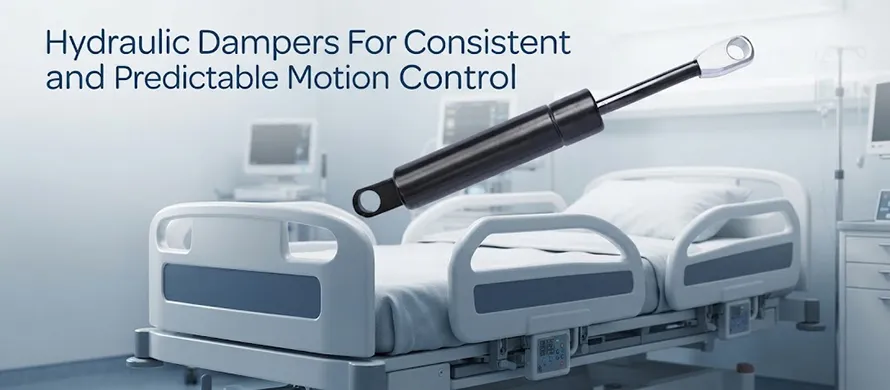
To control this dangerous velocity, engineers utilize the internal oil for hydraulic end-damping.
Because gas is highly compressible but oil is completely incompressible, the fluid acts as a predictable, mechanical brake. Due to gravity, the oil naturally pools at the lowest point inside the cylinder chamber.
The Two-Phase Extension Stroke
The damping process happens in two distinct operational phases:
Phase 1: Fast Extension (Through Gas): During the initial phase of the extension stroke, the piston head moves through the nitrogen gas with very low resistance. This allows for fast, smooth, and effortless lifting travel.
Phase 2: Smooth Deceleration (Through Oil): During the final 10% to 15% of the stroke, the internal piston head plunges directly into the oil pool. The oil is forced to pass through tiny, precision-engineered metering channels within the piston head.
Because fluid cannot pass through these restrictive orifices as fast as gas, it creates immediate hydraulic resistance. This smoothly decelerates the rod right before full extension, ensuring a controlled, elegant stop.
Summary of Internal Roles
To keep the system operating smoothly, the internal chemistry is split into two distinct mechanical duties:
- Compressed Nitrogen Gas: Acts as the energy medium, generating the constant pressure differential required to push the rod outward.
- Synthetic Hydraulic Oil: Acts as the protective fluid medium, lubricating critical elastomer seals and providing the kinetic resistance needed for safe, hydraulic end-damping.
The Engineering Verdict
A marine gas strut is fundamentally a hybrid pneumatic-hydraulic system. The compressed nitrogen provides the muscle, but the internal oil provides the control and longevity. Without that precise volume of hydraulic fluid, a gas strut would lose its pressure to seal wear within weeks, or destroy itself through violent, unmitigated kinetic impacts. For saltwater environments where reliability and corrosion resistance are paramount, understanding these internal mechanics is just as crucial as selecting stainless steel gas shocks with the right material grade for your vessel.
张航
Stay in the loop