






Table of contents
Share Post

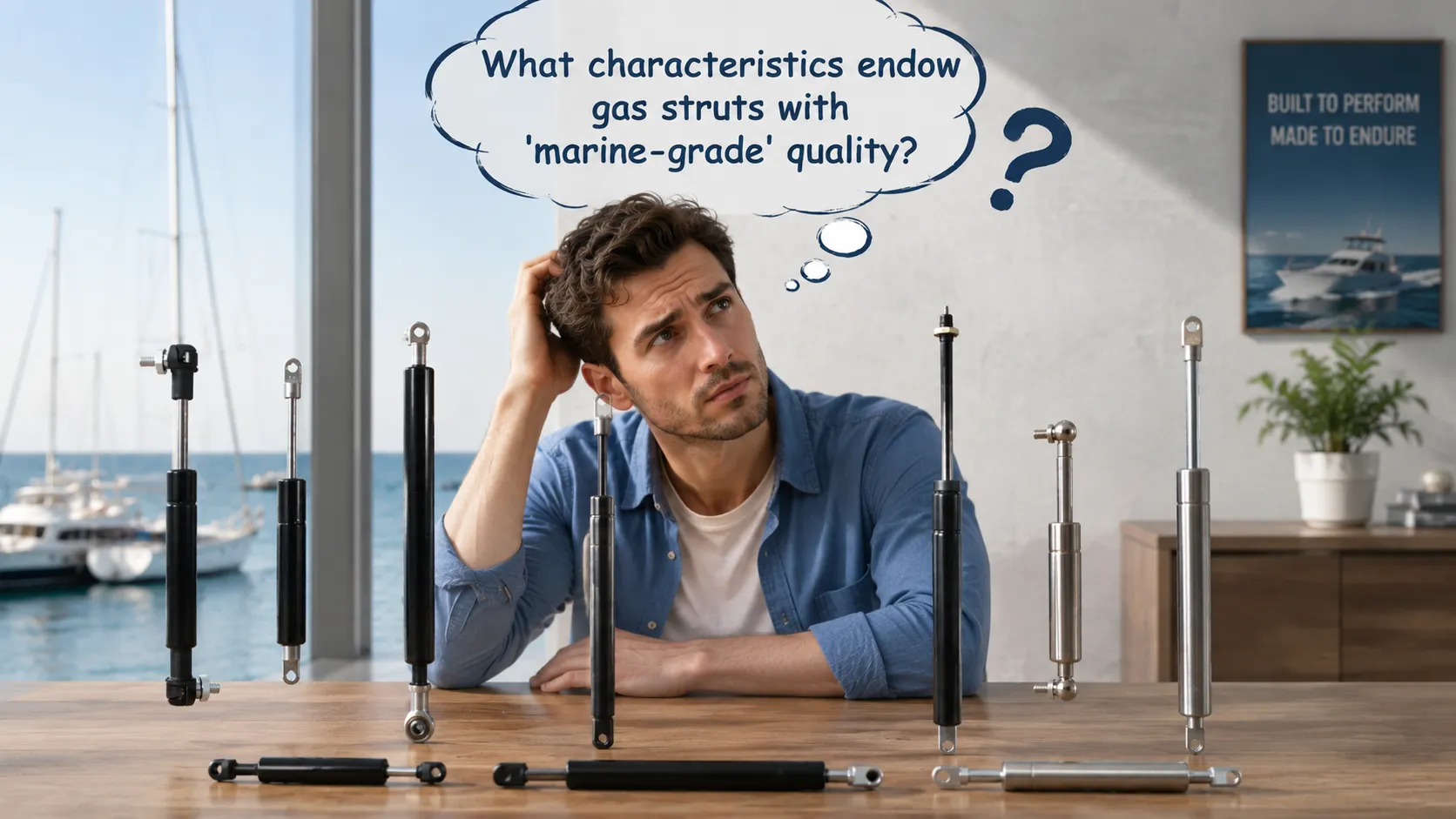
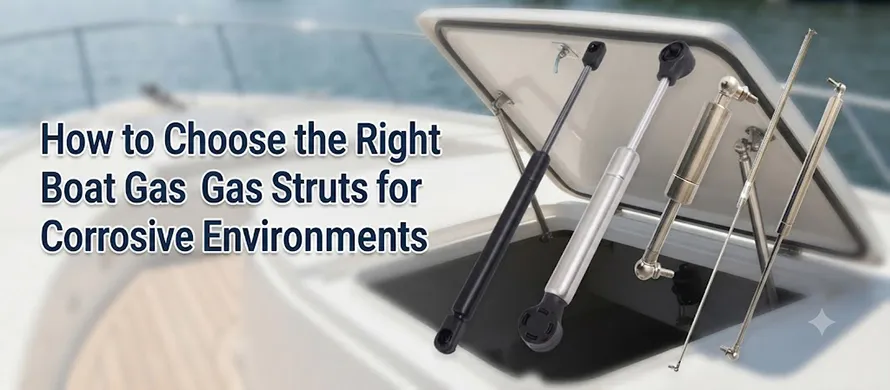
In marine environments, standard industrial components fail rapidly. Saltwater, constant high humidity, and heavy wave impacts create an incredibly corrosive and physically demanding setting for mechanical hardware. When specifying gas shock for boat hatches, engine covers, or coastal equipment, standard carbon steel is out of the question.

To survive, a gas shock must be built to “marine-grade” standards. Here are the specific, concrete engineering characteristics that define a true marine-grade gas shock.

1. Advanced Structural Metallurgy (Grade 316L Stainless Steel)

The most critical factor of a marine-grade gas shock is its base material.

Standard gas springs use painted or coated carbon steel, which quickly rusts when the protective surface layer chips. True marine-grade components are manufactured entirely from high-grade stainless steel alloys—specifically Grade 316L (or Grade 304) for less aggressive environments.

Grade 316L stainless steel contains an addition of molybdenum, which drastically improves resistance to pitting and crevice corrosion caused by chloride ions (saltwater). This alloy ensures the cylinder and piston rod remain structurally sound without relying on surface coatings that can scratch and peel.

2. Specialized Double-Lip Sealing Systems

A gas shock operates under high internal pneumatic pressure. If salt crystals or moisture bypass the seals, they will score the internal piston rod, ruin the internal valving, and cause the nitrogen gas to leak, leading to immediate component failure.

Marine-grade gas shocks utilize specialized, heavy-duty sealing profiles—typically double-lip seals made of Viton (FMC) or high-grade Nitrile (NBR) elastomers.

The outer seal lip acts as a scraper, wiping away salt crust, grime, and water droplets from the rod during every compression cycle. The inner seal lip retains the high-pressure gas and internal lubrication oil, ensuring long-term pressure retention even under continuous exposure to salt spray.

3. High-Purity Nitrogen and Advanced Internal Lubrication

The internal medium of the gas shock must remain stable across variable maritime temperatures. Marine-grade shocks are factory-charged with high-purity nitrogen gas (typically 99.99%) to prevent internal moisture accumulation and eliminate the risk of internal oxidation.

Furthermore, they utilize synthetic hydraulic oils designed to maintain consistent viscosity across a wide temperature range. This internal oil serves a dual purpose: it keeps the double-lip seals permanently lubricated to prevent drying out, and it provides smooth hydraulic end-damping to stop heavy marine hatches from slamming violently when opened.

4. Rigorous Salt Spray Testing Verification

You cannot determine if a component is marine-grade just by looking at it; it must be proven through standardized environmental testing.

True marine-grade hardware undergoes extensive ASTM B117 salt spray testing. While standard industrial components might only be tested for 24 to 48 hours, marine-grade gas shocks are typically rated to withstand 500 to over 1,000 hours of continuous, highly concentrated salt fog exposure without showing signs of red rust or seal degradation.

Technical Specification Checklist

When sourcing or reviewing technical datasheets for marine applications, look for these specific line items:

  • Cylinder and Rod Material: Stainless Steel 316L / 304
  • Seal Profile: Double-lip scraper seal (Viton or NBR)
  • Gas Purity: 99.99% Inert Nitrogen (N2)
  • Testing Standard: 500+ Hours ASTM B117 Salt Spray Compliance

Final Engineering Verdict

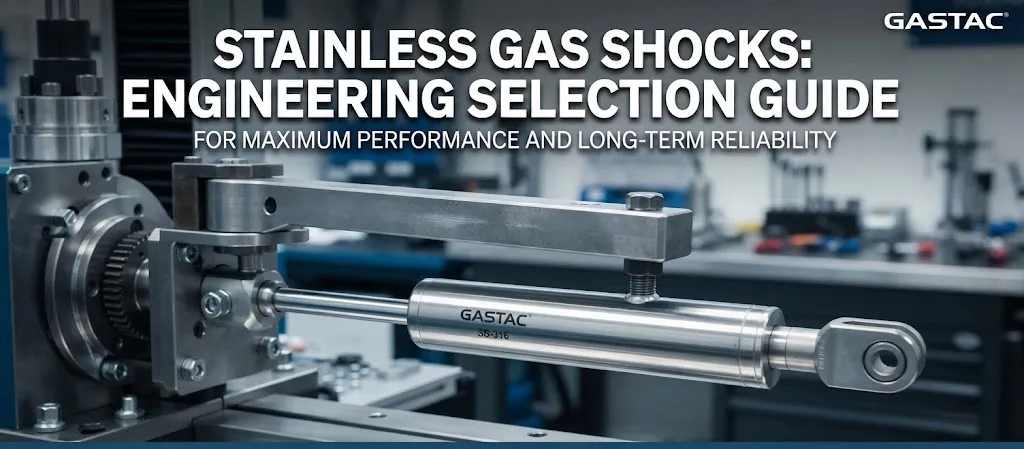
Before finalizing your system design, reviewing the comprehensive factors to consider when selecting stainless steel gas shocks—such as calculating the exact gas force needed for heavy lids and planning the correct mounting orientations—is essential to guarantee long-term performance.

Ultimately, a gas shock earns its “marine-grade” designation through material chemistry and sealing engineering, not marketing labels. By ensuring your component features 316L stainless steel metallurgy, dual-lip scraper seals, and verified salt-spray test ratings, you guarantee a motion-control system that will safely support heavy marine hatches season after season without premature pressure loss.

张航

Stay in the loop

Subscribe to our free newsletter.

Leave A Comment