


















Table of contents
Share Post
Why Premium Adaptive Wheelchairs Rely on Lockable Gas Struts

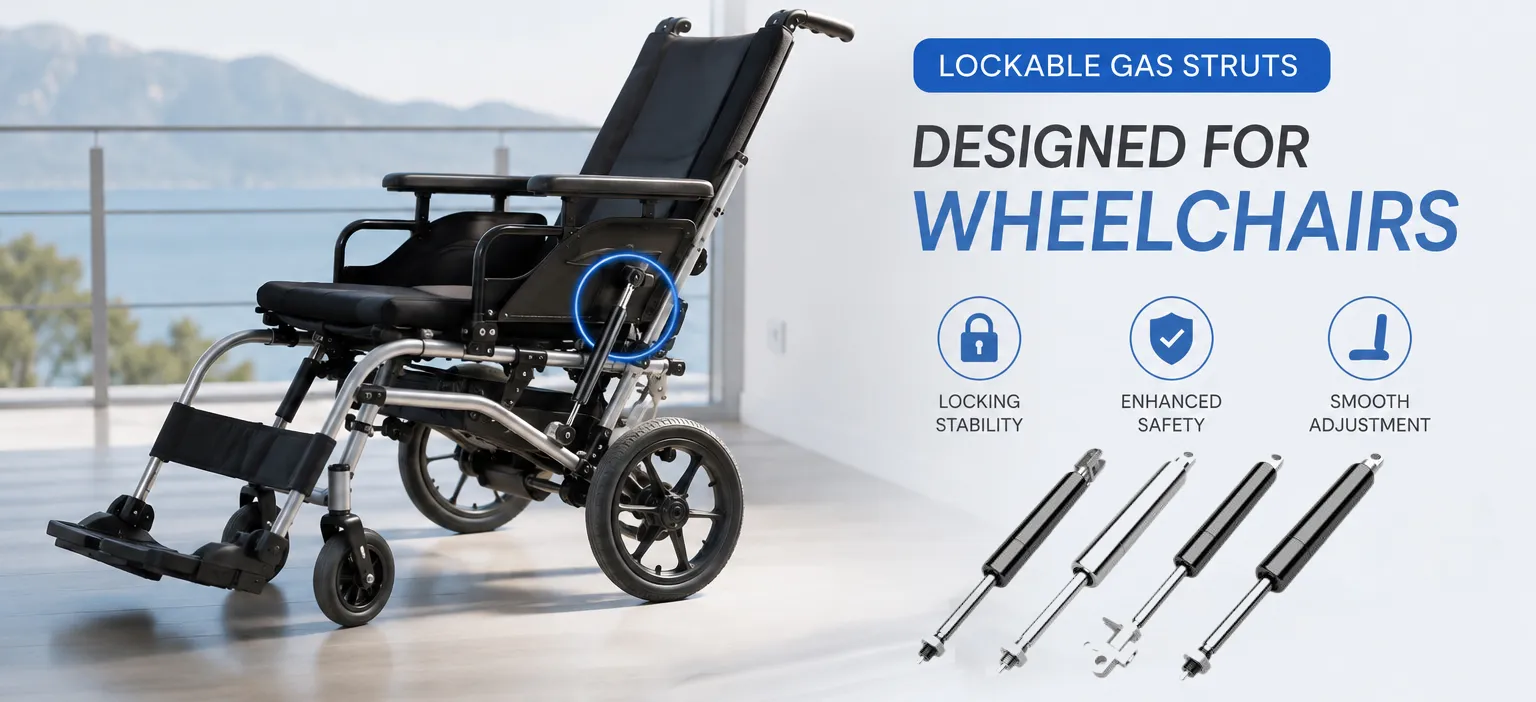
Lockable gas struts are essential for wheelchairs because they provide controlled positioning, secure locking, and smooth adjustment of backrests, leg rests, and seating systems. By helping users and caregivers achieve comfortable support while maintaining stability under load, they improve both mobility and long-term seating comfort.

The Evolution of Modern Wheelchair Design

Wheelchairs are no longer limited to basic transportation. Modern manual and powered wheelchairs are designed to provide greater comfort, ergonomic support, and adaptability for users who spend extended periods seated. To achieve these functions, many wheelchair manufacturers incorporate adjustable components that allow seating positions to be customized according to individual needs.

However, these adjustments must be smooth, reliable, and secure. Users require support systems that can be repositioned with minimal effort while remaining stable during everyday use. This is where lockable gas struts play an important role.

Why Adjustable Positioning Matters in Modern Wheelchairs

For many wheelchair users, maintaining a single seating position for long periods can lead to discomfort, fatigue, and increased pressure on specific areas of the body. Adjustable wheelchair systems help address these challenges by allowing users or caregivers to modify seating angles throughout the day. Common adjustable components include:

  • Backrests
  • Leg rests
  • Headrests
  • Tilt-in-space seating systems
  • Elevating support sections

These adjustments improve overall comfort while helping users maintain healthier sitting postures.

Supporting Individual Comfort Needs

Every wheelchair user has different positioning requirements depending on their physical condition, daily activities, and personal preferences.

Lockable gas struts allow seating components to be adjusted smoothly and locked securely at the desired position, creating a more personalized seating experience.

How Lockable Gas Struts Improve Wheelchair Functionality

Unlike fixed mechanical supports, lockable gas struts provide both movement assistance and position control. Their primary function is to make adjustments easier while ensuring stable support once the desired angle is reached.

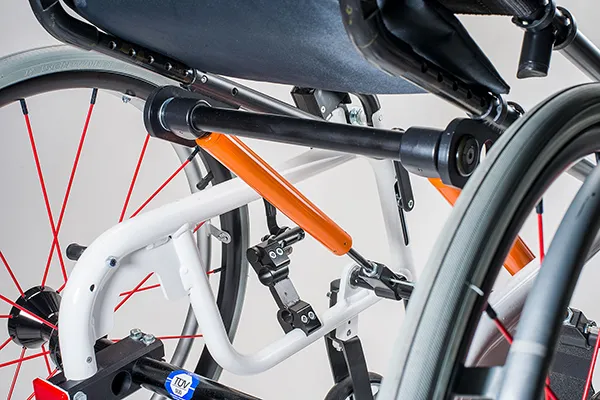
  • Smooth Backrest Adjustment: Many wheelchairs incorporate reclining backrests to improve comfort during extended use. Lockable gas struts help control the movement of the backrest, allowing it to be repositioned smoothly without sudden motion.
  • Adjustable Leg Rest Support: Elevating leg rests can help improve circulation and reduce discomfort for certain users. By using lockable gas struts, caregivers can easily adjust the leg support angle while maintaining secure positioning.
  • Controlled Tilt Functions: In advanced wheelchair designs, tilt mechanisms are used to redistribute pressure and improve user comfort. Lockable gas struts assist with these adjustments by providing controlled movement and reliable locking performance.

These adjustments improve overall comfort while helping users maintain healthier sitting postures.

Lockable Gas Struts Enhance Security and Stability

Comfort alone is not enough. Any adjustable wheelchair component must remain stable after positioning. A poorly designed adjustment system may result in:

  • Unwanted movement
  • Position drift
  • Reduced user confidence
  • Increased caregiver effort

Lockable gas struts help prevent these issues by securely holding seating components in place under normal operating loads. This stability is especially important for users who rely on wheelchairs for extended daily use.

Which Wheelchair Components Typically Use Rigid or Elastic Locking

In most wheelchair applications, rigid locking gas struts are preferred for backrests, elevating leg rests, calf supports, and positioning systems where maximum stability is required after adjustment.

Elastic locking gas struts are more commonly used in specialized seating components, headrest systems, and rehabilitation-focused designs where a small amount of controlled movement can improve comfort and pressure distribution.

As a result, rigid locking remains the dominant choice for the majority of wheelchair positioning functions, while elastic locking is typically reserved for applications that prioritize cushioning and user comfort.

Technical Specifications for Medical Grade Wheelchair Lockable Gas Struts

Because patient transit safety demands absolute physical reliability, wheelchair locking cylinders operate under rigorous performance envelopes. The table below outlines the standard engineering parameters optimized for tilt-in-space, reclining backrest, and elevating leg-rest assemblies:

GASTAC Part NumberRod / Tube Dia. (mm)Stroke (mm)Extended Length (mm)Force Range (F1)Locking TypeApplication Mechanism Type
WH0201203008/2220 mm120 mm100N - 300NElasticMicro Footrest / Legrest Angle
WH0401603508/2240 mm160 mm100N - 350NElasticStandard Elevating Legrest
WH0602054008/2260 mm205 mm150N - 400NElasticCompact Travel Wheelchair Backrest
WH0802454508/2280 mm245 mm150N - 450NElasticStandard Reclining Backrest
WH10028560010/22100 mm285 mm200N - 600NElasticHeavy-Duty Power Chair Backrest
WH12032570010/22120 mm325 mm250N - 700NElasticTilt-in-Space Mechanism (Frame Tilt)
WH15039590010/28150 mm395 mm400N - 900NElasticBariatric (Overweight) Wheelchair Tilt

Design Considerations for Wheelchair Manufacturers

Selecting the right lockable gas strut requires careful evaluation of application requirements. Important factors include:

  • Load Capacity: The gas strut must support the expected operating loads while maintaining smooth adjustment performance.
  • Adjustment Range: Stroke length and mounting geometry should match the required movement range of the seating component.
  • User and Caregiver Effort: Adjustment forces should be optimized to allow easy operation without compromising stability.
  • Long-Term Durability: Wheelchairs experience frequent daily use, making cycle life and reliability critical considerations.

Accelerate Your Medical Mobility R&D with GASTAC

Balancing the shifting center of gravity in a tilt-in-space wheelchair requires custom force calibration to prevent drop-shocks and heavy recline blind spots. Get in touch with the GASTAC engineering team today to map the perfect pressure curve against your wheelchair blueprints and secure precision-calibrated OEM samples for your next production run.

张航

Stay in the loop

Subscribe to our free newsletter.

Leave A Comment