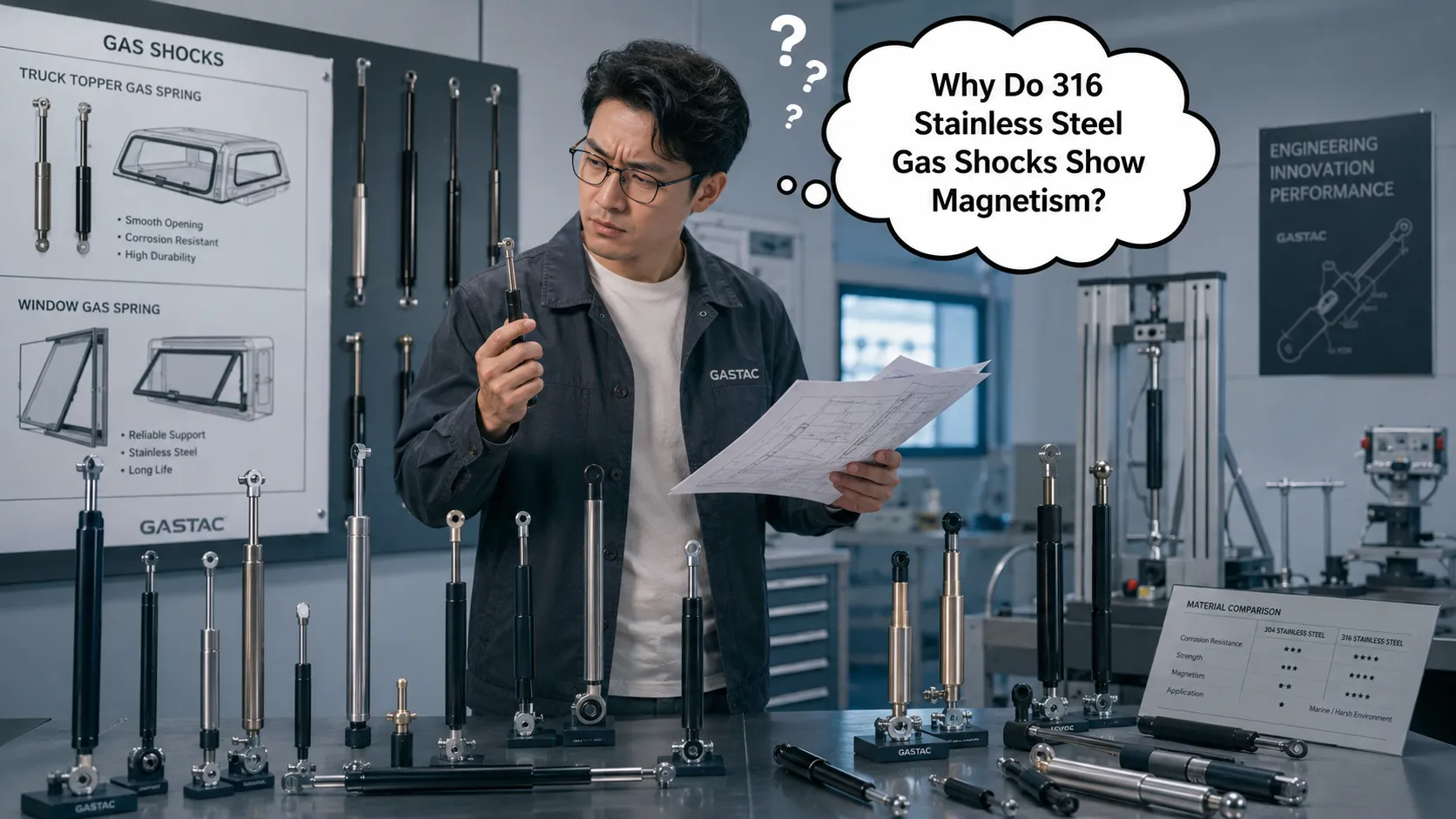




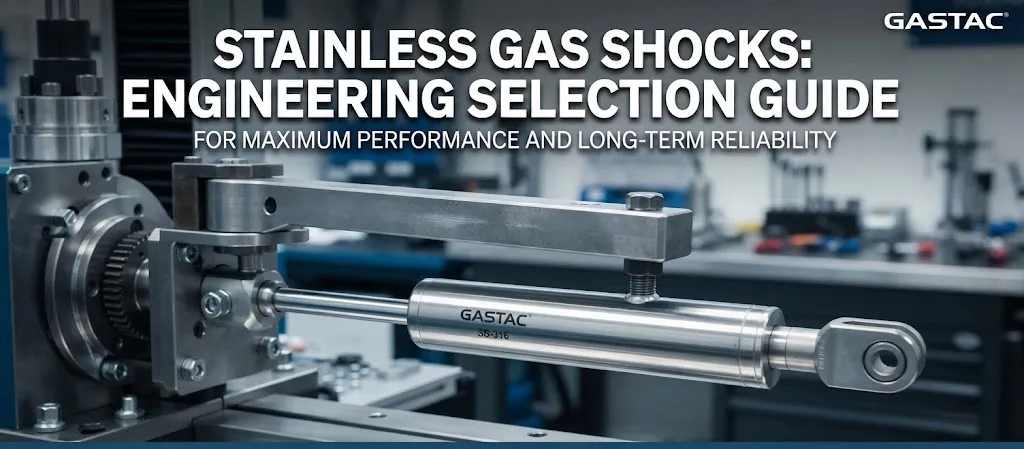



In the manufacturing and procurement industries, there is a widespread belief that high-grade stainless steel is completely non-magnetic. When a quality inspector places a magnet against a newly delivered 316 stainless steel gas shock and feels a distinct pull, it immediately raises red flags.
Is the material counterfeit? Is it actually a lower grade?
The short answer is no. It is entirely normal for genuine, high-quality 316 stainless steel gas springs to exhibit slight magnetism. Here is the direct, technical explanation of why this happens.

Microstructure Shifts in Stainless Steel Gas Shocks During Manufacturing
In its raw, molten state, 316 stainless steel is an austenitic alloy. This crystalline structure is naturally non-magnetic. However, this structure changes when subjected to intense physical stress during production.
The Role of Cold Working
To transform raw steel into a high-performance gas spring, the material must undergo mechanical shaping known as cold working. This includes:
- Cylinder Formation: Deep drawing and stamping the heavy-duty cylinder body.
- Rod Precision: Rolling and polishing the piston rod to a micro-smooth finish.
- Component Joining: Cutting threads and forming structural end fittings.
The Metallurgical Shift
- Phase Transformation: The localized mechanical stress from cold working forces the metal’s microstructure to shift from non-magnetic austenite to magnetic martensite.
- Localized Magnetism: The areas of the gas spring that undergo the most severe deformation—such as the compressed ends, threads, or welds—will always exhibit the strongest magnetic response.
Does Magnetism Affect the Corrosion Resistance of Stainless Steel Gas Shocks?
This is the biggest concern for engineers specifying 316 for marine or chemical applications: Does this induced magnetism mean the shock will rust faster? Fortunately, the answer is no, for two key reasons:
- Chemical Matrix Consistency: The superior corrosion resistance of 316 stems from its chemical composition—specifically the addition of 2% molybdenum and high nickel content. Cold working alters magnetic properties, but it does not change the chemistry.
- Passive Layer Integrity: The mechanical stress does not destroy the protective chromium-oxide passive layer on the metal’s surface. Your 316 shock will still deliver full resistance to saltwater pitting and aggressive chemical washdowns.
Technical Selection of Stainless Steel Gas Shocks
Understanding these metallurgical nuances is critical when auditing your hardware. To streamline your sourcing and quality control processes, keep the following technical resources and engineering variables in mind:
- Troubleshooting & Peer Insights: If you are currently addressing magnetic responses on your production lines or quality control desks, you can join the technical discussion and read more peer insights on this specific Quora thread regarding why 316 stainless steel gas shocks show magnetism.
Critical Engineering Variables: Magnetism is only one of many technical factors to evaluate during procurement. To ensure your components meet all operational, environmental, and structural benchmarks, be sure to review the core factors to consider when selecting stainless steel gas shocks.
Source Certified Stainless Steel Gas Shocks
If you require guaranteed 1:1 OEM matching parts or custom-engineered standard gas springs for harsh environments, please visit the GASTAC online store. We provide fully certified materials, factory-direct pricing, and heavy-duty engineering built to withstand the toughest applications.
张航
Stay in the loop