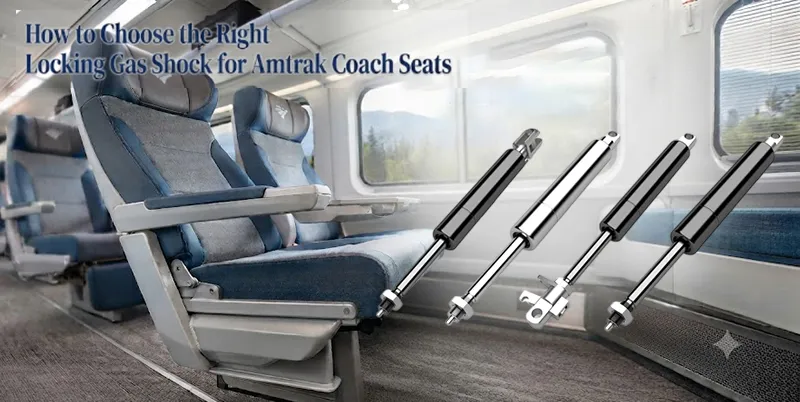








How to Choose the Right Locking Gas Shock for Amtrak Coach Seats

With thousands of passengers traveling daily, seat recline mechanisms are subjected to constant use, heavy loads, and persistent transit vibrations. Ensuring passenger comfort and safety in Amtrak coaches requires reliable locking gas shocks engineered for high-cycle rail environments.

Choosing the right locking gas shock is essential for ensuring smooth reclining, passenger safety, and long-term durability in Amtrak coach seats. This guide explains the key specifications, common challenges, and OEM considerations to help manufacturers and maintenance professionals select the ideal solution.

Why Do Amtrak Coach Seats Use Locking Gas Shocks?

Modern passenger rail seating must deliver a balance between comfort, durability, and safety. Unlike standard office chairs or automotive seating, Amtrak coach seats operate under demanding conditions, including continuous passenger use, varying occupant weights, and frequent reclining adjustments throughout each journey.

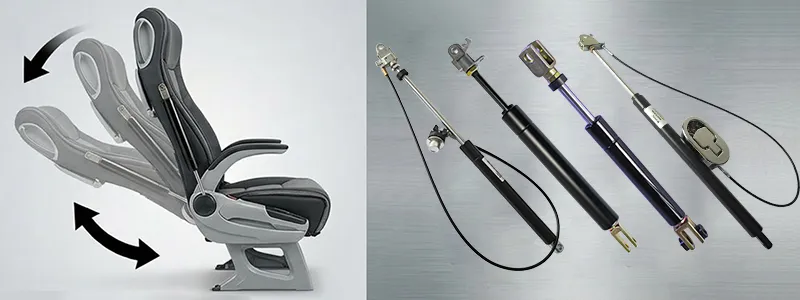
A locking gas shock provides controlled movement while securely holding the seat back at any selected angle. When the passenger activates the release lever or cable, the gas shock unlocks, allowing smooth recline adjustment. Once released, it immediately locks again to maintain the chosen position.

Key Benefits of Locking Gas Shocks in Amtrak Coach Seats

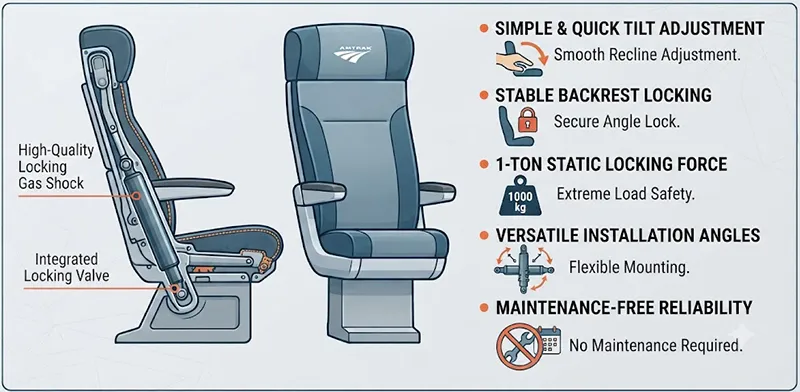
Locking gas shocks benefits extend beyond passenger comfort. For seat manufacturers and maintenance providers, high-quality locking gas shocks improve operational reliability, reduce maintenance requirements, and support longer service life. By selecting the appropriate locking gas shock, OEMs can enhance seat performance while meeting the rigorous durability and safety standards expected in the rail industry. The following are the key advantages of using locking gas shocks in Amtrak coach seats:

  • Simple and quick seat tilt adjustment to accommodate different body positions.
  • The seat backrest angle is locked and stable during adjustment.
  • The locking gas spring can withstand up to 1 ton of static locking force to prevent injury to passengers.
  • It can be installed in different positions and angles to meet the comfort needs of patients.
  • Supports multiple operators to set the seat tilt angle; no manual maintenance required.

Process to Choose the Appropriate Locking Gas Shocks

Selecting the right locking gas spring for Amtrak coach seats involves more than simply matching dimensions. Engineers and seat manufacturers must evaluate several performance and installation factors to ensure the gas spring delivers smooth operation, reliable locking, and long-term durability under demanding railway conditions. Following a systematic selection process helps reduce design risks, improve passenger comfort, and extend the service life of the seating system.

Step 1. Define the Seat Application

The first step is to clearly identify how the locking gas spring will be used within the seating system. Consider questions such as:

  • Is it for a standard coach seat or a premium reclining seat?

  • Will it support the seat back, seat cushion, or another moving component?

  • What recline angle is required?

  • Will passengers adjust the seat frequently?

Understanding the application establishes the foundation for selecting the correct specifications.

Step 2. Calculate the Required Force

The gas spring force must provide sufficient support while allowing passengers to recline the seat comfortably. When determining the required force, engineers should evaluate:

  • Seat backrest weight

  • Passenger weight

  • Installation angle

  • Lever arm distance

  • Required operating force

An incorrect force rating may result in seats that are difficult to adjust or unable to remain securely locked.

Step 3. Determine the Stroke and Overall Length

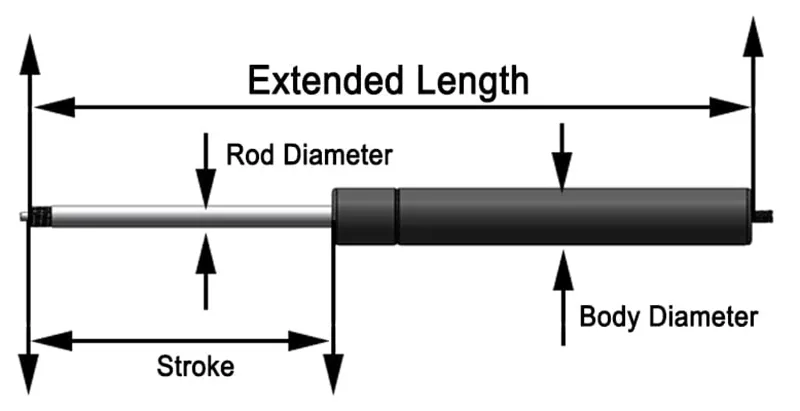
Next, determine the movement required by the seat mechanism. Key dimensions include:

  • Extended length
  • Compressed length
  • Stroke length

These measurements must match the geometry of the seat linkage to ensure smooth motion without interference.

Step 4. Select the Appropriate Locking Type

Different locking gas springs provide different locking characteristics. Common options include:

  • Rigid locking
  • Elastic locking
  • Compression locking
  • Extension locking

For Amtrak coach seats, rigid locking is generally preferred because it provides maximum stability after adjustment.

Step 5. Select Mounting Configuration and Release Mechanism

Proper selection of the mounting configuration and release mechanism is required to ensure correct installation and reliable operation of the locking gas spring in Amtrak coach seats. Key mounting configuration and release mechanism options include:

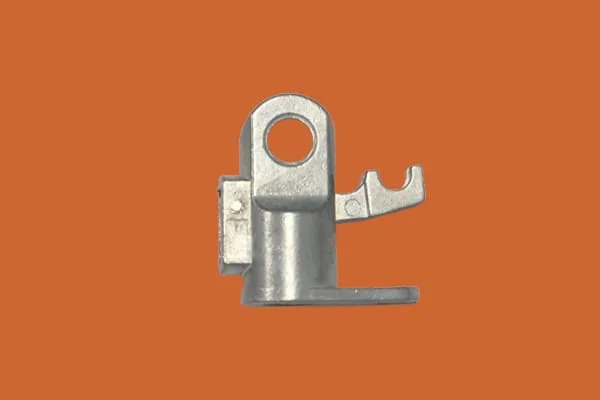
  • Gas spring eyelet / Clevis fork

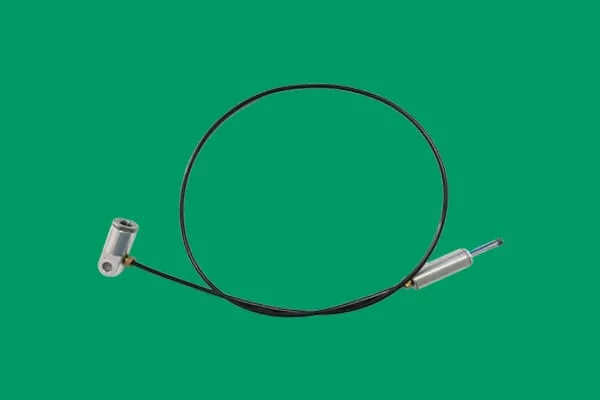
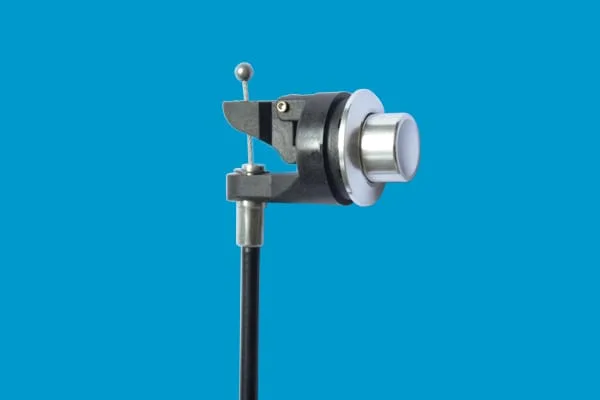
  • 、Push-button system / Bowden cable system

Locking Gas Shocks Size Range

The size of locking gas shocks used in Amtrak coach seats must be selected based on seat structure, load requirements, and available installation space. Proper sizing ensures correct force transmission, smooth movement, and reliable locking performance under continuous railway operation. Common parameter ranges include:

  • Rod diameter: 8mm / 10mm
  • Tube diameter: 22mm / 26mm / 28mm
  • Stroke: 30 – 130mm

  • Extended length: 190 – 390mm

  • Force Range: 100N – 600N
  • End itting for gas springs: eyelet gas springs / clevis joints

GASTAC Locking Gas Shocks for Amtrak Coach Seats Specifications

GASTAC locking gas shocks for Amtrak coach seats are engineered to meet the demanding requirements of railway seating systems, providing stable locking performance, smooth motion control, and long service life under high-cycle operating conditions. Each product can be customized according to OEM seat design requirements.

Below is the standard range of locking gas springs provided by GASTAC for Amtrak coach seats:

NumerRod diameter (mm)Tube diameter (mm)Extended Length (mm)Stroke (mm)Force (N)Rod End Thread Type
GTLC190308/1022/26/2819030100N – 600NM8/M10×1.0
GTLC210408/1022/26/2821040100N – 600NM8/M10×1.0
GTLC230508/1022/26/2823050100N – 600NM8/M10×1.0
GTLC250608/1022/26/2825060100N – 600NM8/M10×1.0
GTLC270708/1022/26/2827070100N – 600NM8/M10×1.0
GTLC290808/1022/26/2829080100N – 600NM8/M10×1.0
GTLC310908/1022/26/2831090100N – 600NM8/M10×1.0
GTLC3301008/1022/26/28330100100N – 600NM8/M10×1.0
GTLC3501108/1022/26/28350110100N – 600NM8/M10×1.0
GTLC3701208/1022/26/28370120100N – 600NM8/M10×1.0
GTLC3901308/1022/26/28390130100N – 600NM8/M10×1.0

How to Measure a Locking Gas Spring?

Now that the standard specifications of locking gas springs for Amtrak coach seats are clear, the next step is understanding how to correctly measure a locking gas spring. Proper measurement is essential to ensure accurate replacement, correct fitting, and reliable performance in real applications.

The following are the key parameters that need to be measured:

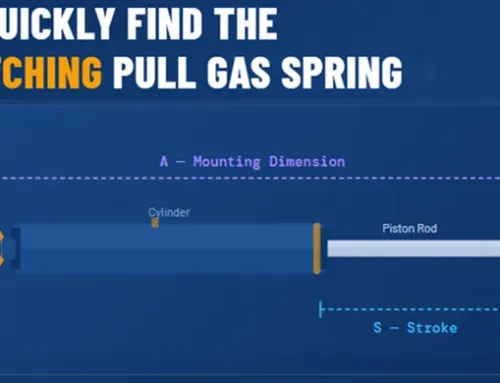
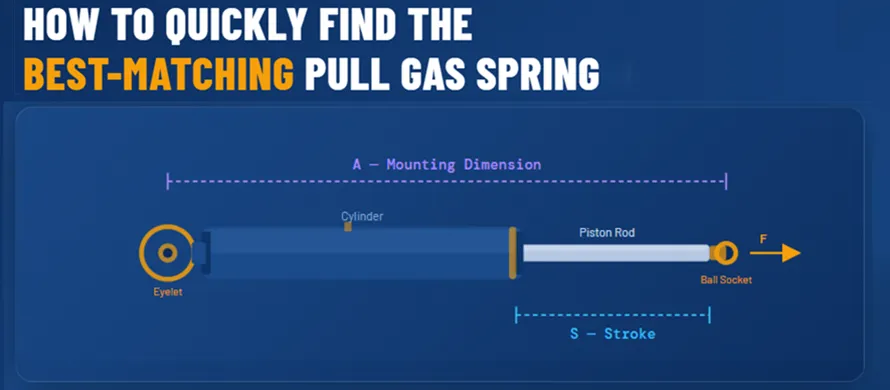
  • Extended Length: Measure from the exact center of one mounting hole to the center of the other when the spring is fully pulled out. If using threaded fittings without eyelets, measure from the end of the threads on the rod to the center of the mounting point.
  • Stroke: This is the difference between the extended and compressed lengths. It represents how much the rod travels in and out.

  • Rod / Body Diameters: Use a digital caliper to measure the width of the thin piston rod and the thickness of the main cylinder barrel.
  • End Fittings: Note the style (e.g., ball socket, gas spring eyelet, or joint clevis) and the thread or hole size.
  • The force (usually measured in Newtons (N) or pounds-force (lbs)) is typically stamped on a label on the cylinder body.If the label is worn off, you can calculate it using the object’s weight, the lever arm length, and the mounting distances, or consult the manufacturer’s force calculator (1lb ≈ 4.482N).

End Fitting Gas Springs for Amtrak Coach Seats

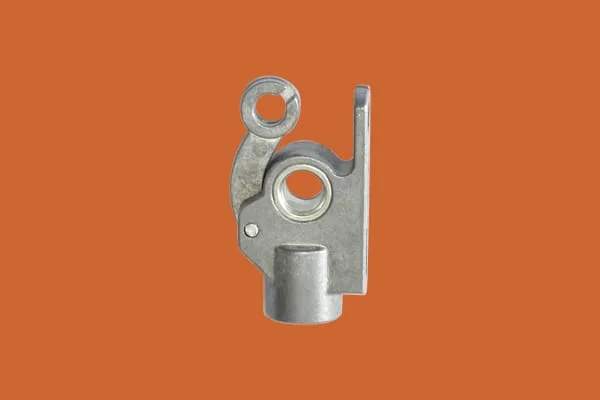
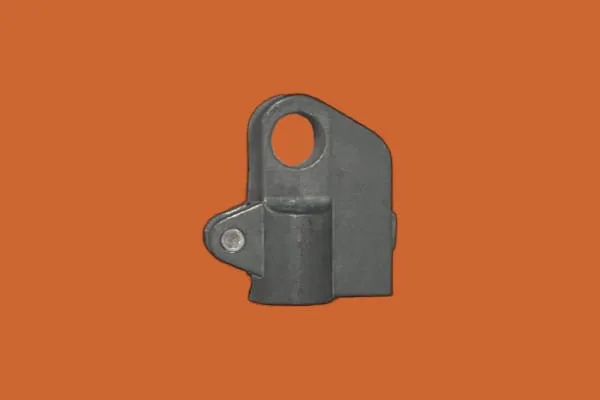
End fittings are a critical interface between the locking gas spring and the seat structure in Amtrak coach seat systems. They determine how the gas spring is mounted, how loads are transmitted, and how smoothly the seat mechanism operates throughout repeated reclining cycles.

Below are the standard end fitting options provided by GASTAC for gas springs used in Amtrak coach seats:

Gas Spring End Fittings

end ftiiting for gas springs XHJ001

XHJ001

end ftiiting for gas springs XHJ002

XHJ002

end ftiiting for gas springs XHJ003

XHJ003

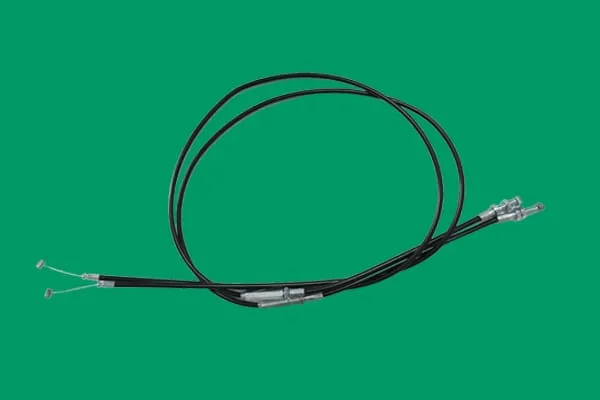
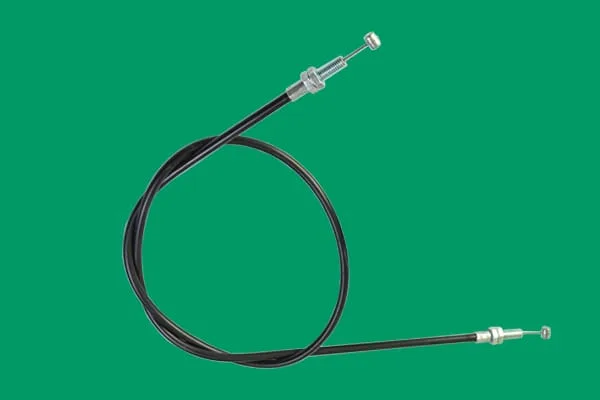
Gas Spring Bowden Cables

gas spring for Bowden cables GTBD001

GTBD001

gas spring for Bowden cables GTBD002

GTBD002

gas spring for Bowden cables GTBD003

GTBD003

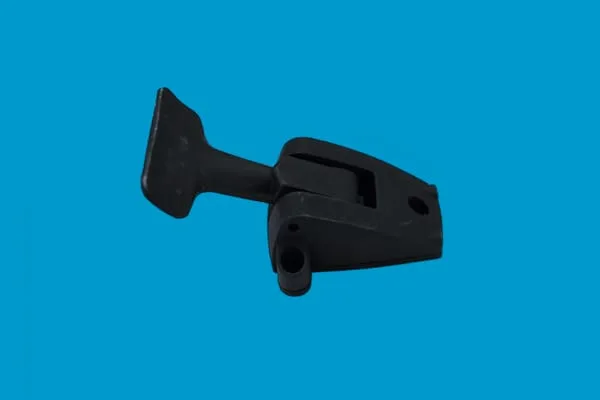
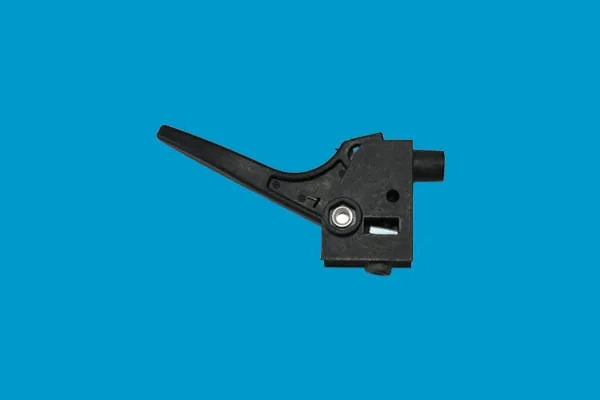
Locking Gas Spring Release Buttons

Locking Gas Spring Release Button BS002

BS002

Locking Gas Spring Release Button BS004

BS004

Locking Gas Spring Release Button AN002

AN002

How to Choose High Quality Locking Gas Springs?

High-quality locking gas shocks for Amtrak coach seats should be selected based on key engineering and durability factors to ensure safe, stable, and long-term effectiveness in long-haul bus applications. Key selection criteria include:

  • Use high-strength carbon steel and precision seamless steel tubing for cylinder construction
  • High-quality piston rod with hard chrome plating for wear and corrosion resistance
  • Stable locking mechanism with zero-position drift under static load
  • Cycle life tested up to 25000 cycles or more under full load conditions
  • Compatibility with Bowden cable release systems and end fitting assemblies
  • Verified performance under medical safety and rehabilitation equipment standards

How to Choose a Locking Gas Spring Manufacturer?

Choosing a reliable gas spring manufacturer is crucial to ensuring the consistency, stability, and long-term reliability of Amtrak coach seat products. A qualified gas spring manufacturer should possess strong engineering capabilities, rigorous quality control, and extensive experience in the transportation sector. Key evaluation factors include:

  • With a proven track record of serving over 500 medical industry clients, we have established long-term partnerships with leading brands.

  • Factory scale with over 1000 m² production facility and 100+ employees, including engineering, production, and quality control teams

  • Compliance with international quality and safety standards (e.g., ISO certification)

  • Production capacity of 5,000 locking gas springs for Amtrak coach seats every two weeks.

  • Strict tolerance control for consistent force output across production batches (Error within 0.2%)

  • Verified cycle life testing and durability performance reports

  • Reliable after-sales service and technical support for long-term cooperation

How to Choose a Locking Gas Spring Manufacturer?

Choosing a reliable gas spring manufacturer is crucial to ensuring the consistency, stability, and long-term reliability of Amtrak coach seat products. A qualified gas spring manufacturer should possess strong engineering capabilities, rigorous quality control, and extensive experience in the transportation sector. Key evaluation factors include:

  • With a proven track record of serving over 500 medical industry clients, we have established long-term partnerships with leading brands.

  • Factory scale with over 1000 m² production facility and 100+ employees, including engineering, production, and quality control teams

  • Compliance with international quality and safety standards (e.g., ISO certification)

  • Production capacity of 5,000 locking gas springs for Amtrak coach seats every two weeks.

  • Strict tolerance control for consistent force output across production batches (Error within 0.2%)

  • Verified cycle life testing and durability performance reports

  • Reliable after-sales service and technical support for long-term cooperation

Your Trusted Partner for Lockable Gas Spring Solutions

In conclusion, GASTAC’s lockable gas shocks for seating systems provide an ideal solution for buses, trains, and other public transportation vehicles. Designed for exceptional strength, stability, safety, and long-lasting performance, this advanced gas spring technology delivers the reliability required for modern transit applications. Whether you are a transportation operator seeking to enhance passenger safety and comfort, or a seat manufacturer looking for a dependable and high-quality component, GASTAC’s lockable gas shocks are engineered to meet your specific requirements. Contact us today to discover more about our products and customized solutions, and let us support your transportation seating projects.

Stay in the loop

Subscribe to our free newsletter.