
Engineers, OEM designers, maintenance teams, and procurement departments searching for a tension gas springs manufacturer are rarely looking for general product information. They are typically dealing with one of three real problems:
A new mechanical design requiring force control integration
An existing system requiring a direct replacement or cross-reference solution
A sourcing decision involving cost, reliability, and supply stability
n all cases, the risk is the same: incorrect force selection or incompatible geometry leads to system failure. This is why selecting a manufacturer is not a catalog decision—it is a technical validation process.
GASTAC supports industrial users in solving force control design and replacement challenges through engineering-based gas spring selection.
Engineering Fundamentals of Force Control Applications in Tension Gas Springs
Tension gas springs are used in mechanical systems where controlled pulling force is required to balance weight, assist motion, or stabilize movement. The actual working force in a system is not determined by product rating alone. It is influenced by:
- Load distribution across the moving structure
- Pivot geometry and lever distances
- Installation angle and mounting position
- Friction within mechanical interfaces
- Required safety margin for operation
This is the primary reason why identical gas springs can perform differently in different applications. For OEM engineering teams, the key requirement is not a standard specification, but a force condition matched to the actual mechanical system.
GASTAC evaluates gas spring force based on application drawings or system descriptions to ensure correct force allocation in real operating conditions.
Tension Gas Springs Development and OEM Design Integration
For OEM manufacturers and equipment designers, tension gas springs are part of a broader mechanical system rather than an isolated component. Typical design requirements include:
Space-constrained installation layouts
Non-standard stroke or extension range
Specific mounting geometry requirements
- Controlled motion behavior under repeated cycles
In these cases, selection cannot rely on catalog parameters alone. A qualified manufacturer must be able to translate system-level requirements into:
Force specification
Stroke configuration
End fitting design
Installation compatibility
GASTAC works directly with OEM design teams to align gas spring specifications with mechanical system constraints during the design stage, reducing iteration risk during prototyping.
Tension Gas Springs Maintenance and Replacement Applications
In industrial maintenance scenarios, the primary requirement is not design optimization but functional replacement without system modification.
This typically involves replacing existing tension gas springs from global brands or legacy equipment, including systems originally designed with Stabilus or SUSPA components. Key requirements include:
Matching force characteristics
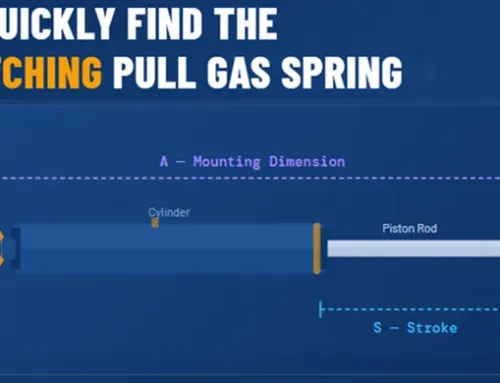
Matching stroke and installation length
Compatible end fittings
Direct substitution without structural redesign
In these cases, procurement teams are not selecting a new design—they are managing downtime and system continuity.
GASTAC provides cross-reference replacement solutions based on existing part numbers or physical samples, allowing direct integration into existing mechanical systems.
Tension Gas Springs Procurement and Supply Chain Considerations
For distributors and procurement engineers, evaluation criteria extend beyond technical parameters to supply reliability and cost structure. Key sourcing concerns typically include:
Batch consistency across production cycles
Lead time stability for repeat orders
Minimum order flexibility
Long-term pricing predictability
Product interchangeability for inventory management
Unlike one-off engineering applications, procurement decisions require predictable supply performance across time.
GASTAC maintains controlled production processes to ensure consistent force output, dimensional accuracy, and repeatability across batches, supporting both OEM supply and distribution networks.
Technical Risks in Tension Gas Springs Selection
Across all customer categories, selection errors typically fall into predictable patterns:
Incorrect force estimation based on weight alone: leads to insufficient or excessive force output
Ignoring installation geometry: reduces effective force in real motion systems
Stroke mismatch with mechanical travel range: causes interference or incomplete movement
Assuming interchangeability without verification: leads to compatibility failure in replacement applications
These issues are not product defects—they are system-level selection errors. This is why engineering-based evaluation is critical before final specification approval.
How to Choose High Quality Tension Gas Springs
Choosing a high quality tension gas spring requires evaluating whether the manufacturer can provide stable performance, consistent production quality, and application-appropriate force behavior based on real working conditions rather than catalog specifications alone.
Cylinders manufactured using precision seamless steel tubing.
High-quality piston rods with hard chrome plating for wear and corrosion resistance.
Stable force without visible fluctuation during operation.
Cycle life testing exceeds 50,000 cycles under full load conditions .
Operate normally within the temperature range of -30°C to +80°C.
How to Choose Gas Struts Manufacturer
Choosing a reliable gas struts manufacturer requires evaluating whether the supplier can ensure consistent product quality, engineering-level application support, and stable long-term supply for industrial or OEM requirements, rather than only comparing product price or catalog specifications.
Serving over 300+ tension gas spring customers with a strong track record and long-term partnerships with leading brands.
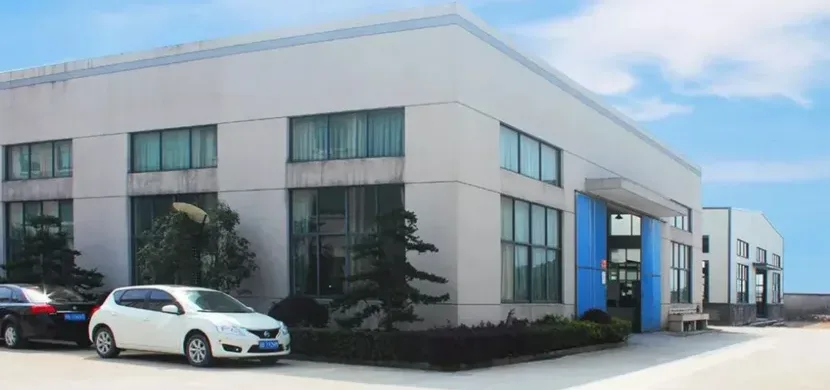
A factory with over 10,000 m² of production facilities and more than 100 employees, including engineering, production, and quality control teams.
Production capacity of 3000 pcs tension gas springs every two weeks.
Compliance with international quality and safety standards (e.g., ISO certification).
Strict tolerance control ensuring consistent force output across batches, with an error margin within 0.2%.
Verified cycle life testing and durability performance reports provided.
Reliable after-sales service and technical support for long-term cooperation.
GASTAC Leading Tension Gas Spring Manufacturer in China
At GASTAC, we specialize in the engineering and manufacturing of high-performance tension gas springs. Since our inception, we have been dedicated to providing reliable, precision-engineered motion control solutions for a wide range of industrial and OEM applications.
To be the trusted force behind your motion control challenges. We strive to combine innovative technology with exceptional service, ensuring that our partners receive not just a component, but a reliable solution that enhances their end-product performance.
Gas Springs Engineering inquiry
If you are working on a new design or replacing an existing gas spring system, GASTAC provides engineering support including:
Force calculation based on drawings or application data
Cross-reference replacement for major brands
OEM customization for non-standard systems
Technical recommendation for mechanical integration
Send your application details or technical drawings for engineering evaluation and model selection.
张航
Stay in the loop