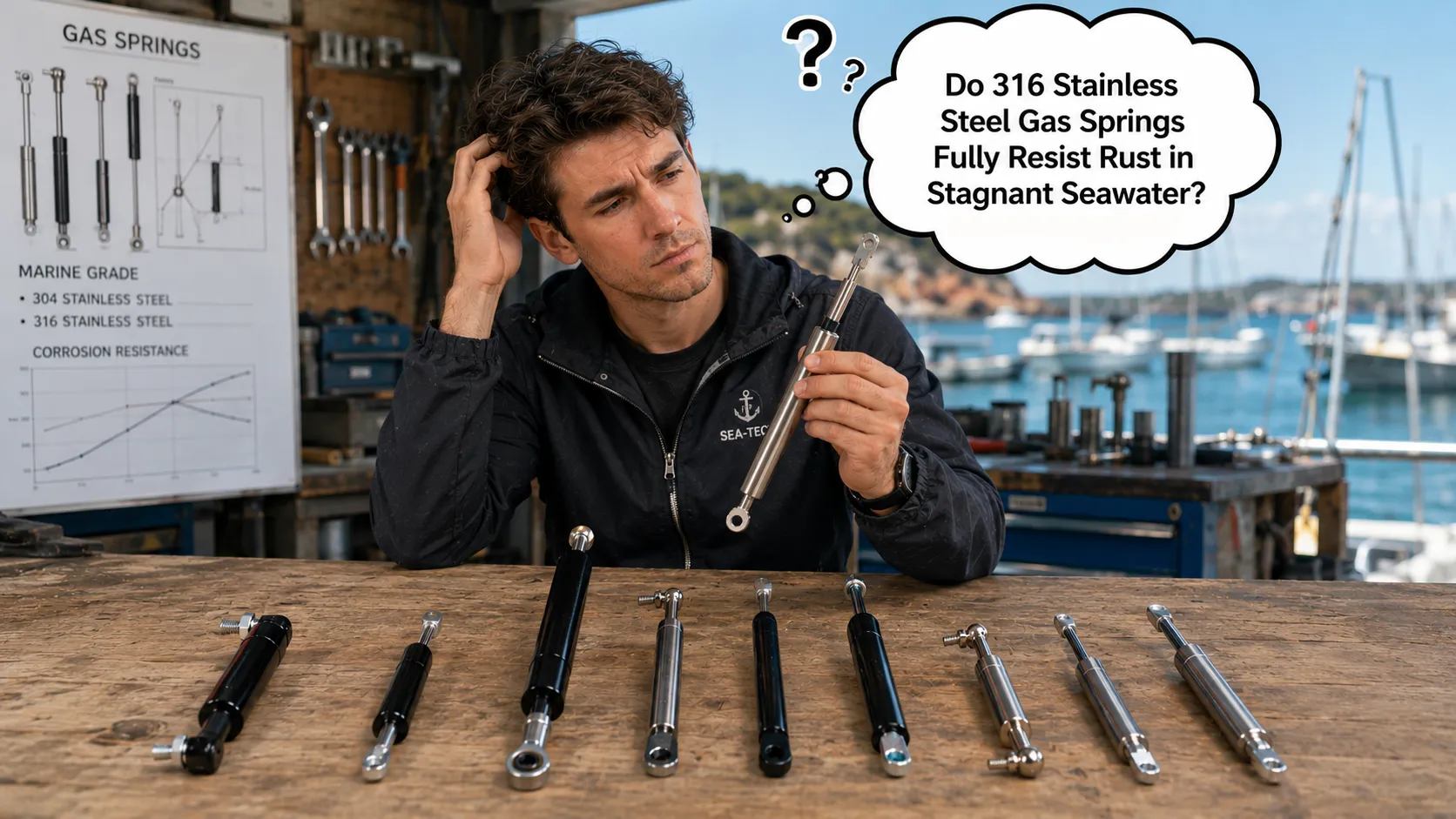






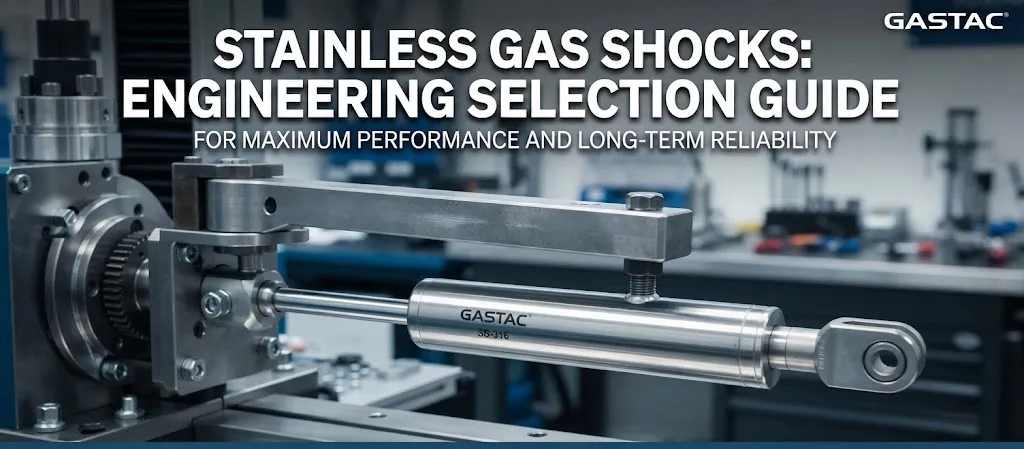
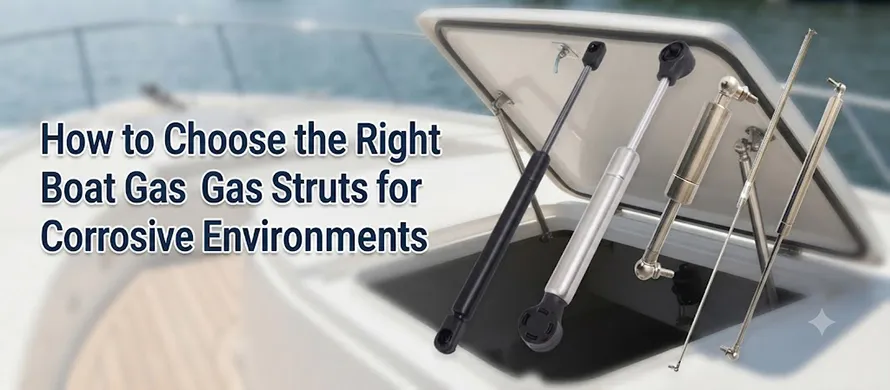


In marine engineering, 316 stainless steel gas springs are the industry standard. However, stagnant seawater (non-moving saltwater) introduces electrochemical threats that can compromise even high-grade alloys.
The short answer is no—316 stainless steel cannot completely prevent rust if seawater remains stagnant and trapped.
Why Stagnant Seawater Destroys Stainless Steel?
The protective chromium-oxide layer on 316 stainless steel requires oxygen to self-heal. Stagnant water depletes oxygen and traps chloride ions, triggering two major failure modes:
- Crevice Corrosion: Oxygen is quickly exhausted in tight spaces—such as rod seals, end fitting threads, and mounting brackets. Without oxygen, the protective layer breaks down, allowing chlorides to attack.
- Pitting Corrosion: Flowing water washes away micro-deposits. Stagnant water allows heavy salt concentrations to settle permanently on the cylinder and piston rod, burning deep microscopic holes into the metal.
This specific metallurgical vulnerability is why questions like Can 316 stainless steel gas springs rust? What happens to them in stagnant seawater? continue to be critical diagnostic topics among offshore maintenance teams and naval architects on professional platforms.
The Cost of Corrosion: Performance Failure
When a stainless steel gas shock corrodes in stagnant conditions, it leads to functional failure:
- Gas Leakage: Pitting on the polished piston rod tears the internal rubber seals during cycling, causing a complete loss of nitrogen pressure (F1 force).
- Mechanical Binding: Heavy corrosion around end fittings and joints causes the hardware to seize up entirely.
Technical Selection of Stainless Steel Gas Shocks
To prevent premature failure in marine and offshore applications, implement these engineering practices:
- Design for Drainage: Always orient the gas spring to prevent water from pooling around the seals. Ensure mounting brackets have drainage holes.
- Freshwater Rinsing: Regularly flush areas exposed to stagnant salt spray with fresh water to remove chloride build-up and allow the metal surface to re-oxygenate.
- Procurement Checklist: Material grade is only one variable. For a full breakdown of load calculations and environmental cross-referencing, review our guide on the core factors to consider when selecting stainless steel gas shocks.
Source Certified Stainless Steel Gas Shocks
If you require guaranteed 1:1 OEM matching parts or custom-engineered gas springs for harsh marine environments, visit the GASTAC online store. We provide fully certified materials, factory-direct pricing, and heavy-duty engineering built to withstand the toughest conditions.
张航
Stay in the loop