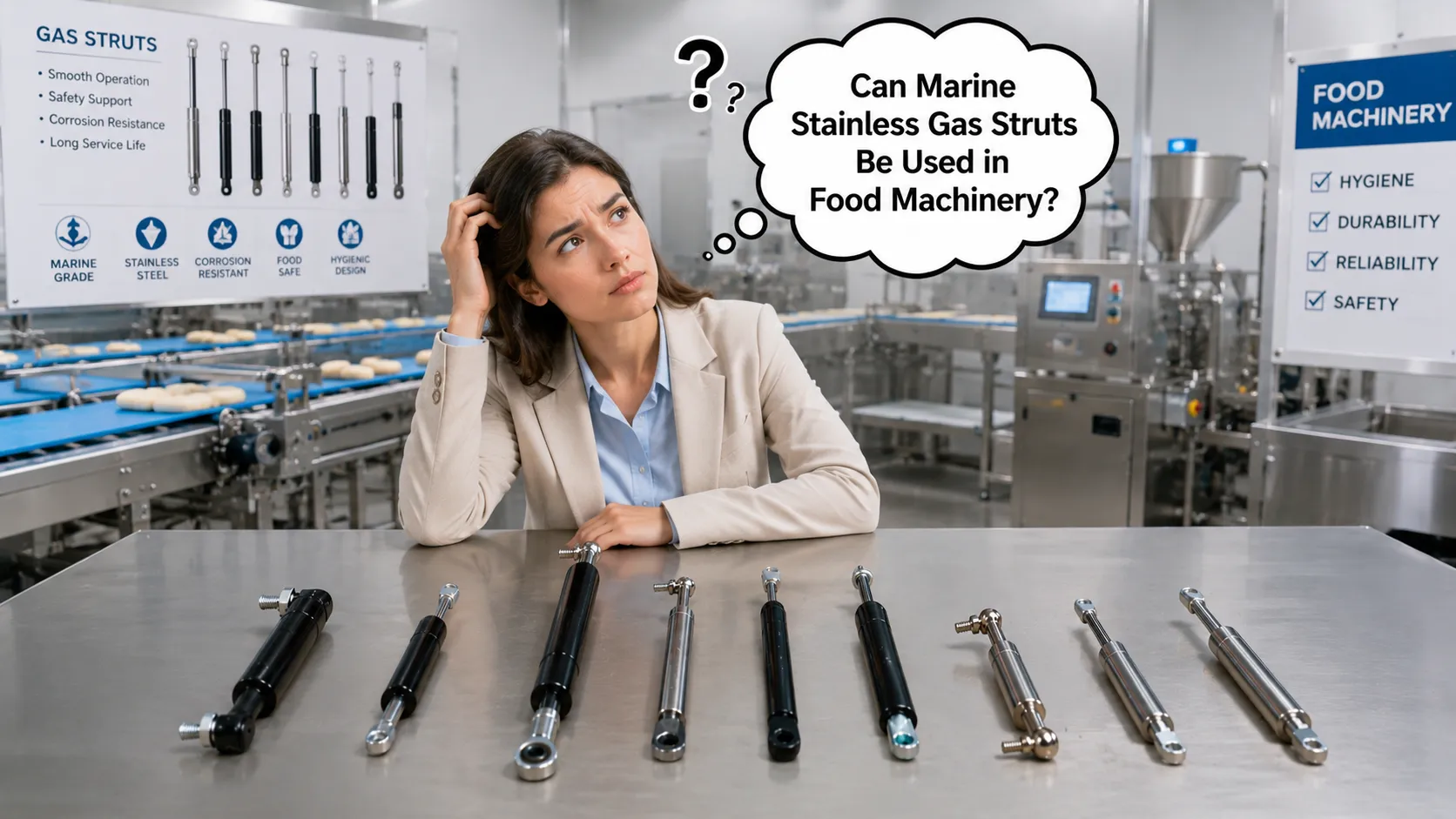








When designing food processing or packaging lines, a common engineering fallback is: “If a component handles open-ocean saltwater, it can handle a food-grade washdown.” Following this logic and installing standard marine stainless gas struts directly into food zones is a critical compliance and safety mistake.
While marine hardware excels at corrosion resistance, it completely fails the sanitary design and hazard prevention protocols required in food automation. Here is the strict technical reality behind why they fail, and how to correctly specify stainless hardware.
The Material Reality: 304 vs. 316 in Food Processing
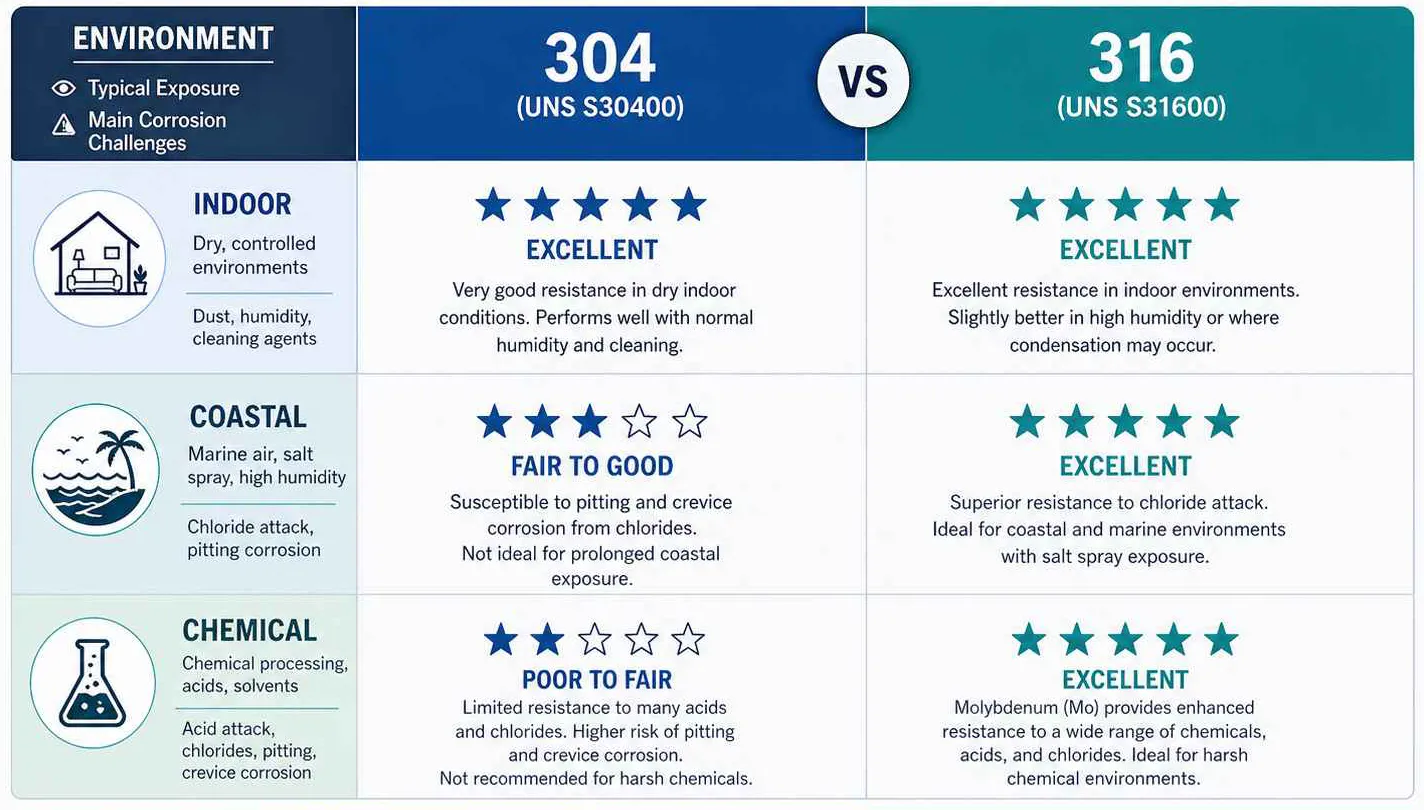
A common misconception is that Grade 304 stainless steel is banned in food machinery. It is not. However, its application limits are highly restricted compared to Grade 316:
- 304 Stainless Steel (Standard Marine Grade): Perfectly acceptable for structural frames, conveyor supports, or dry-product zones. However, it lacks molybdenum. When exposed to organic food acids (citric, acetic) or the aggressive chlorine-based sanitizers used in heavy washdowns, 304 suffers rapid pitting corrosion and chemical leaching, making it unfit for direct food contact or splash zones.
- 316 Stainless Steel (Premium Marine Grade): Contains 2% to 3% molybdenum. This addition builds a passive layer resistant to chloride-induced pitting and organic food acids. For sorting trays, packaging seals, and any gas spring mounted directly over or inside food contact zones (Zone 1), 316 stainless steel is the engineering baseline.

Why a 316 Marine Strut Still Fails Food Compliance
Even if you source a marine gas spring made entirely of 316 stainless steel, it is still a compliance hazard out of the box due to two hidden engineering factors:
1. The Internal Lubrication Hazard (The Toxic Drop)
- Marine Spec: Filled with standard industrial hydraulic oil optimized purely for mechanical damping and seal longevity.
- Food Spec (FDA 21 CFR 178.3570): Gas springs leak microscopically over thousands of cycles. A single drop of industrial marine oil on a food line forces immediate production shutdowns and recalls. Food machinery demands NSF H1 certified food-grade lubricants (tasteless, odorless, non-toxic), designed specifically for incidental food contact.
2. Sanitary Design vs. Mechanical Utility
- Marine Spec: Built with rolled edges, exposed rod-end threads, and stamped metal labels. In marine environments, these parts just need to hold a load.
- Food Spec (DIN EN 1672-2 / EHEDG): Food machinery requires strict hygienic design. Crevices, exposed threads, and gaps act as harborages where organic food residue accumulates, leading to bacterial growth (such as Listeria or Salmonella) that standard Clean-In-Place (CIP) washdowns cannot reach. Food-grade shocks feature high-polish surfaces, fully sealed joints, and smooth end fittings.
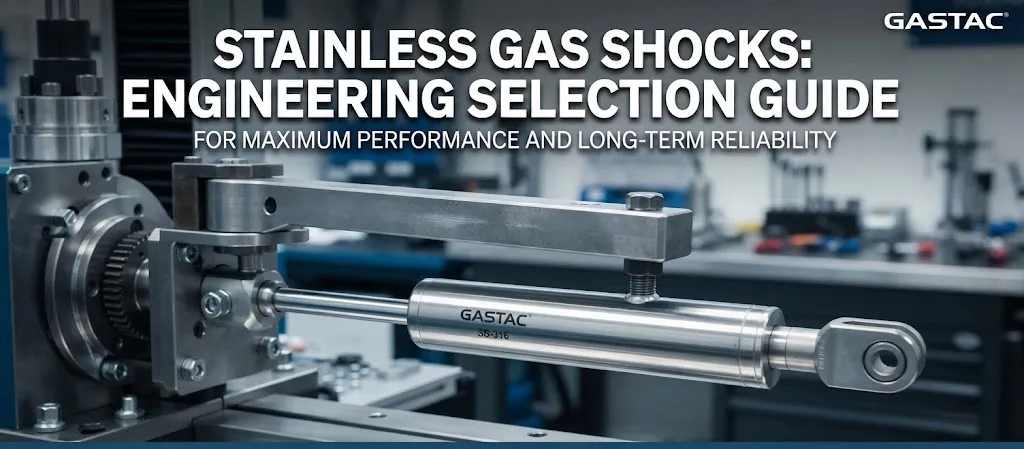
Stainless Gas Struts Engineering Selection Guide
To successfully integrate gas springs into your food processing layout, skip the marine parts catalog and follow this technical checklist:
- Define the Zone: Use 304 stainless steel only in non-contact/dry areas. Specify 316 stainless steel for any splash or direct food contact zones.
- Mandate NSF H1: Ensure the manufacturer supplies a certificate verifying the internal damping oil is NSF H1 registered.
- Eliminate Catch Points: Avoid gas springs with external springs, plastic shrouds, or open threads that can trap organic debris during operation.
- Complete the Checklist: Material and oil type are just the baseline. For a deeper technical analysis covering exact load ratings, stroke velocities, and correct orientation to prevent seal dry-out, read our complete guide on the core factors to consider when selecting stainless steel gas shocks.
Procure Certified Stainless Steel Gas Springs
Don’t compromise factory compliance with uncertified marine hardware. Visit the GASTAC online store for fully certified 316 stainless steel gas springs engineered with NSF H1 lubrication, precise material traceability, and exact 1:1 OEM dimensions tailored for high-speed food automation packaging lines.
张航
Stay in the loop