














If you’re planning to replace a worn-out gas strut, the most important step is getting the measurements right. Many users search for how to measure gas struts because even a small mistake in size or force can lead to poor performance—or a strut that simply doesn’t fit.
In this guide, we’ll walk through the correct way to measure a gas strut, explain key dimensions, and help you avoid the most common mistakes.

Understanding How Gas Struts Are Measured
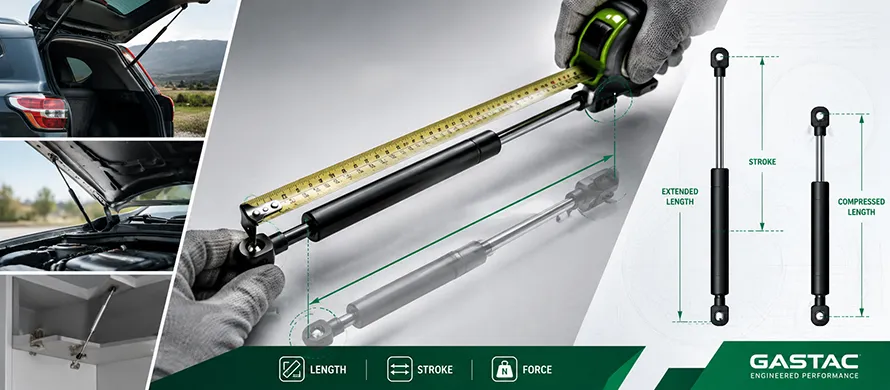
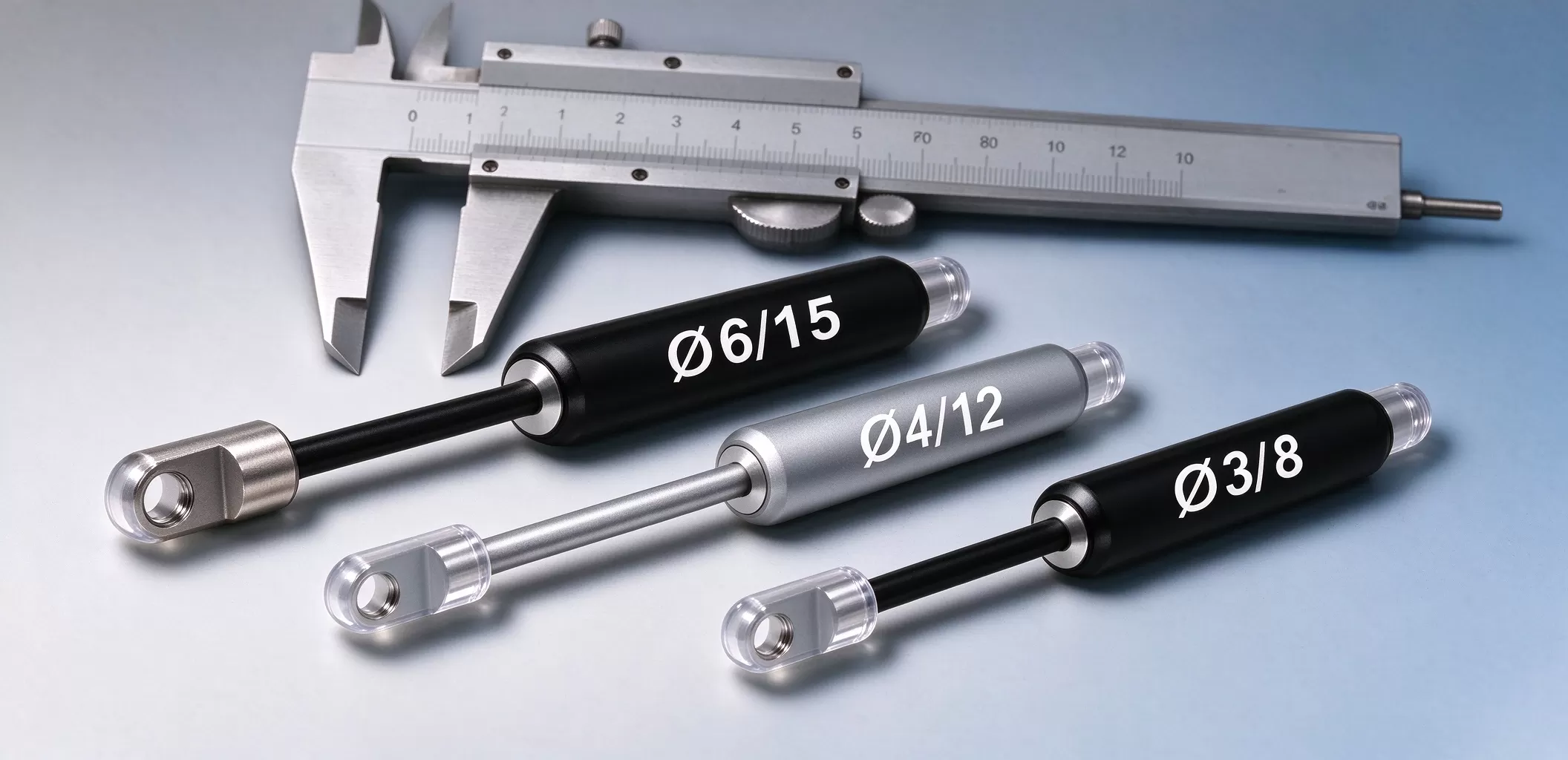
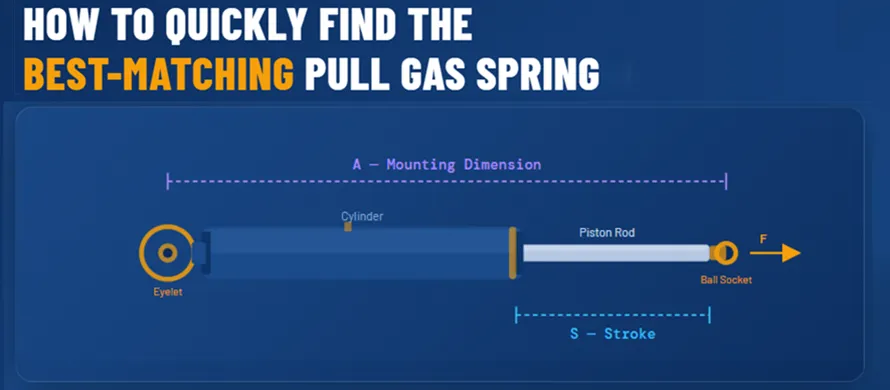
Before jumping into the process, it’s important to understand how gas struts are measured in real applications. A gas strut is not defined by just one number. Instead, proper gas strut measurements include:
- Extended length (fully open)
- Compressed length (fully closed)
- Stroke length (travel distance)
- Force rating (measured in Newtons)
Whether you’re working on automotive, industrial, or cabinet applications, the same principles apply—even though some users may refer to them as gas springs or gas shocks.
How to Measure Gas Struts
To correctly measure gas struts, you need to understand that both length, stroke, mounting configuration, and force rating all work together to ensure proper fitment and safe operation. Missing or incorrect measurements can lead to installation failure, poor performance, or safety risks.
Step 1: Measure the Extended Length
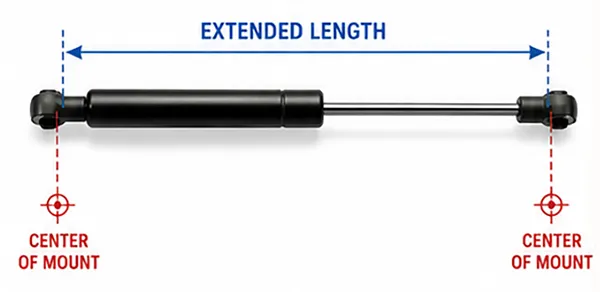
The first step in learning how to measure a gas strut is determining its extended length. Open the strut fully and measure from the center of one mounting point to the center of the other. This is critical:
- Do NOT measure end-to-end
- Always measure center-to-center
This is the standard method used across the industry when defining gas strut length.

Step 2: Measure the Compressed Length
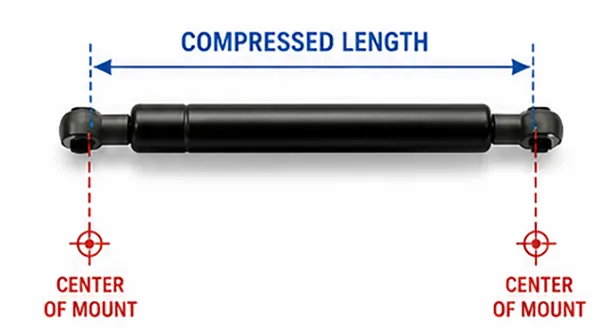
Next, compress the strut completely and measure again from center to center. This dimension ensures the strut will fit properly when the application is closed (such as a trunk, hood, or cabinet door).
Incorrect compressed length is one of the most common installation problems.

Step 3: Calculate the Stroke Length
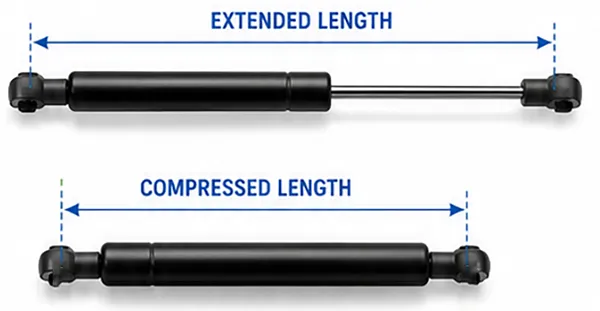
Stroke is the difference between extended and compressed length. This step is essential when learning how to measure gas springs correctly, as the stroke determines how far the lid or panel can travel.
Formula: Stroke = Extended Length – Compressed Length
If the stroke is incorrect:
- The lid may not open fully
- Or it may overextend and cause stress

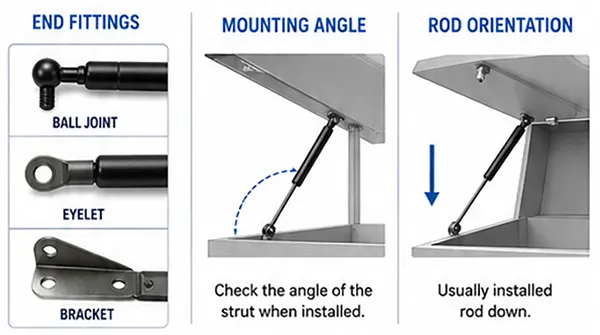
Step 4: Identify Mounting Types and Orientation
Besides length, you also need to check:
- End fittings (ball joints, eyelets, brackets)
- Mounting angle
- Rod orientation (usually rod down)
These details are often overlooked but are critical when replacing a strut.

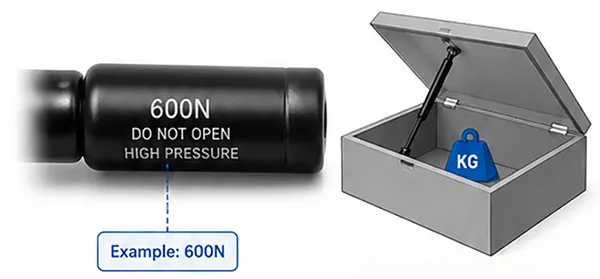
Step 5: Determine the Force (N Rating)
Many DIY users focus only on size, but force is equally important. If you’re unsure how to measure gas shocks or struts for force:
- Check markings printed on the old strut (e.g., 450N, 600N)
- If unreadable, estimate based on application weight and angle
Choosing the wrong force can result in:
- Door not staying open (force too low)
- Difficulty closing (force too high)

Avoid Common Measurement Errors
Even when users understand how to measure gas strut length, mistakes still happen. Here are the most common ones:
- Measuring total length instead of center-to-center
- Ignoring compressed length
- Forgetting to calculate stroke
- Replacing based on “similar size” only
- Not checking mounting ends
Avoiding these errors will save time, cost, and repeated replacements.
How to Measure Different Types of Gas Springs
Different types of gas springs are measured using the same core engineering principles, even though their working functions and applications vary. Whether it is used for lifting, locking, or pulling, accurate measurement of length, stroke, and force is essential to ensure proper performance and compatibility in real-world use.
Types of Gas Springs
- Compression Gas Springs – Used to provide pushing force for lifting, supporting, or counterbalancing loads in applications such as hoods, trunks, and covers
- Lockable Gas Springs – Designed to hold a specific position during operation, allowing controlled movement with adjustable or fixed locking force
- Tension Gas Springs – Operate by providing pulling force to retract or return components to their original position in mechanical systems
When to Replace Instead of Measure Again
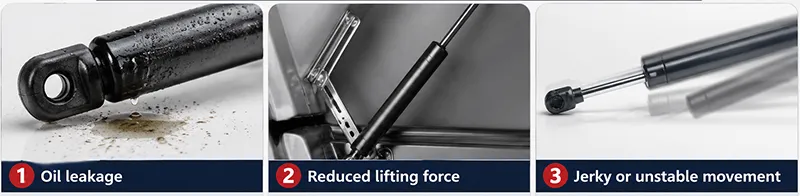
In normal maintenance, gas struts should not be repeatedly re-measured once clear performance degradation appears. If your gas strut shows any of the following signs:
- Oil leakage from the cylinder body, indicating seal failure and loss of internal pressure
- Reduced lifting force, where the strut can no longer properly support the load
- Jerky or unstable movement, showing inconsistent damping or internal wear
…it is time to replace the gas strut rather than re-measure or attempt adjustment.

Get the Right Fit with GASTAC Gas Springs Manufacturer
As a professional gas spring manufacturer, GASTAC provides OEM-level gas struts designed for automotive, industrial, and custom applications. If you’re unsure about your measurements, our engineering team can help you:
- Match exact dimensions
- Confirm correct force
- Customize mounting types
This ensures your replacement works perfectly the first time—no trial and error.
Key Takeaways on Measurement
Understanding how to measure a gas strut correctly is the key to a successful replacement. By focusing on extended length, compressed length, stroke, and force, you can confidently select the right product for your application.
Take accurate measurements, avoid common mistakes, and when in doubt—work with a manufacturer who understands the engineering behind every detail.
张航
Stay in the loop