








Table of contents
Share Post
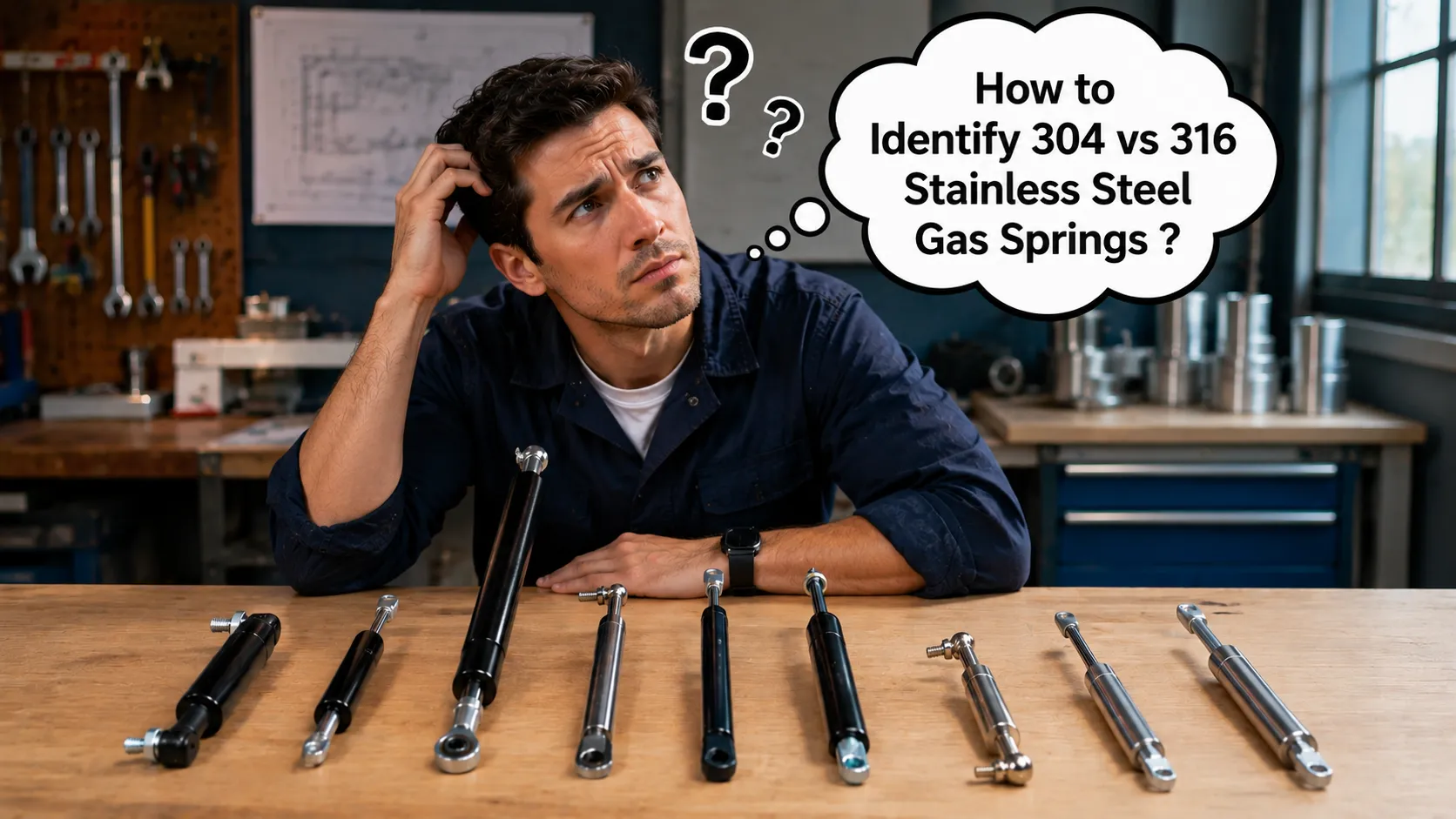
How to Identify and Differentiate 304 vs 316 Stainless Steel Gas Springs

When it comes to Stainless Steel Gas Springs, material selection is not just a technical detail—it directly determines corrosion resistance, lifespan, and performance stability in demanding environments. Among all stainless steel grades used in gas spring manufacturing, 304 and 316 stainless steel are the two most commonly compared. At first glance, they look almost identical. But in real-world applications—especially marine, coastal, industrial, or chemical environments—the differences become critical.

This guide breaks down how to identify and differentiate 304 vs 316 Stainless Steel Gas Springs, and how to choose the right one for your application.

Stainless Steel Gas Springs Chemical Composition and Performance

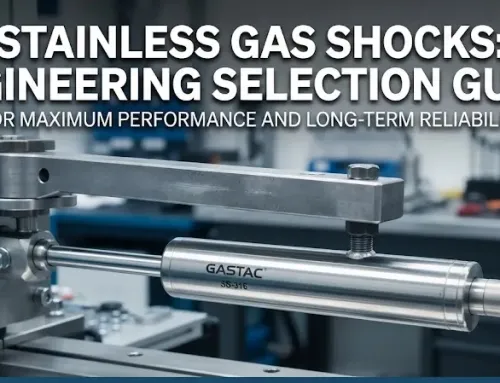
To understand why differentiation matters, one must examine the specific elements inside the alloys. Both 304 and 316 are austenitic stainless steels containing high concentrations of chromium and nickel, which establish a passive chromium oxide layer to block surface oxidation. Beyond chemical composition, engineers must also evaluate pressure limits, environmental extremes, and mounting configurations; for a complete breakdown of these design variables, review the industry guide on factors to consider when selecting stainless steel gas shocks. The critical difference between the two metals, however, lies in a single alloying element: molybdenum.

  • Grade 304 Stainless Steel: Typically composed of 18% chromium and 8% nickel (often designated as 18/8). It provides excellent corrosion resistance in standard atmospheric conditions and fresh water applications.
  • Grade 316 Stainless Steel: Contains approximately 16% chromium, 10% nickel, and a mandatory addition of 2% to 3% molybdenum. The inclusion of molybdenum significantly alters the pitting resistance equivalent number (PREN), providing robust defense against localized chloride attack and stress corrosion cracking.
Alloy GradeChromium (Cr)Nickel (Ni)Molybdenum (Mo)Primary Application Environment
Grade 30418.0% – 20.0%8.0% – 10.5%0.0%Industrial machinery, automotive trim, fresh water
Grade 31616.0% – 18.0%10.0% – 14.0%2.0% – 3.0%Marine environments, salt spray, chemical processing

Can you Visually Distinguish Between 304 and 316 Stainless Steel?

The short answer is no. Under standard visual inspection, Grade 304 and Grade 316 stainless steel gas springs look identical. Both share the same grain structure, surface reflectivity, color profile, and weight density. A high-quality polish (Ra≤0.15 µm) applied to a 304 piston rod will exhibit the exact same mirror finish as a 316 rod.

Because naked-eye inspection is impossible for raw metal verification, you can read the detailed community discussion regarding these physical similarities on Quora’s expert metallurgy thread on distinguishing 304 and 316 stainless steel. As experts note, you cannot rely on surface appearance to verify alloy integrity.

Methods for Non-Destructive Identification of Stainless Steel Gas Springs

Since visual inspection fails, industrial buyers and quality control technicians must utilize standard metallurgical testing methods to ensure compliance before installing stainless steel gas springs into critical projects.

1. Permanent Laser Marking and Laser Etching Verification

Industrial manufacturers of high-end stainless steel gas springs prevent mixed inventory by laser-etching the specific material grade directly onto the cylinder wall body. During incoming inspection, check the technical laser print. A marine-grade strut will clearly display “SS316” or “AISI 316” alongside the tracking batch number and Newton force rating. If the cylinder is completely unmarked or only lists dimensions, it must be treated as Grade 304 or lower until verified by chemical testing.

2. Molybdenum Chemical Spot Testing (Acid Test)

For unlabelled gas struts, a chemical spot test provides an affordable, on-site destructive evaluation method. This test uses a specific acid solution (typically containing sodium diglycollate or similar reagents) that reacts specifically with molybdenum. By applying a drop of the testing solution to a cleaned, non-critical surface area of the cylinder, a distinct color change occurs within 30 to 60 seconds. If the solution turns dark pink or reddish-brown, molybdenum is present, confirming the alloy is Grade 316. If no color change occurs, the metal is Grade 304.

3. Handheld X-ray Fluorescence (XRF) Analysis

The definitive, completely non-destructive method for aerospace and military-grade applications is X-ray Fluorescence spectrometry. A handheld XRF analyzer fires low-energy X-rays at the stainless steel gas spring, exciting the metallic atoms and causing them to emit secondary fluorescent X-rays characteristic of each element. Within three seconds, the digital display provides a complete elemental breakdown down to 0.01% accuracy. This immediately identifies whether the chromium, nickel, and molybdenum content aligns with the rigid ASTM thresholds for 316-grade hardware.

张航

Stay in the loop

Subscribe to our free newsletter.

Leave A Comment