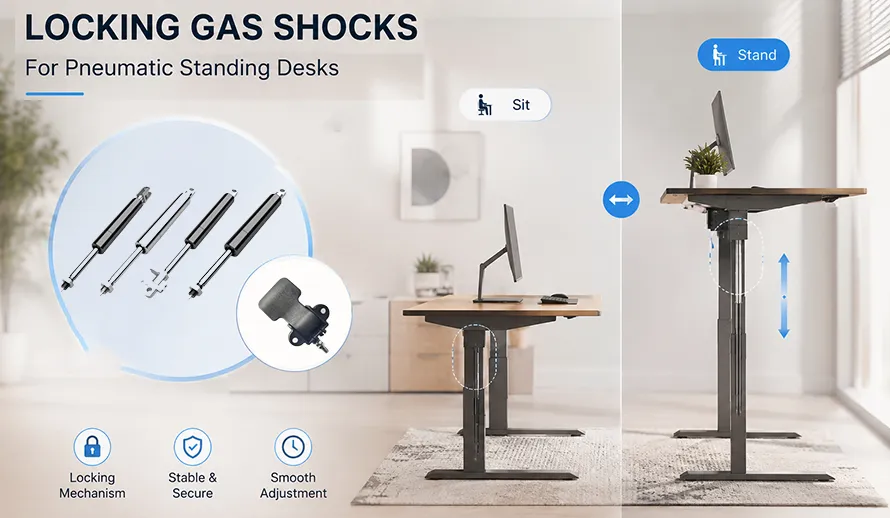
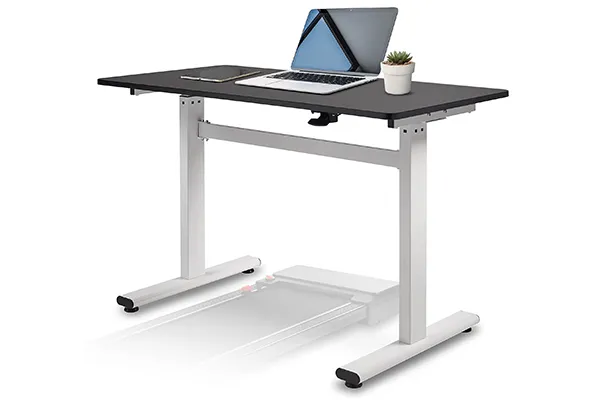









Walk into any modern office and you’ll notice a growing trend: employees are no longer sitting all day. From corporate workplaces to home offices, standing desks have become a preferred solution for improving comfort, productivity, and workplace ergonomics. While electric standing desks often receive the most attention, pneumatic standing desks continue to gain popularity because they offer a simpler, quieter, and more cost-effective alternative.
But what makes a pneumatic standing desk feel smooth, balanced, and easy to adjust? The answer lies in the locking gas spring.
Well-designed locking gas springs do much more than move a desktop up and down. They control the entire user experience, from lifting assistance and height adjustment to stability and long-term reliability.
Why Users Choose Pneumatic Standing Desks
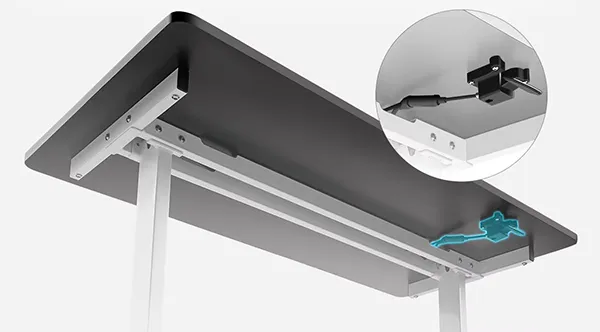
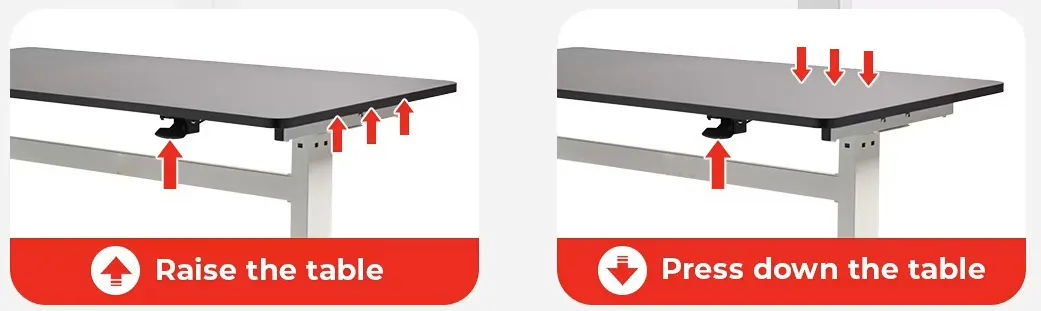
The biggest advantage of a pneumatic standing desk is convenience. Unlike electric models, there are no motors, control panels, power cords, or electronic components involved. Users simply activate the release mechanism and adjust the desk to their preferred height. The entire process takes only a few seconds.
Whether transitioning from sitting to standing during the workday or fine-tuning the desk height for better posture, users expect the adjustment to feel effortless. That expectation places enormous importance on the gas spring system hidden inside the desk frame.
The Challenge Behind Every Height Adjustment
A standing desk may look simple, but adjusting it requires moving more weight than many people realize. A typical workstation may support:
- One or two monitors
- A laptop
- Keyboard and mouse
- Docking stations
- Speakers
- Office accessories
Together, these items can create a significant load on the desktop. Without a balancing mechanism, users would need to lift this weight manually every time they wanted to change desk height. This is exactly why locking gas springs are used.
The Real Role of a Locking Gas Spring
Many people assume a gas spring simply pushes the desktop upward. In reality, its primary job is to counterbalance the weight of the workstation. A properly selected locking gas spring offsets much of the desktop load, making height adjustment feel lighter and more controlled. The result is an experience where users can easily move the desk without excessive effort. At the same time, the locking mechanism ensures the desktop remains securely positioned once the desired height is reached. The desk moves when you want it to move—and stays exactly where you leave it.
Why Pneumatic Standing Desks Smooth Movement Matters
Users rarely judge a standing desk based on specifications alone. Instead, they judge it by feel. A premium pneumatic standing desk should provide:
- Smooth upward movement
- Controlled downward adjustment
- Consistent resistance throughout travel
- Precise positioning
- Stable locking at every height
When these elements work together, the desk feels refined and professional. When they don’t, users immediately notice problems such as sudden movement, excessive force requirements, or unstable positioning.
Why Rigid Locking Gas Shock Is the Preferred Solution
For pneumatic standing desks, rigid locking gas springs are typically the preferred choice. Unlike elastic locking systems, rigid locking minimizes movement after adjustment and provides a stable work surface for daily use. This is especially important when supporting:
- Multiple monitors
- Monitor arms
- Laptops
- Technical equipment
- Heavy desktop accessories
Users expect their desk height to remain exactly where it was set. Even minor movement can negatively affect typing comfort, monitor stability, and overall user confidence. For this reason, rigid locking systems have become the standard solution in most professional pneumatic standing desk designs.
Technical Specifications for Pneumatic Desk Lifting Cylinders
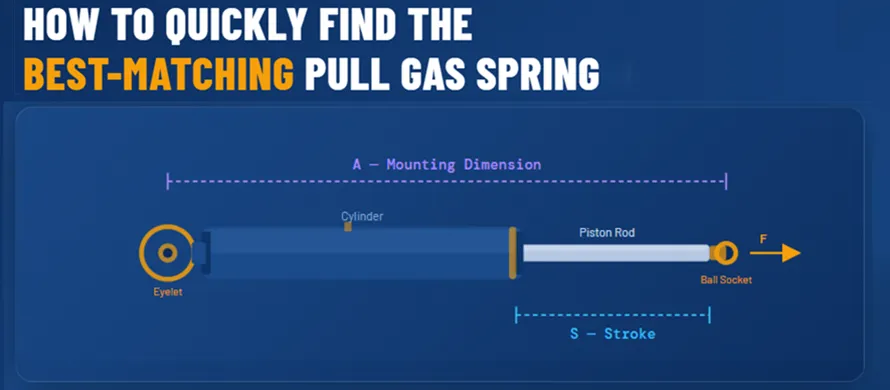
Pneumatic desk struts require a specific balance of long stroke lengths and relatively low, highly calibrated extension forces (F1). The table below highlights the standard engineering parameters optimized for single-column (podium style) and dual-column sit-stand workstations:
| GASTAC Part Number | Rod / Tube Dia. (mm) | Stroke (mm) | Extended Length (mm) | Force Range (F1) | Locking Type | Application Type |
|---|---|---|---|---|---|---|
| PSD2000490600 | 10/28 | 200 mm | 490 mm | 300N - 600N | Rigid | Compact Laptop Podium |
| PSD2500590600 | 10/28 | 250 mm | 590 mm | 300N - 600N | Rigid | Small Study / Home Office Desk |
| PSD3000690600 | 10/28 | 300 mm | 690 mm | 300N - 600N | Rigid | Standard Sit-to-Stand Desk |
| PSD3500790600 | 10/28 | 350 mm | 790 mm | 300N - 600N | Rigid | Extended Range Student Desk |
| PSD4000890600 | 10/28 | 400 mm | 890 mm | 300N - 600N | Rigid | Premium Dual-Monitor Desk |
| PSD4500990600 | 10/28 | 450 mm | 990 mm | 300N - 600N | Rigid | Full-Range Workstation |
| PSD5001110600 | 10/28 | 500 mm | 1110 mm | 300N - 600N | Rigid | Ultra-Long Heavy Machinery Desk |
Pneumatic vs Electric Standing Desks
While electric standing desks dominate many premium office environments, pneumatic models continue to offer several practical advantages.
| Feature | Pneumatic Standing Desk | Electric Standing Desk |
|---|---|---|
| Power Requirement | No external power required, allowing greater placement flexibility. | Requires a nearby power outlet for operation. |
| Noise Level | Silent adjustment without motor noise. | Audible motor sound during lifting and lowering. |
| Maintenance | Lower maintenance costs thanks to a simpler mechanical structure. | Higher maintenance potential due to electronic and motorized components. |
| Complexity | Fewer parts, easier assembly, and improved long-term reliability. | More components increase system complexity and troubleshooting requirements. |
| Adjustment Response | Immediate height changes with a quick release mechanism. | Controlled movement at a fixed motor speed. |
| Initial Cost | Cost-effective solution for offices, schools, and home workspaces. | Higher investment associated with motorized technology and electronic controls. |
Users expect their desk height to remain exactly where it was set. Even minor movement can negatively affect typing comfort, monitor stability, and overall user confidence. For this reason, rigid locking systems have become the standard solution in most professional pneumatic standing desk designs.
What OEM Manufacturers Look for in Standing Desk Locking Gas Springs
For standing desk manufacturers, selecting the correct gas spring involves far more than choosing a force rating. Several factors must be carefully balanced.
- Consistent Counterbalance Performance: The lcoking gas shock must provide predictable assistance throughout the entire adjustment range.
- Smooth Release Characteristics: Users should be able to initiate movement easily without experiencing sudden jumps or drops.
- Long Service Life:
- Height-adjustable desks are used repeatedly every day. A high-quality locking gas shock should deliver reliable performance over tens of thousands of adjustment cycles.
- Stable Locking Performance: The desk must remain secure under varying workstation loads and changing user habits.
The Future of Pneumatic Standing Desk Design
As ergonomic workspaces continue to evolve, users are demanding products that are simpler, faster, and more intuitive to use. GASTAC gas spring manufacturer is responding with:
- Improved gas spring technologies
- Wider adjustment ranges
- Lighter frame designs
- Better workspace flexibility
- Enhanced durability
Despite advances in motorized systems, pneumatic standing desks remain an attractive option because they offer immediate adjustment without electronics, software, or power requirements. At the center of this experience is the locking gas spring.
Partner with GASTAC Gas Springs Experts
Engineering a pneumatic sit-stand desk that remains rock-solid during aggressive typing while offering a weightless, two-second lift requires flawless gas cylinder calibration. Don’t risk product returns with generic industrial struts.
Contact the GASTAC professional team. GASTAC application engineers are ready to analyze your column dimensions, calculate the perfect $K$-factor for your desktop weight, and deliver customized samples alongside competitive bulk OEM quotes tailored to your manufacturing timeline.
张航
Stay in the loop