







Table of contents
Share Post
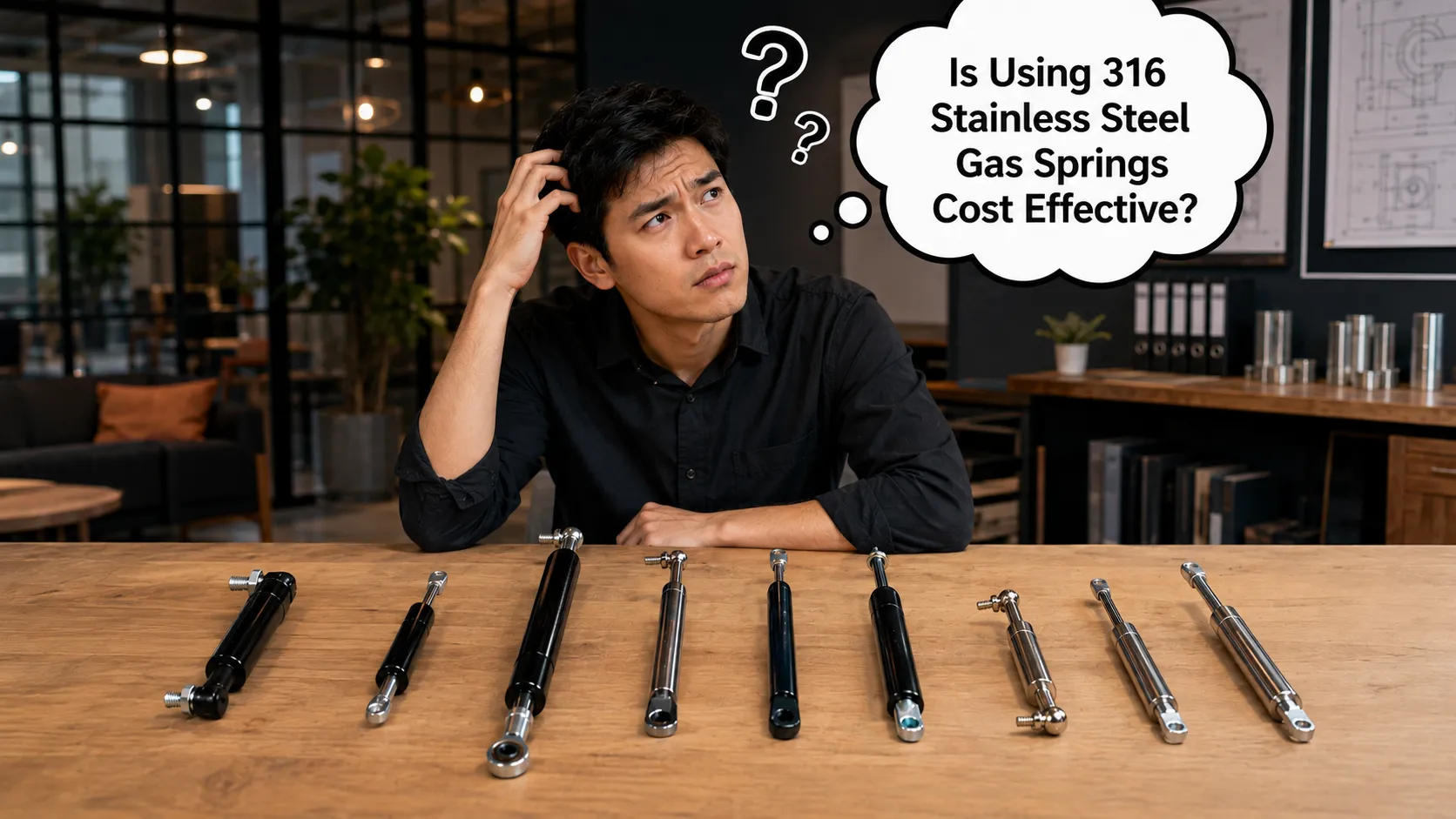
Is Using 316 Stainless Steel Gas Springs Cost Effective?

When designing motion control systems, procurement departments face a persistent financial dilemma: does the higher upfront price of Grade 316 stainless steel gas springs justify the budget, or can Grade 304 handle the application at a lower cost?

True cost-effectiveness is not about buying the most expensive material. It is about matching metallurgy to the environment. Specifying 316 alloy eliminates catastrophic downtime in harsh conditions, while deploying 304 alloy in mild environments prevents over-engineering and saves immediate capital.

Stainless Steel Gas Springs Upfront Expense vs. Material Composition

The primary barrier to adopting Grade 316 steel is the initial unit cost. Grade 316 contains 2% to 3% molybdenum, an expensive alloying element entirely absent in Grade 304. This addition directly increases raw material pricing and the final cost of the gas strut.

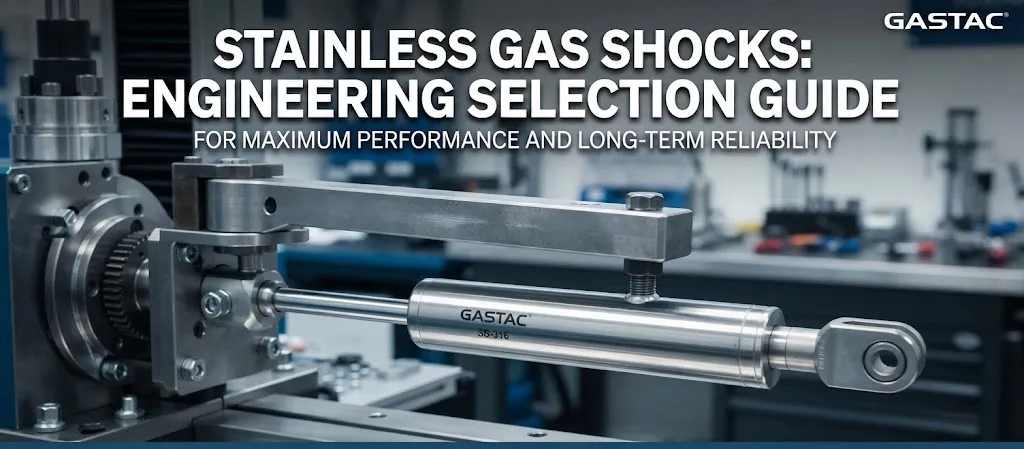
However, purchase price alone creates a false economy. To determine true financial viability, engineers must evaluate exact operating factors. For a technical breakdown of these variables, see the industry engineering guide on factors to consider when selecting stainless steel gas shocks.

When Is It Necessary to Select 316 Grade Stainless Steel Gas Springs?

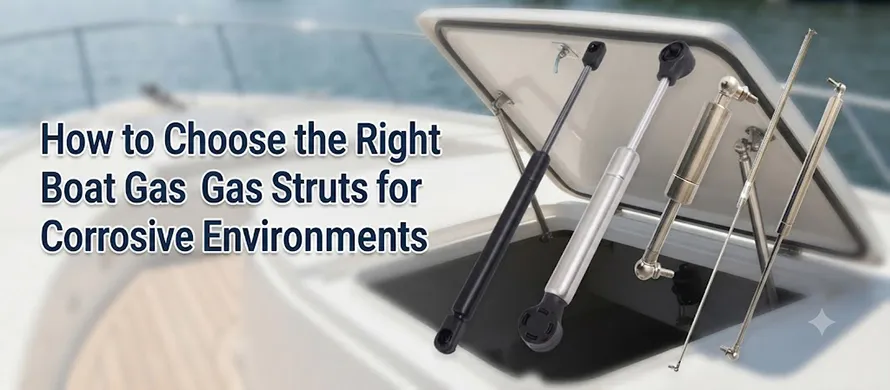
In marine, offshore, or heavy salt-spray applications, chloride ions aggressively attack vulnerable metals. If Grade 304 or carbon steel struts are deployed here, they rapidly develop localized pitting corrosion.

The Financial Impact of Stainless Steel Gas Spring Failure

When pitting occurs along the cylinder or scars the piston rod, it tears the internal polyurethane seals. Once seal integrity is breached, compressed nitrogen gas escapes, dropping the internal lifting force (F1) to zero. This failure triggers three direct costs:

  • Replacement Cost: Purchasing new hardware plus expedited shipping fees.
  • Labor Expense: Technician hours required to diagnose, remove, and replace the seized strut.
  • Downtime Loss: Stalled production lines or compromised safety, costing thousands per hour.

Because Grade 316 resists chloride pitting, it lasts 4 to 5 times longer than lower-grade alloys in marine environments, turning higher initial expenditure into massive operational savings.

Choosing 304 Stainless Steel Gas Springs Is a Wiser Choice

Conversely, specifying Grade 316 for every application results in wasted budget. Grade 304 stainless steel possesses identical tensile strength, identical structural density, and excellent corrosion resistance against fresh water and standard atmospheric moisture. Grade 304 satisfies all performance metrics if the gas struts are intended for:

  • Indoor manufacturing equipment
  • Medical laboratory devices
  • Commercial kitchen hardware
  • Freshwater municipal infrastructure

In these environments, the molybdenum protection of Grade 316 remains completely unutilized.

The Cost-Saving Benefits of Grade 304 Stainless Steel Gas Springs

Selecting Grade 304 for non-marine applications allows procurement teams to directly reduce component acquisition costs by 20% to 30%. This saves significant upfront budget without sacrificing a single day of the product’s expected service life.

For further technical debate on defining these cost thresholds based on your specific environment, participate in the active engineering discussion on How do you determine if 316 stainless steel is worth it on Quora.

Is using 316 stainless steel gas springs cost-effective? The answer depends entirely on placement. For high-salinity or chemical environments, Grade 316 stainless steel gas springs are the only financial choice because they prevent expensive downtime. For standard outdoor or indoor environments, Grade 304 is the superior economic choice, saving upfront budget by eliminating over-engineering.

张航

Stay in the loop

Subscribe to our free newsletter.

Leave A Comment