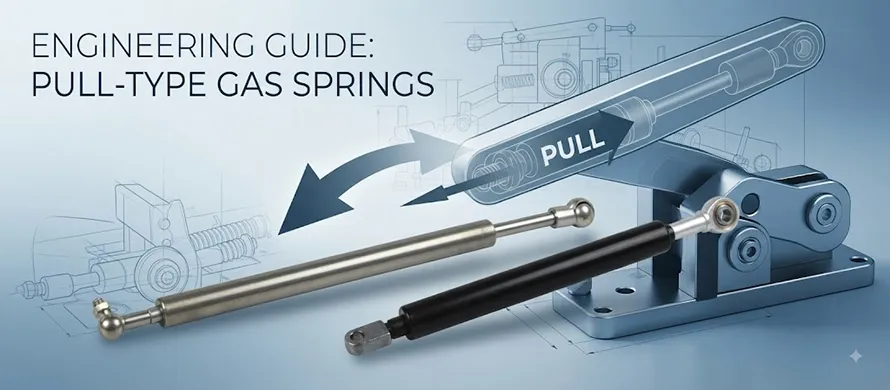
Gas struts are everywhere — in car hoods, camper trailers, truck tool boxes, storage lids, cabinets, and industrial equipment. Yet many people still ask: what is a gas strut, how does it work, and what size do I need? This complete guide answers all of those questions in a clear and structured way.
What Is a Gas Strut?
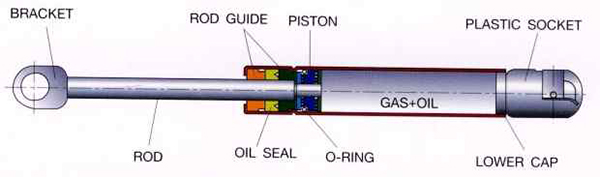
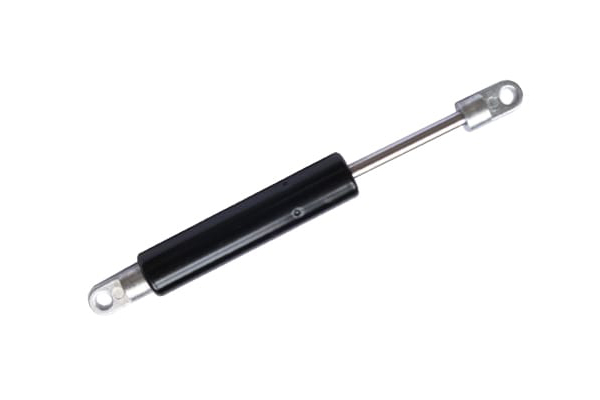
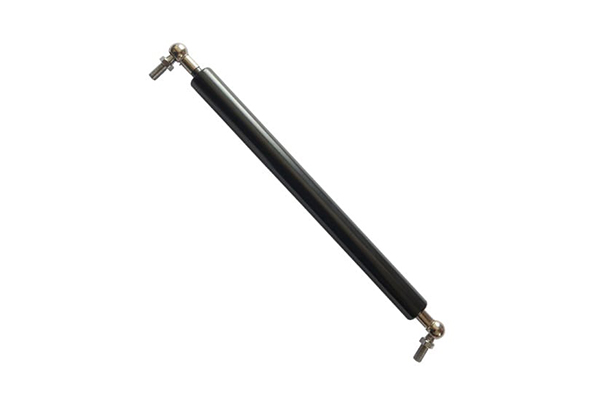
A gas strut is a sealed, high-pressure mechanical device filled with compressed nitrogen gas and a small amount of oil to deliver smooth, controlled lifting, counterbalancing, and damping. Using an internal piston rod, it stores energy when compressed and releases it to support or raise heavy lids, hatches, doors, tailgates, and furniture panels safely and effortlessly.You may also hear it called gas spring, gas shock, Gas piston.

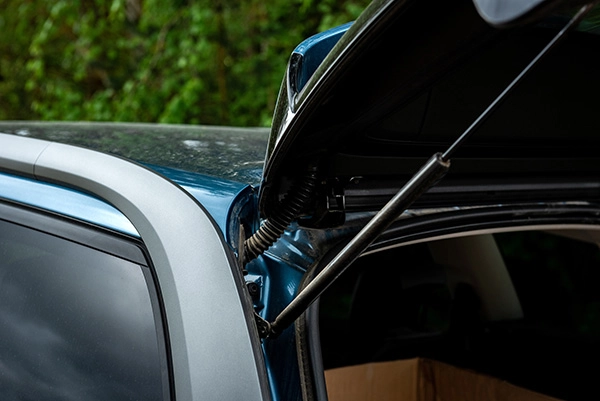
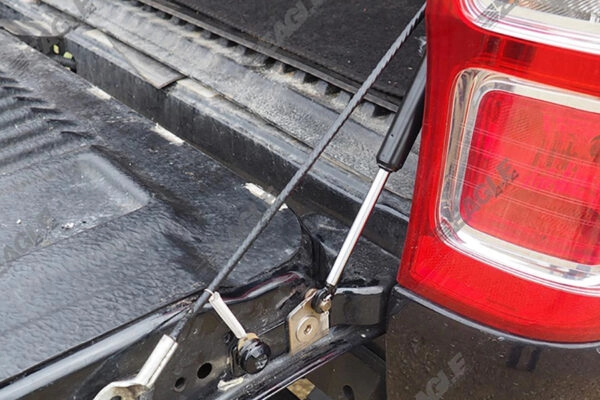
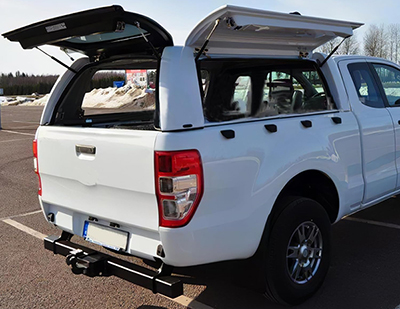
For example, what is a gas strut for a car? It assists in lifting and holding hoods, trunks, or doors smoothly. Similarly, what are tailgate struts? These are gas struts specifically designed to support the opening and closing of truck tailgates safely and effortlessly.


How Does a Gas Strut Work?
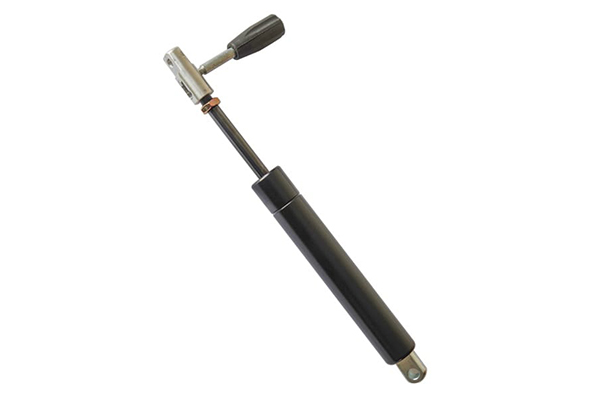
A gas strut works by compressing nitrogen gas inside a sealed cylinder when the piston rod is pushed in. The compressed gas stores energy and creates pressure against the piston. As the rod extends, the gas expands, pushing the piston outward. Oil inside the cylinder provides damping, controlling the rod’s speed and ensuring smooth, stable movement throughout the stroke.The video below demonstrates how locking gas springs work:
What Does a Gas Strut Do?
A gas strut helps lift, support, and hold objects in place effortlessly. It provides smooth, controlled motion, counterbalances weight, and prevents sudden drops. Commonly used on doors, lids, hatches, and panels, it ensures safe, stable, and precise operation while reducing effort and protecting both the user and the mechanism from damage.
What are Gas Struts Used for?
Gas struts are used to assist in lifting, supporting, and holding objects in place with controlled motion. They are commonly applied to car hoods, tailgates, furniture lids, cabinets, windows, and industrial panels. By counterbalancing weight and damping movement, gas struts make heavy or awkward objects easier to operate safely, smoothly, and efficiently in everyday and industrial applications.
What Gas Strut Do I Need?
Choosing the correct gas strut depends on your specific application, as selecting the right type ensures safety, smooth operation, and long-term reliability. Several factors influence your choice:
Factors for Choosing the Right Gas Spring
- Type of Equipment – Different applications, such as automotive hoods, furniture lids, industrial panels, or medical devices, have unique force and motion requirements.
- Indoor or Outdoor Use – Environmental conditions like humidity, temperature, and exposure to sunlight or corrosive elements affect material and coating selection.
- Load Characteristics – Consider the weight, balance, and center of gravity of the object to ensure the strut provides proper support and motion.
- Required Motion Control – Determine whether smooth damping, adjustable positioning, or locking at certain points is necessary for your application.
- Environmental Exposure – Factors such as saltwater, chemicals, dust, or extreme temperatures influence the choice of materials, seals, and finishes to maintain performance and durability.
Gas Strut Common Types
Gas struts come in several types, each designed to meet different lifting, support, and motion control needs. Selecting the right type depends on the application, load, and environment. Common types include:
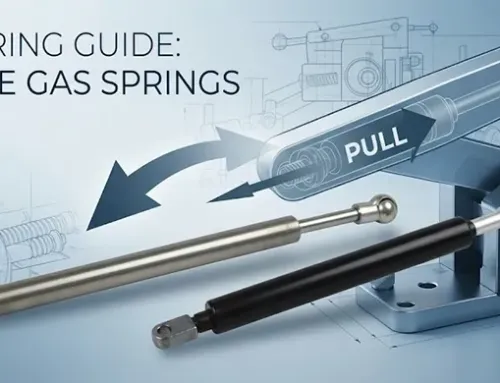
Compression Gas Struts
Standard type for general lifting and support; provides smooth, consistent motion for doors, lids, and panels.
Locking Gas Struts
Feature a locking mechanism to hold the rod in position, allowing adjustable or fixed support for furniture, medical equipment, or machinery.
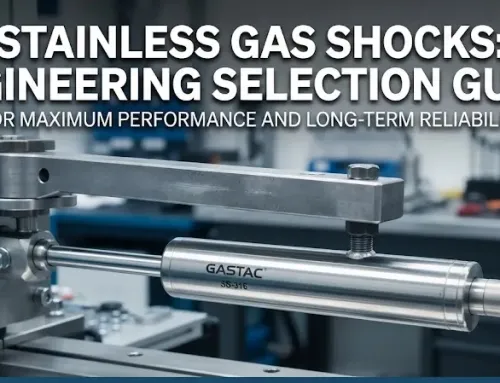
Stainless Steel Gas Struts
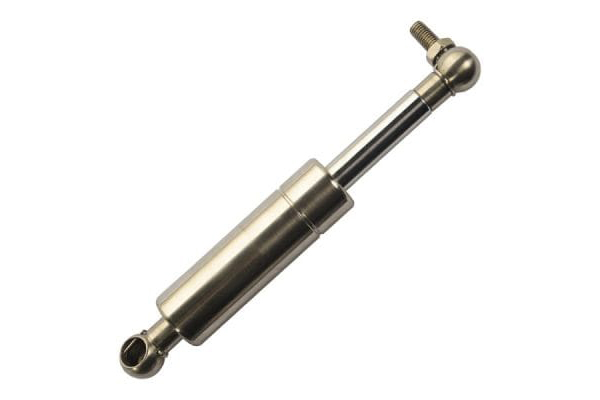
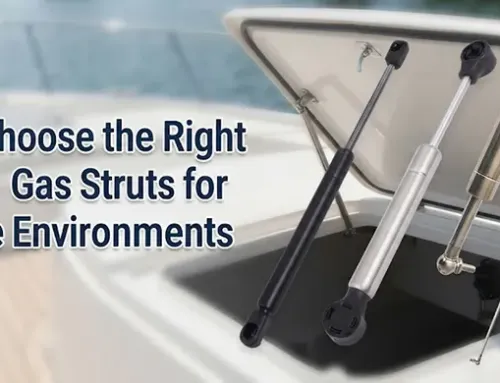
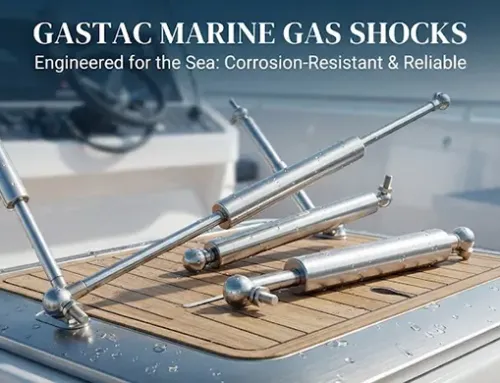
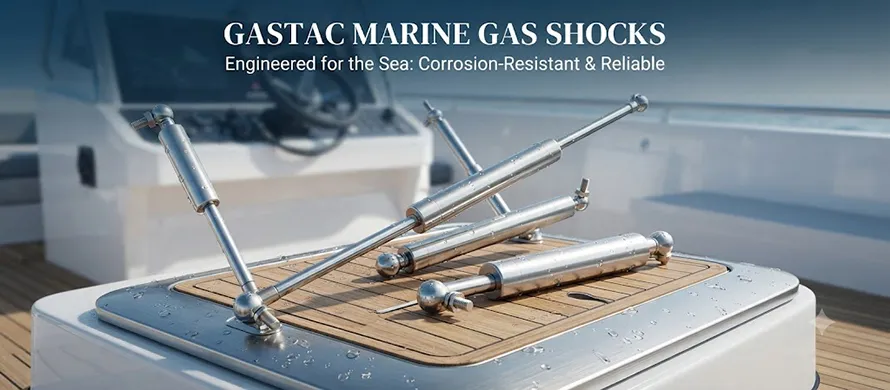
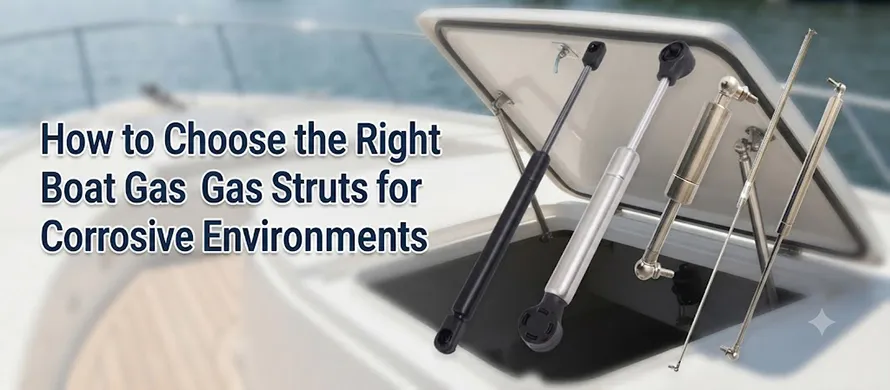
Constructed from corrosion-resistant stainless steel; ideal for marine, outdoor, or harsh environments.
What Size Gas Strut Do I Need?
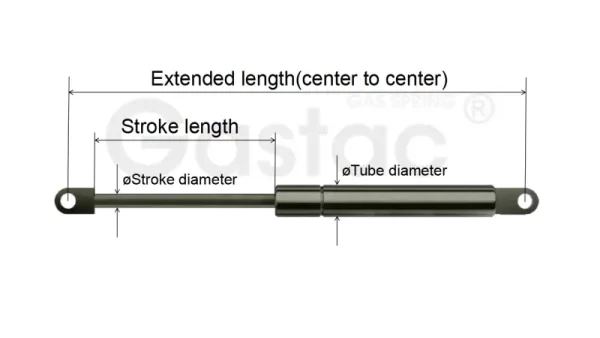
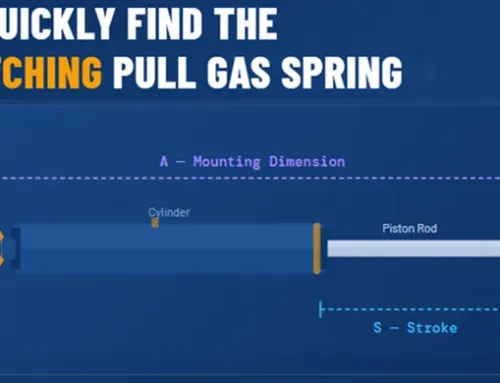
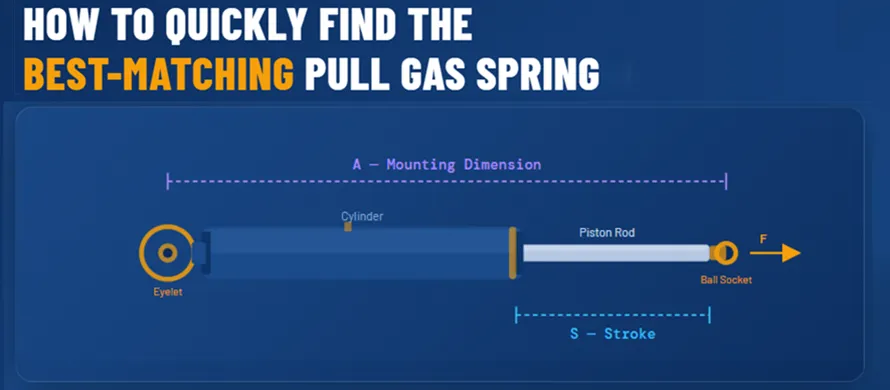
How to work out what size gas strut i need? The correct size depends on the extended length, stroke length, and required force rating. You must measure the mounting points, opening distance, and weight of the object to ensure proper fit and balanced support. Choosing the right size ensures smooth operation, safe lifting, and long-term durability.
1. Extended Length
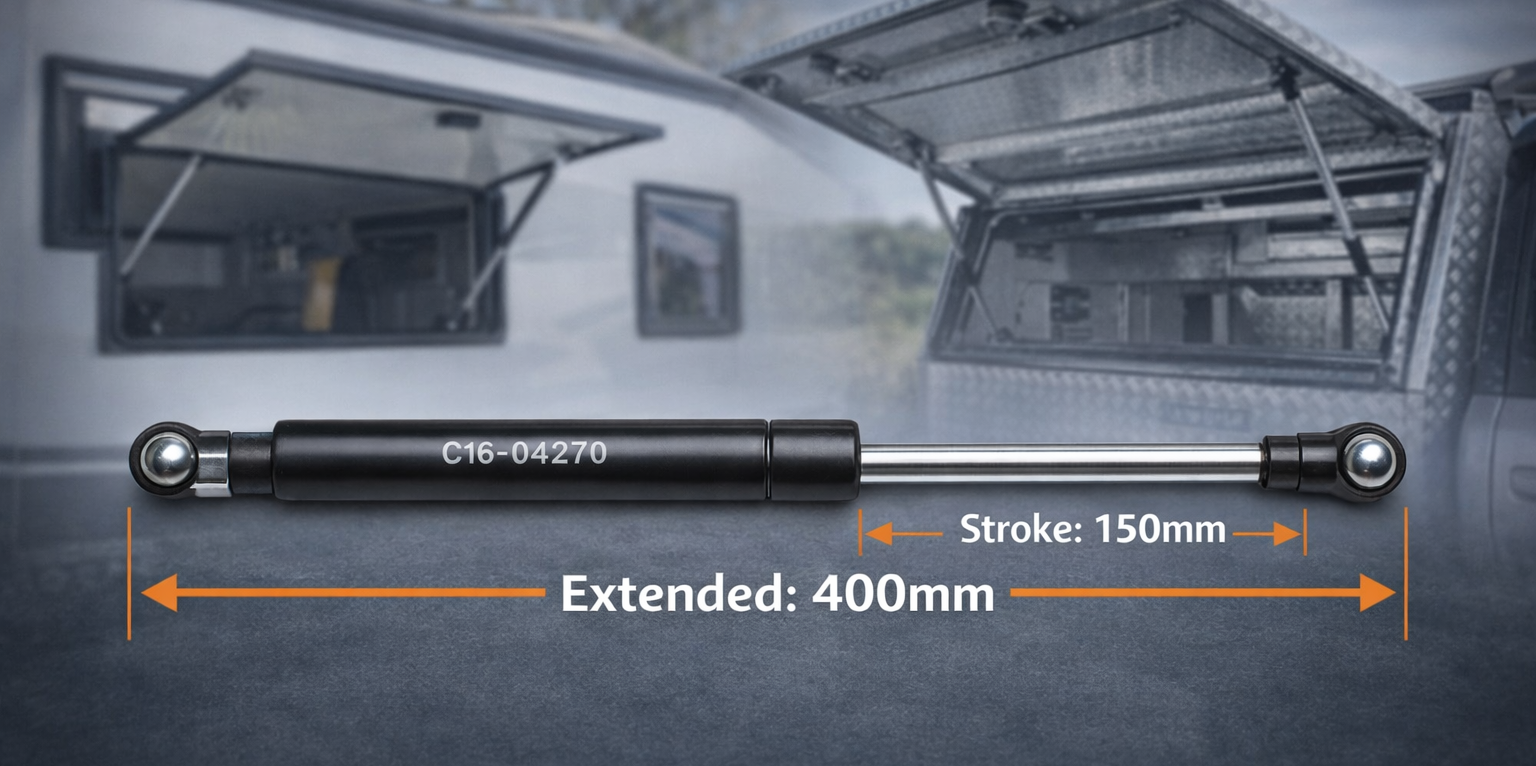
This is the full length of the gas strut when fully extended, measured from center-to-center of the mounting points.Correct extended length ensures proper opening angle and alignment.
2. Stroke Length
Stroke is the distance the rod travels from fully extended to fully compressed.The stroke determines how far the lid or panel can move.
3. Force Rating
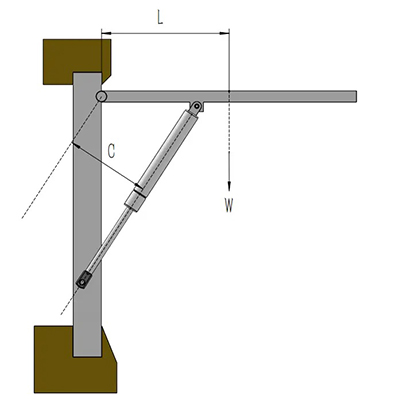
Force is measured in Newtons (N). This determines how much lifting power the strut provides.Correct force depends on:
- Weight of the panel
- Center of gravity
- Mounting position
- Installation angle
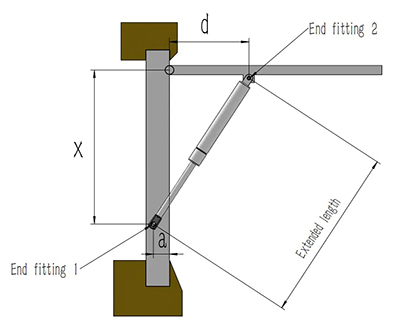
4. Mounting Position
Installation geometry significantly affects performance. Even the correct force rating can perform poorly if mounting points are incorrect.
If you need detailed step-by-step guidance to determine the correct gas spring specifications, please visit our Gas Struts Calculator. The page also provides comprehensive instructions on Installing Gas Struts and Replacing Gas Struts, helping you measure accurately, select confidently, and complete installation with ease.
What Size Gas Struts for Camper Trailer?
For example, if your camper trailer side window weighs 8 kg and opens to 45°, you may need gas struts with a 400 mm extended length, 150 mm stroke, and around 250–300N force. For a heavier rear storage door weighing 15 kg, a 500 mm strut with 400–500N may be required.

What Do the Numbers on a Gas Strut Mean?
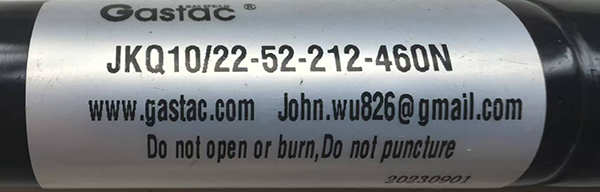
Gas struts typically have markings printed on the cylinder body. These numbers provide key specifications.Example:
456N – Force rating
212mm – Extended length
52mm – Stroke length
10/22 – Rod diameter / tube diameter
Gastac – Brand logo
JKQ – The gas spring type is locking gas spring
www.gastac.com – Gas spring website
John.wu826@gmail.com – Email
20230901 – Production date or shipping date
These markings help identify replacement compatibility, correct force rating, dimensional specifications, and the product series or batch code. When replacing a gas strut, matching these numbers ensures proper fit, safe operation, and reliable performance.

张航
Stay in the loop