











Table of contents
Share Post

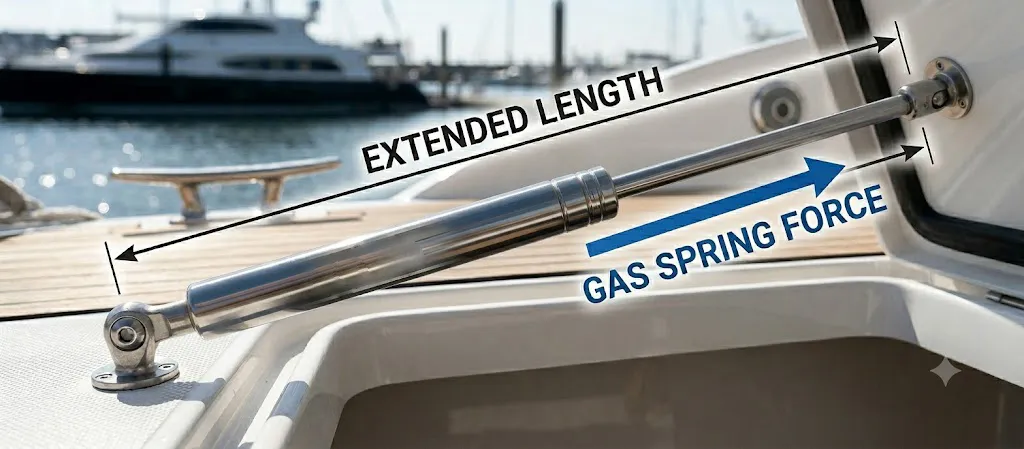
Marine gas springs are essential components widely used in marine environments to support, lift, and control the movement of heavy lids, hatches, doors, and storage compartments on boats and ships.

Unlike standard gas springs, marine gas springs are specifically designed to withstand harsh conditions such as saltwater exposure, high humidity, and continuous vibration.

If you are designing, repairing, or upgrading marine equipment, understanding how marine gas springs work—and how to choose the right one—can significantly improve safety, durability, and usability.

What Are Marine Gas Springs?

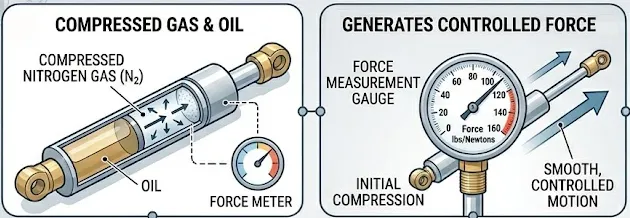
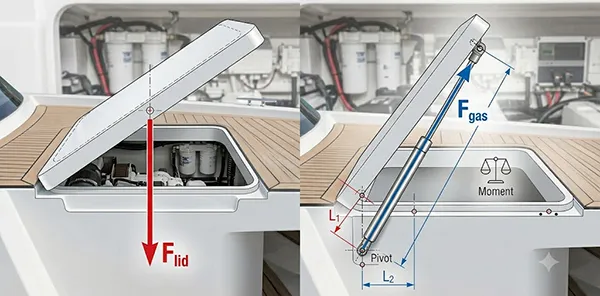
A marine gas spring is a mechanical device filled with compressed nitrogen gas and oil that generates controlled force to assist lifting or lowering heavy components, commonly used in marine applications such as hatches, lids, and access panels.

Understanding the Environment of Marine Gas Springs

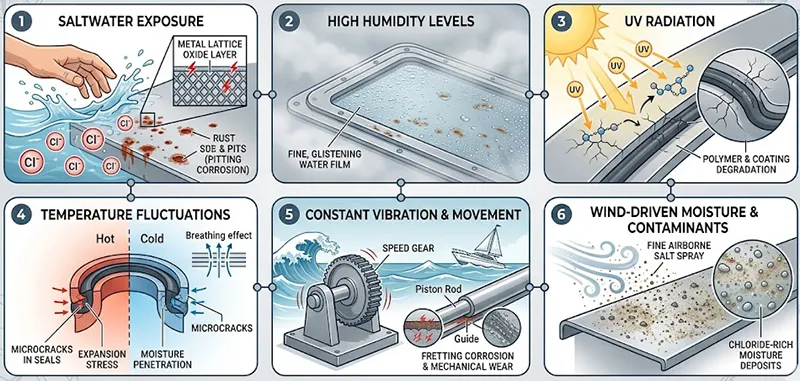
Marine equipment operates in one of the most demanding environments for mechanical components. Unlike indoor applications, marine gas springs are continuously exposed to factors that accelerate wear and corrosion. These challenges include:

  • Saltwater exposure: Chloride ions (Cl⁻) in seawater damage the protective oxide layer on metal surfaces and increase the electrochemical reaction rate in a highly conductive environment.
  • High humidity levels : High humidity forms a thin water film on metal surfaces, leading to continuous electrochemical corrosion.
  • UV radiation: Ultraviolet radiation damages the molecular chains of polymers and protective coatings.
  • Temperature fluctuations: Temperature changes cause thermal expansion and contraction, resulting in microcracks, decreased sealing performance, and moisture penetration through the “breathing” effect.
  • Constant vibration and movement: Continuous vibration repeatedly damages the protective oxide layer, leading to fretting corrosion and mechanical wear.
  • Wind-driven moisture and contaminants: Wind-blown salt spray and airborne particles deposit chloride-rich moisture and abrasives on the surface.

Over time, these environmental conditions can cause standard steel components to rust, degrade seals, and reduce overall product lifespan. For this reason, marine applications require marine gas springs specifically engineered to withstand long-term exposure to harsh conditions.

What Material Should You Choose for Marine Gas Springs?

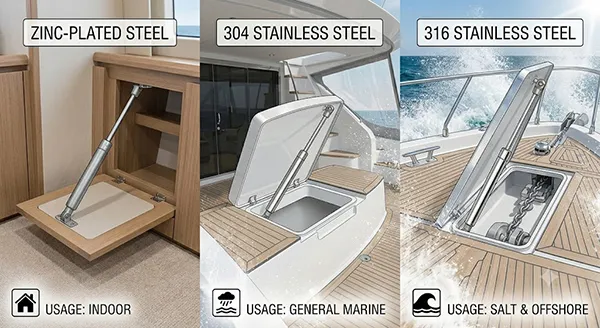
Material selection for marine gas springs mainly depends on whether the application is exposed to seawater or used inside the vessel.

External Marine Applications (Direct Saltwater Exposure)

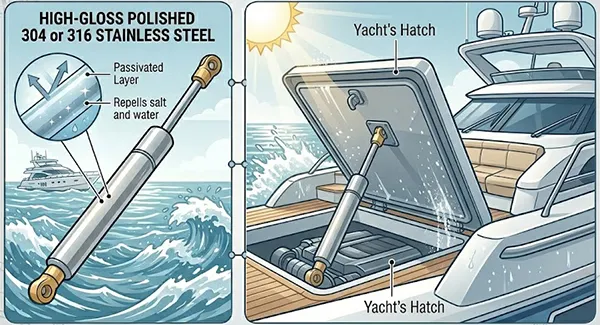
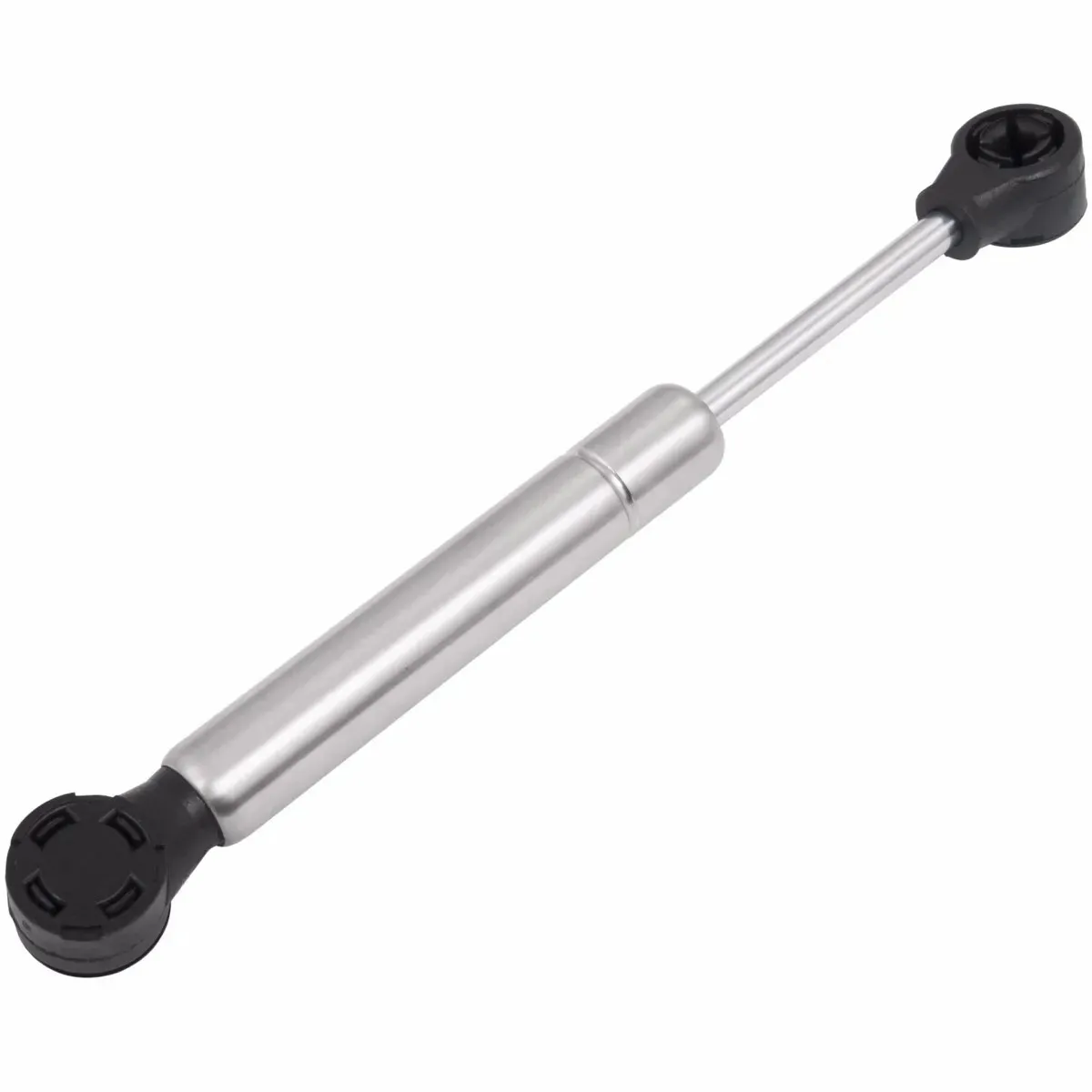
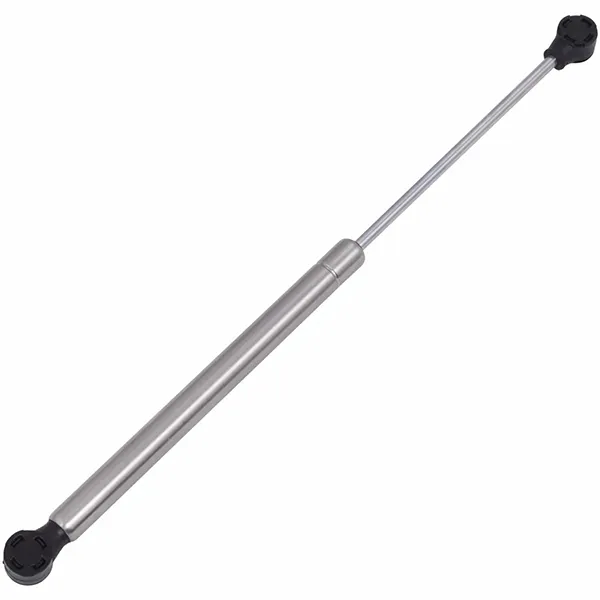
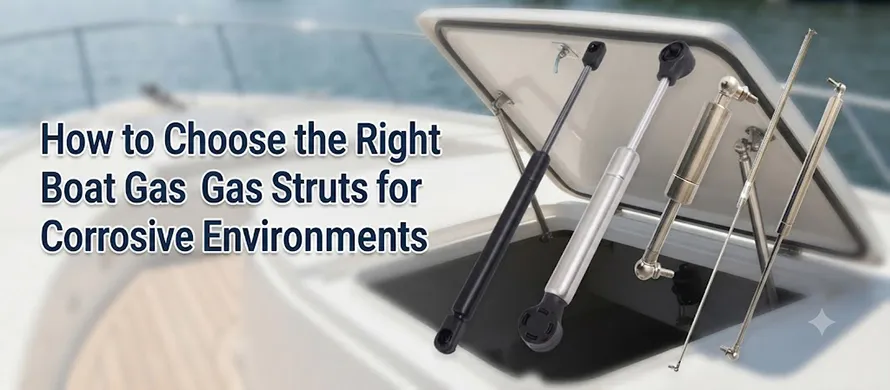
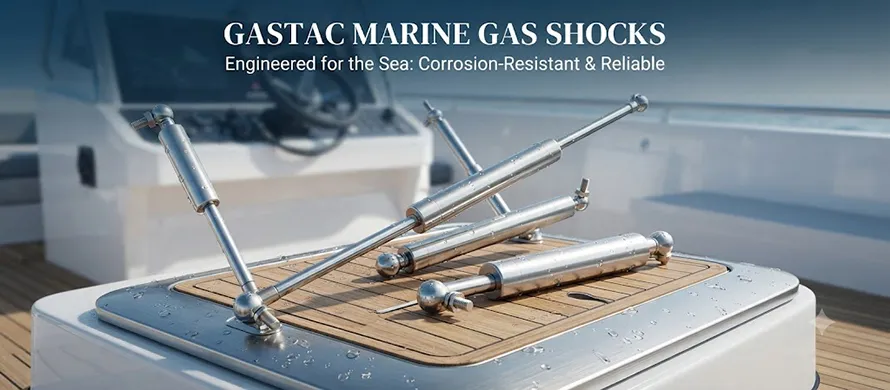
304 or 316 stainless steel is typically used in applications with direct exposure to saltwater and harsh outdoor conditions due to its strong corrosion resistance.

For Harsh External Conditions (Stainless Steel Gas Springs)

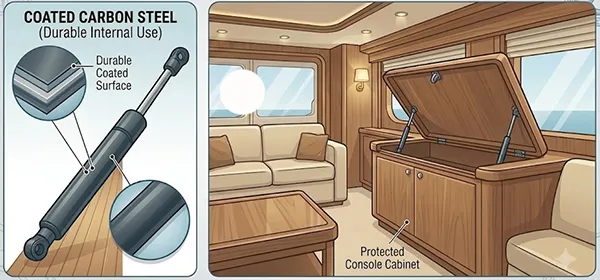
Materials for Protected or Internal Marine Installations

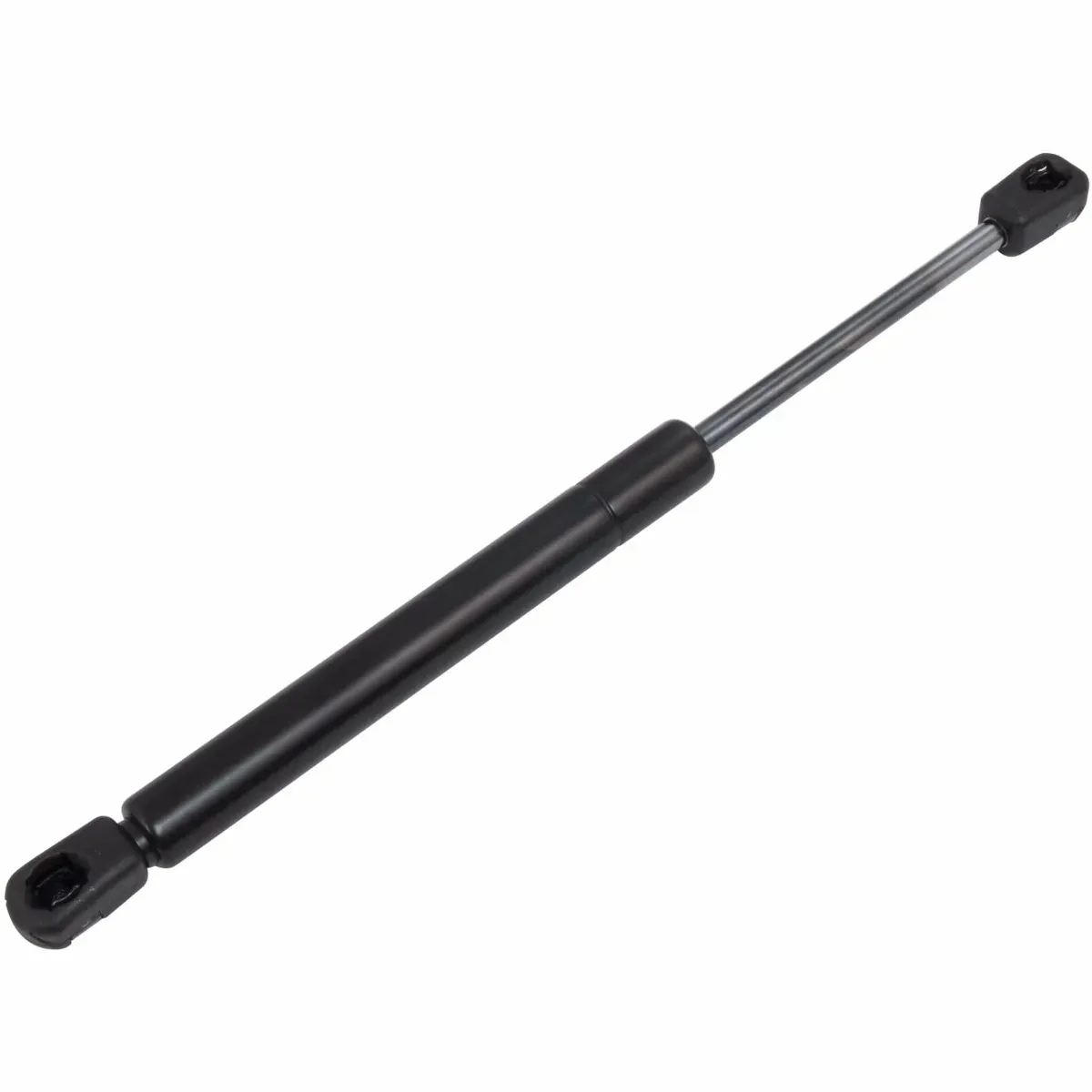
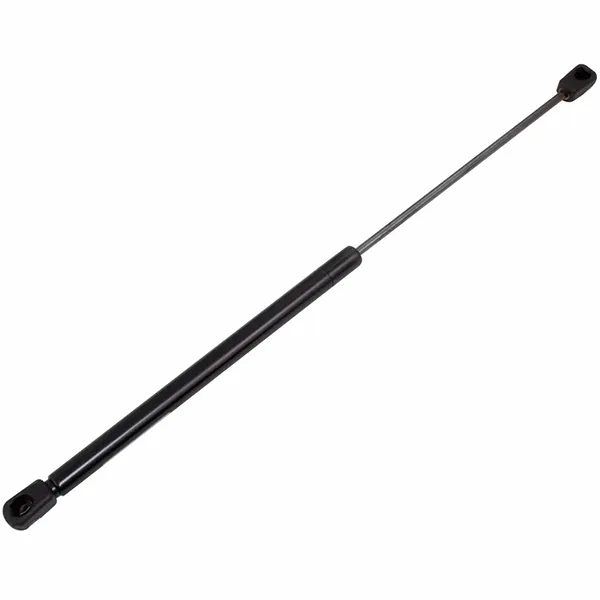
High-quality corrosion-protected carbon steel is generally used in enclosed or low-exposure areas where direct seawater contact is limited, offering a more cost-effective solution.

What Is the Difference Between Stainless and Standard Gas Springs?

Stainless and standard gas springs differ mainly in material quality and their ability to perform in corrosive environments. Stainless versions are designed for harsh conditions such as marine exposure, while standard gas springs are intended for general indoor or low-corrosion applications.

The table below outlines the basic property comparison between standard gas springs and stainless steel gas springs:

Comparison DimensionStandard Carbon Steel Gas SpringStainless Steel Gas Spring (304/316)
Base MaterialHigh-strength carbon steel (e.g., Grade 45 or Q235)Grade 304 or 316 stainless steel
Corrosion & Failure MechanismRelies on external QPQ, electrophoresis, or paint coatings. If scratched, moisture penetrates the carbon steel base, rapidly creating iron oxide (rust) and causing the coating to flake off.Relies on a dense, self-healing chromium oxide passivation layer formed naturally by internal chromium. If scratched, the exposed surface automatically re-passivates.
Salt Spray Test StandardNSS (Neutral Salt Spray) rating is typically 72 to 144 hours.NSS (Neutral Salt Spray) rating typically reaches 500 to 1000+ hours.
Piston Rod ProcessingPrecision ground followed by hard chrome plating. The plating has micro-cracks where moisture can penetrate over time, leading to sub-surface rust and blistering.Electropolished or micro-polished to a surface roughness of Ra≤0.1 μm. Eliminates the risk of plating flakes and drastically reduces seal wear.
Cylinder Inner Wall TreatmentStandard seamless tube drawing and honing; the inner wall is prone to micro-rust spots when exposed to internal moisture.Deep passivation and high-precision honing of the inner wall; remains chemically inert under prolonged exposure to internal gas-oil mixtures for a constant operating resistance.
Magnetic CharacteristicsStrongly ferromagnetic.Exhibits non-magnetic or weakly magnetic properties, ensuring zero interference with nearby precision electronic instruments.
Temperature ToleranceStandard range of −20°C to +80°C.Outfitted with Viton seals to withstand extreme thermal fluctuations from −30°C up to +200°C.

Common Applications of Marine Gas Springs

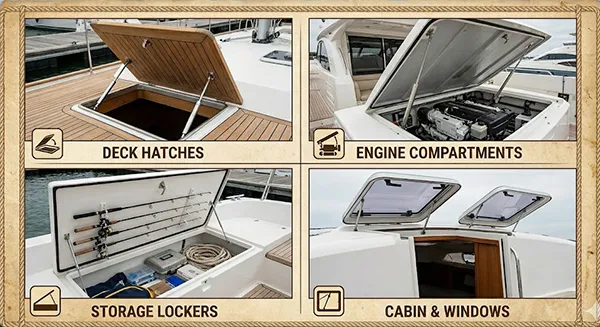
Marine gas springs are used throughout modern vessels to improve functionality, safety, and user convenience. Their ability to support heavy panels and provide controlled movement makes them ideal for numerous onboard systems.

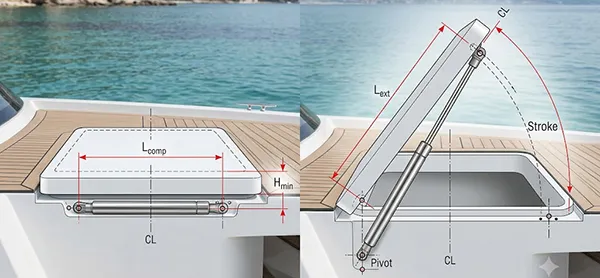
  • Deck Hatches: Provides smooth lifting and prevents heavy deck covers from slamming shut on passenger fingers.

  • Engine Compartments: Holds up large, heavy engine room covers for hands-free maintenance access.
  • Storage Lockers: Simplifies accessing fishing rod lockers, live wells, bait wells, and dock boxes.
  • Cabin & Windows: Controls the movement of motorhome-style companionway doors, skylights, and pop-up windows.

Common Applications of Marine Gas Springs

张航

Stay in the loop

Subscribe to our free newsletter.

Leave A Comment