





Table of contents
Share Post

Standing desk converters have become a popular solution for offices and home workspaces where replacing an entire desk is not practical. Instead of investing in a full sit-stand desk system, users can simply place a converter on top of their existing desk and instantly create a flexible ergonomic workstation.

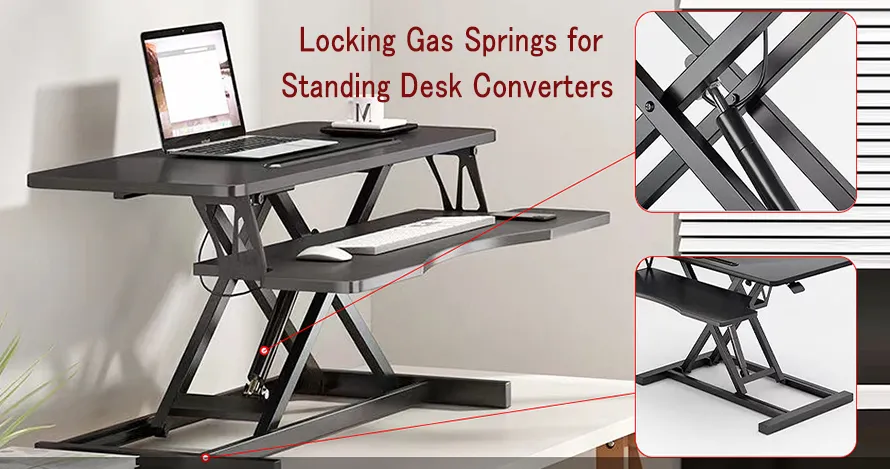
But the real performance of a standing desk converter does not come from its surface area, monitor platform, or keyboard tray. It comes from the mechanism hidden inside: locking gas springs. These components determine whether the converter feels smooth, stable, and effortless—or heavy, unstable, and frustrating to use.

Why Standing Desk Converters Exist in the First Place

Unlike full standing desks, converters are designed for one specific purpose: Transform a fixed desk into a sit-stand workstation without replacement. This makes them especially popular in:

  • Shared office environments
  • Small workspaces
  • Budget-conscious setups
  • Temporary or flexible workstations
  • Home office retrofits

The key requirement is simple: Users should be able to change working height without disrupting their workflow. That requirement places all mechanical responsibility on the lifting system.

The Real Challenge Behind Desktop-Level Height Adjustment

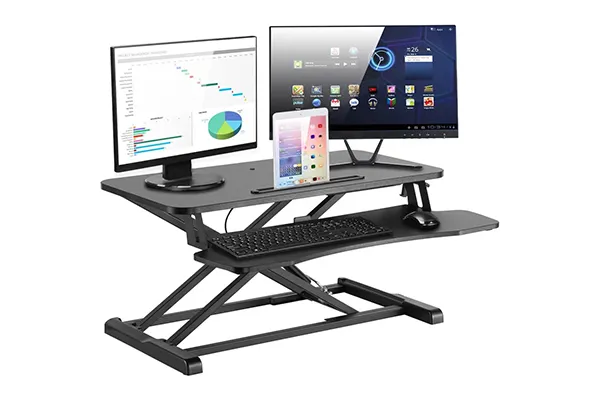
Standing desk converters face a unique engineering problem: They must lift and stabilize two separate working layers at the same time:

  • Upper monitor platform
  • Lower keyboard tray

This creates uneven load distribution and shifting center of gravity during movement. Without a proper balancing system, users would experience:

  • Sudden dropping when releasing height adjustment
  • Excessive force required to lift the unit
  • Instability when typing at mid-height
  • Wobbling under monitor weight

What Locking Gas Springs Actually Do in a Converter System

In standing desk converters, locking gas springs are not just lifting assistants. They act as a dynamic balance and positioning system.

Converters carry more complexity than normal desks:

  • Monitor arms or dual monitors
  • Keyboard + mouse tray
  • Accessories and devices

Locking gas springs offset this combined load, making vertical movement feel significantly lighter.

A well-designed system ensures:

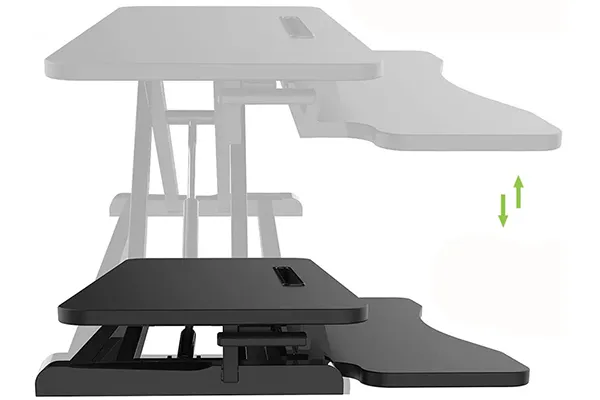
  • Smooth upward lift without sudden jumps
  • Controlled downward movement without free-fall
  • Stable transition at any intermediate height

This is critical because users often adjust converters while equipment is still on them.

Unlike fixed-position risers, converters must support:

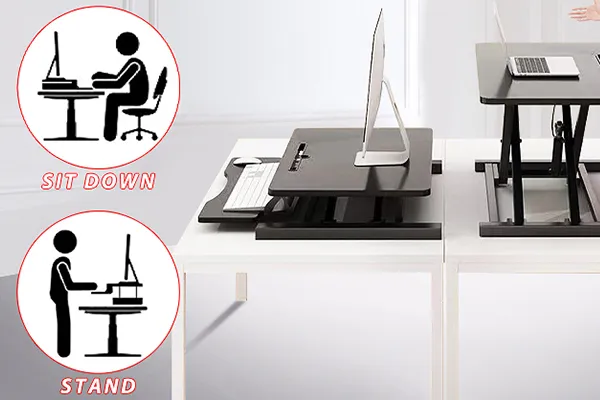
  • Sitting height
  • Standing height
  • Mid-level collaboration height
  • Temporary adjustment positions

Locking gas springs allow infinite positioning within the stroke range while maintaining stability.

Why Stability Matters More in Converters Than in Full Standing Desks

Standing desk converters sit on top of another desk surface, which introduces a second layer of movement risk. Even small instability can result in:

  • Monitor vibration during typing
  • Keyboard tray bounce
  • Loss of precision when working
  • User discomfort over long periods

This is why rigid locking performance is critical. Once positioned, the system must behave like a solid workstation—not a moving mechanism.

The Difference Between Good and Poor Converter Performance

From a user perspective, the difference is immediately noticeable:

High-Quality Converter Experience

  • Smooth lifting with minimal effort
  • Stable monitor position at all heights
  • No sudden sinking or rebound
  • Easy adjustment without lifting heavy load manually

Poor Converter Experience

  • Requires excessive force to raise
  • Drops when releasing adjustment
  • Wobbles at mid-height
  • Feels unstable under load

In most cases, this difference is not caused by frame design—but by gas spring quality and tuning.

Technical Specifications for Standing Desk Converter Cylinders

Because converters handle localized desktop weight rather than raw structural building loads, their force envelopes are highly concentrated. The table below outlines the standard parameters optimized for X-frame and Z-frame converter designs:

GASTAC Part NumberRod / Tube Dia. (mm)Stroke (mm)Extended Length (mm)Force Range (F1)Locking TypeApplication Riser Type
SDC06020040010/2260 mm200 mm150N - 400NRigidUltra-Compact Mini Top Riser
SDC08024040010/2280 mm240 mm150N - 400NRigidSlimline 20" Laptop Station
SDC10028040010/22100 mm280 mm150N - 400NRigidStandard 24" Single-Screen Riser
SDC12032040010/22120 mm320 mm150N - 400NRigidStandard 30" Mainstream Riser
SDC15038040010/22150 mm380 mm150N - 400NRigidHeavy-Duty 32" Keyboard Riser
SDC16040540010/28160 mm405 mm150N - 400NRigidPremium 36" Dual-Monitor Corner Riser
SDC18044540010/28180 mm445 mm150N - 400NRigidLarge 42" Double-Tier Workstation
SDC20048540010/28200 mm485 mm150N - 400NRigidUltra-Wide 48" Professional Studio Riser

Why Rigid Locking Gas Springs Are the Industry Standard

For standing desk converters, rigid locking is the preferred solution. Because the system must:

  • Hold dual-layer loads
  • Prevent micro-movement during typing
  • Maintain precise height position
  • Resist gradual sinking under weight

Elastic locking systems are generally unsuitable because they introduce slight movement under load, which reduces usability in desktop environments.

OEM Design Considerations for Standing Desk Converters

For manufacturers, designing a reliable converter system requires balancing several factors:

  • Load Distribution: Upper monitor platform and lower keyboard tray do not share equal weight, so force balancing must account for shifting center of gravity.
  • Stroke and Travel Range: Converters typically require moderate vertical travel, not full standing desk range. This means gas spring response must remain stable across a compact motion range.
  • User Activation Force: The system must be light enough to allow easy adjustment while still being strong enough to securely hold the position under load, making this balance essential for overall user satisfaction.

Elastic locking systems are generally unsuitable because they introduce slight movement under load, which reduces usability in desktop environments.

Why Locking Gas Springs Define Product Quality

In standing desk converters, users rarely evaluate technical specifications. Instead, they judge:

  • How easy it feels to lift
  • How stable it feels when typing
  • Whether it stays in position
  • Whether it feels “solid” or “cheap”

All of these perceptions are directly controlled by the locking gas spring system.

Accelerate Your Office Furniture R&D with GASTAC Gas Springs

Balancing the shifting leverage of a folding Z-lift frame requires custom force calibration to prevent drop-shocks and heavy lifting blind spots. Get in touch with the GASTAC engineering team today to map the perfect pressure curve against your converter blueprints and secure precision-calibrated OEM samples for your next production run.

张航

Stay in the loop

Subscribe to our free newsletter.

Leave A Comment