







Table of contents
Share Post

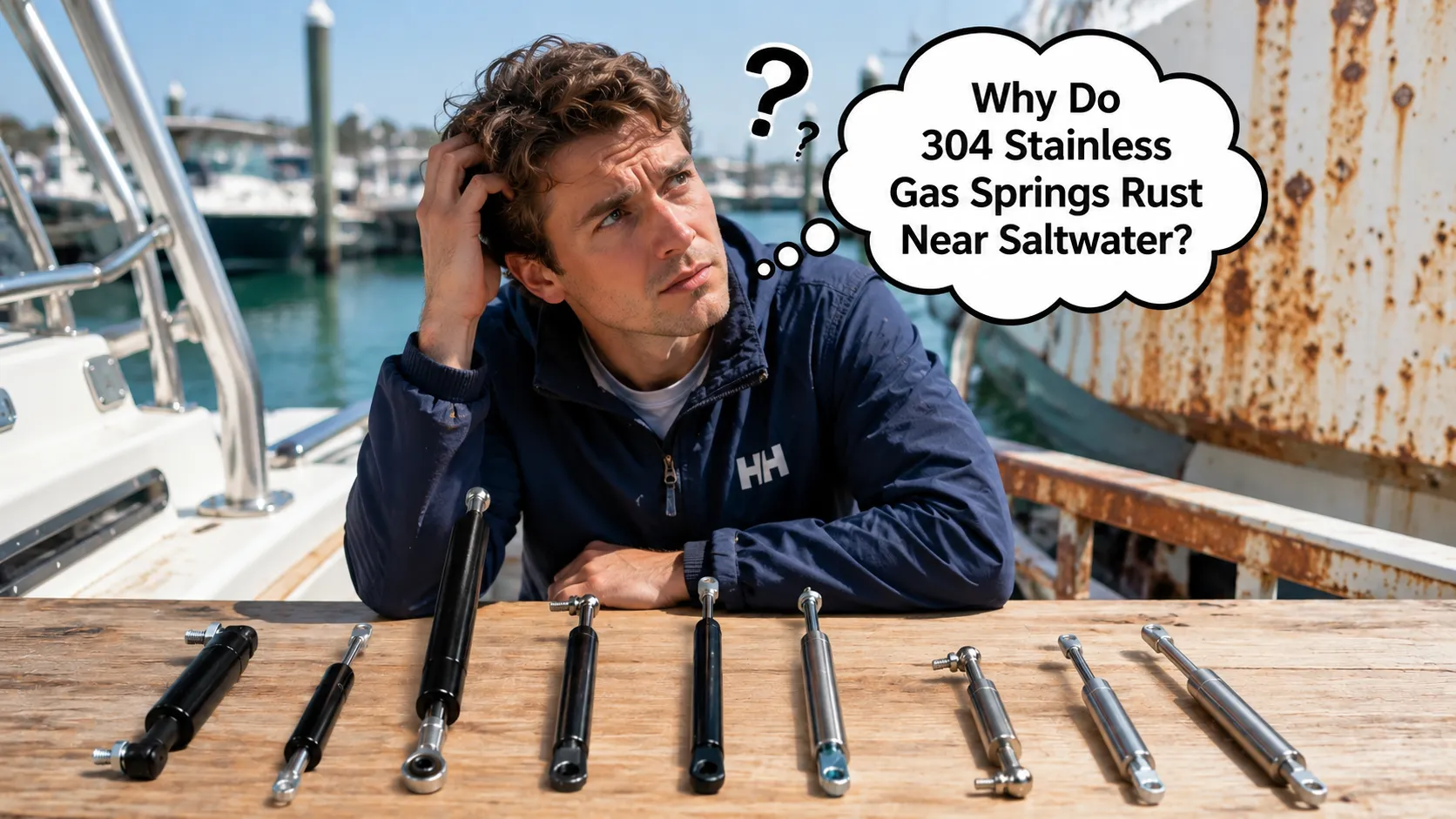
To engineering and procurement professionals operating in marine or coastal environments, the appearance of reddish-brown streaks on a stainless gas spring is a frustrating sight. After specifying stainless steel to avoid the structural degradation common to carbon steel, seeing rust develop near saltwater can feel like a material failure.

However, this phenomenon—often referred to as “tea-staining” or localized pitting corrosion—is entirely predictable under the laws of metallurgy. To understand why 304 stainless gas springs succumb to saltwater environments, we must look closely at chemical composition, passive layer breakdown, and environmental mechanics.

The Chemistry of 304 Stainless Steel vs. Chloride Ions

To understand why rust occurs, it helps to look at the metallurgical anatomy of stainless gas springs. Stainless steel does not resist corrosion because of a coating; it resists it because of an ultra-thin, self-healing surface layer called chromium oxide (Cr2O3), known as the passive layer.

  • The Protective Barrier: In Grade 304 stainless steel, a minimum of 18% chromium reacts with ambient oxygen to form this microscopic passive film, shielding the underlying iron from oxidation.
  • The Chloride Attack: Saltwater and sea spray are dense with chloride ions (Cl-). Chlorides are highly aggressive chemical agents. Because of their tiny ionic radius, they can penetrate the microscopic imperfections in the chromium oxide film of a 304 stainless steel alloy.
  • The Breakdown: Grade 304 lacks sufficient chemical resistance to withstand continuous chloride exposure. Once the chlorides breach the passive film, oxygen cannot reach the metal beneath fast enough to reform the layer, initiating localized galvanic cells that manifest as brown iron oxide (rust).

Pitting and Crevice Corrosion in Gas Spring Operation

Corrosion near saltwater rarely attacks a gas spring uniformly. Instead, it targets highly specific mechanical zones through two distinct processes:

  • Pitting Corrosion: This occurs on the exposed cylinder body and the piston rod. The chloride ions create microscopic pits. Once a pit forms, the chemistry inside it changes; it becomes highly acidic, accelerating the corrosion rate deep into the metal while the surrounding surface looks completely untouched.
  • Crevice Corrosion: A gas spring is a mechanical component with moving parts. The tight clearances around the end fittings, the rod guide, and the dual-lip elastomer seals create stagnant micro-environments. Saltwater gets trapped in these tight gaps. Because there is no fresh oxygen flow inside a crevice to regenerate the chromium oxide film, the passive layer collapses permanently, leading to rapid rust tracking along the sealing track.

The Structural Mechanics of a Stainless Gas Spring

Why does rust matter so much on a gas spring compared to a static bracket? It comes down to performance degradation and structural integrity.

Impacted ComponentVisual IndicatorMechanical Consequence
Piston Rod SurfaceMicroscopic pits & brown streaksTears the internal rubber seals, causing high-pressure nitrogen gas leaks and total spring failure.
Cylinder HousingLocalized pitting clustersWeakens the wall structure holding the internal 100+ bar pneumatic charge.
End FastenersRed rust around threads/jointsIncreases structural friction, binds the joints, and leads to mechanical shearing under load.

How to Prevent Saltwater Corrosion

Understanding why 304 fails in marine environments highlights the importance of choosing the right material profile during the early stages of application design.

For environments with high salt spray, heavy coastal fog, or direct marine exposure, Grade 316 stainless steel is the industry benchmark. Grade 316 contains 2% to 3% Molybdenum (Mo). This metallurgical addition specifically targets chloride resistance, drastically reducing the risk of pitting and crevice corrosion under harsh coastal conditions.

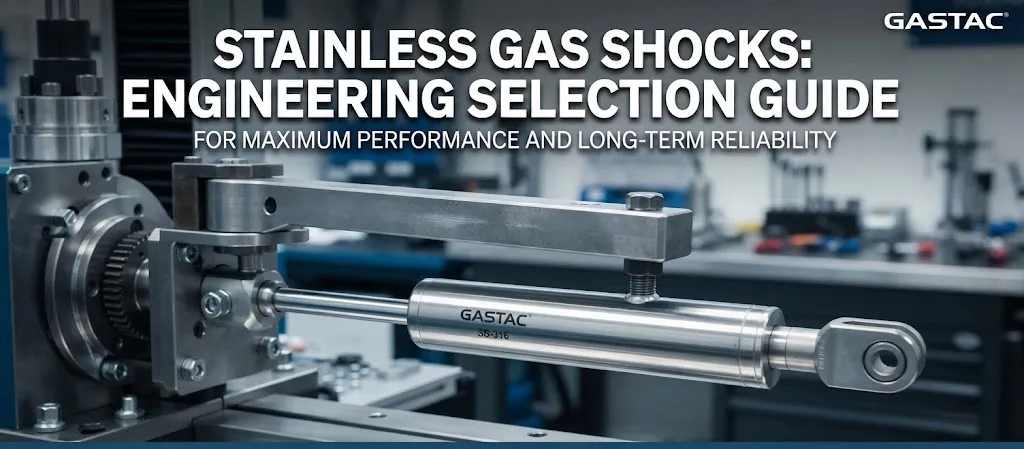
Technical Selection Note: Material specification is just one part of ensuring component longevity. If you are designing systems for harsh, corrosive, or heavy-duty environments, review our comprehensive technical engineering checklist on the essential factors to consider when selecting stainless steel gas shocks to ensure your application achieves maximum cycle life and pressure retention.

张航

Stay in the loop

Subscribe to our free newsletter.

Leave A Comment