






To the untrained eye, a stainless steel gas strut should maintain a perfectly flat force profile throughout its entire stroke. Since the internal gas flows freely through the piston head orifices, the pressure remains equal on both sides. However, when you fully compress a stainless steel gas strut, you will notice a distinct, progressive increase in the force required to force the rod completely into the cylinder.

This progressive resistance is not a design flaw. It is a direct result of two core engineering principles: volumetric displacement and thermodynamic pressure scaling.

Volumetric Displacement of the Piston Rod

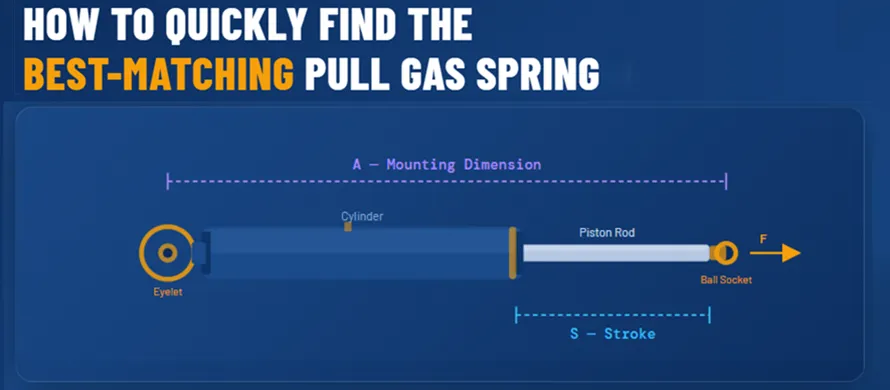
The primary driver behind the force increase is the physical volume of the steel rod entering the sealed chamber. A gas strut does not generate force through traditional mechanical elasticity like a wire coil spring. Instead, it relies on the pressure differential created by the cross-sectional area of the rod.

  • The Volume Squeeze: When the strut is extended, a significant portion of the rod is outside the cylinder. As you compress the strut, that solid steel rod is forced into the housing, occupying physical space that was previously available for the gas.
  • Boyle’s Law in Action: Because the cylinder is a fixed, non-expanding closed-loop system, introducing the rod decreases the total internal volume available for the nitrogen charge. According to Boyle’s Law, as volume decreases, pressure must rise.
  • The Resulting Force Spike: Because force equals pressure multiplied by the cross-sectional area of the rod (F = P * A), this elevated internal pressure directly increases the outward force exerted by the strut.

The Force Progression Ratio

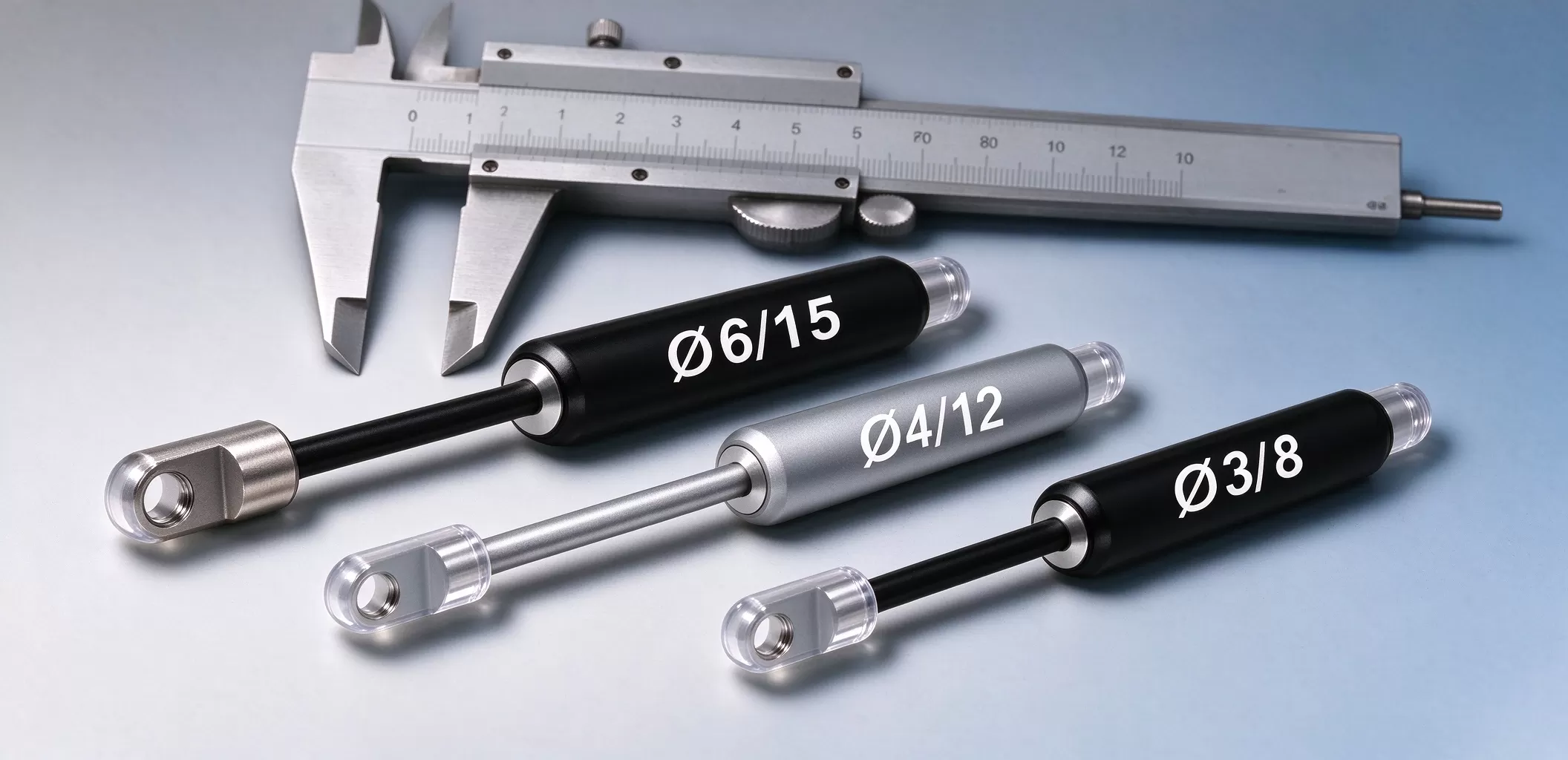
The magnitude of this force increase is determined by the design of the strut, specifically the ratio between the diameter of the piston rod and the diameter of the cylinder tube.

  • High Progression (Thick Rod / Narrow Cylinder): * The rod displaces a massive percentage of the internal volume when fully compressed.

    • This causes a steep spike in internal pressure.

    • The Result: A high force progression ratio where the compression force can increase by 40% or more at the end of the stroke.

  • Low Progression (Thin Rod / Large Cylinder): * Engineered specifically for a flatter, more predictable force profile (common in marine shocks).

    • The percentage of displaced volume remains minimal when the rod is fully inserted.

    • The Result: A flat, predictable force increase, usually kept between 10% to 20%.

Technical Note: This pressure behavior is a critical variable during the specification phase. For a complete engineering checklist, explore the essential factors to consider when selecting stainless steel gas shocks to ensure your application gets the correct force curve.

Thermal Dynamics and Friction Accumulation

While volume displacement is the primary mechanical factor, thermodynamics and internal friction also contribute to the increased resistance during rapid compression.

  • Transient Temperature Spikes: Compressing a gas generates heat. If a heavy marine hatch or industrial hood is closed quickly, the rapid reduction in volume causes a temporary temperature spike within the nitrogen gas. According to the Ideal Gas Law, this thermal increase causes an additional, momentary spike in internal pressure.
  • Seal Friction: As the strut reaches full compression, the internal double-lip elastomer seals and scraper rings experience maximum friction against the polished stainless steel rod.
  • Micro-Hydraulic Oil Column: At the very end of the stroke, the piston head encounters an internal hydraulic oil column. This oil is designed to provide kinetic damping to prevent structural jarring, adding a final layer of resistance that makes the last few millimeters of the stroke feel significantly harder to compress.

A stainless steel gas strut gets harder to push when fully compressed because the solid rod literally crowds out the nitrogen gas inside the cylinder. The resulting volume reduction drives up the internal pressure, requiring more mechanical force to overcome the final stretch of the stroke.

张航

Stay in the loop

Subscribe to our free newsletter.

Leave A Comment