Gas struts are widely used in modern vehicles, furniture, and industrial equipment to provide smooth lifting and controlled motion. From car hoods and truck tool boxes to camper windows and storage beds, these compact components make it easier to open, hold, and close heavy panels safely.
Despite their widespread use, many people still ask a simple question: how does a gas strut work?
The answer lies in a clever engineering design that combines compressed gas, piston movement, and hydraulic damping inside a sealed cylinder. This mechanism allows gas struts—also known as gas springs—to generate lifting force while maintaining smooth and controlled movement.
In this guide, we will explain the internal structure and operating principle of gas struts, helping you understand how does gas spring work and why these devices are so effective in a wide range of applications.
What Is a Gas Strut?
A gas strut, often called a gas spring, is a sealed mechanical device that uses compressed gas to create a controlled pushing force.
Unlike traditional metal springs that rely on elastic deformation, gas struts use high-pressure nitrogen gas inside a cylinder to generate force. This allows them to deliver consistent lifting assistance while maintaining smooth motion and stability.
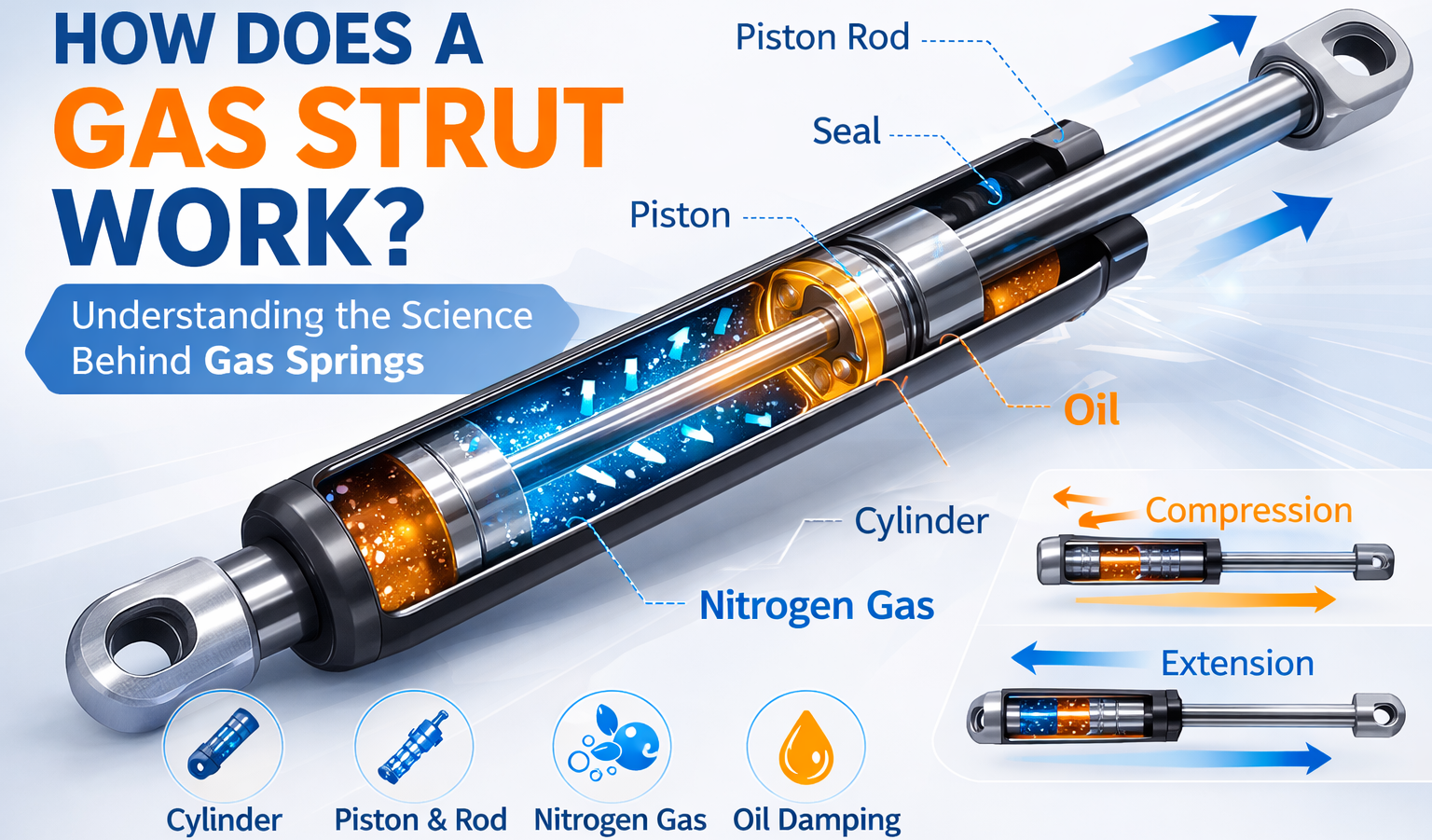
A typical gas strut consists of several main components:
- Pressure cylinder that stores compressed gas
- Piston rod that extends and retracts
- Piston assembly separating internal chambers
- Hydraulic oil used for damping control
- Sealing system that maintains internal pressure
Together, these components allow gas struts to operate efficiently in applications requiring lifting support or motion control.
How Does a Gas Strut Work ?
The answer lies in a clever engineering design that combines compressed gas, piston movement, and hydraulic damping inside a sealed cylinder. This mechanism allows gas struts—also known as gas springs—to generate lifting force while maintaining smooth and controlled movement.
To understand gas struts how do they work, it is helpful to look inside the sealed cylinder.
Gas struts contain compressed nitrogen gas stored under high pressure. Nitrogen is commonly used because it is chemically stable and maintains pressure over long periods.
When a load pushes against the piston rod, the rod moves inward into the cylinder. This movement reduces the internal gas volume and increases pressure inside the chamber.
Because compressed gas naturally expands when space becomes available, the stored pressure pushes the piston rod outward again when the external load is reduced. This outward force is what provides lifting assistance.
This simple principle explains how does gas spring work: energy is stored through gas compression and released through controlled expansion.
The Role of the Gas Piston Inside the Cylinder
Another important part of the mechanism is the internal piston assembly.
The piston divides the cylinder into internal chambers and allows controlled movement of both gas and oil. When the rod moves, the piston travels through the cylinder while maintaining pressure separation.
Understanding how does a gas piston work helps explain how gas struts maintain smooth motion. As the piston moves, small internal passages allow hydraulic oil to flow between chambers. This controlled oil flow slows the movement and prevents sudden acceleration.
Without this damping effect, the strut would extend too quickly and become unsafe in many applications.
Why Hydraulic Oil Is Important?
Although compressed gas provides the lifting force, hydraulic oil plays a critical role in controlling the movement of the gas strut.
When the piston moves through the cylinder, the oil must pass through small calibrated internal passages. These restricted channels slow the movement of the piston rod and create resistance.
This process is known as hydraulic damping, which ensures that gas struts extend smoothly rather than snapping open.
Many gas struts also include end-of-stroke damping, where the oil slows the piston near the end of extension. This reduces impact forces, protects mounting hardware, and improves overall safety.
Why Nitrogen Is Used in Gas Struts?
Most gas struts use nitrogen gas rather than air or other gases.Nitrogen offers several advantages:
- chemically stable and non-reactive
- maintains pressure over long periods
- prevents internal corrosion
- does not support combustion
These properties make nitrogen ideal for sealed pressure systems such as gas springs.
Key Functions of Gas Struts
Gas struts provide several important advantages over traditional mechanical springs. Their design combines compressed gas and hydraulic damping, allowing them to deliver smooth, controlled motion while remaining compact and reliable.
| Advantage | Description |
|---|---|
| Smooth Lifting Assistance | Reduces the effort needed to lift heavy panels, lids, and covers. |
| Controlled Motion | Hydraulic damping ensures smooth and safe opening and closing. |
| Compact Design | High force output in a small and efficient structure. |
| Low Maintenance | Sealed gas systems operate reliably for years with minimal maintenance. |
Common Applications of Gas Struts
Gas struts are used in many industries where controlled lifting or support is required.In all systems, the principle behind how does a gas strut work allows heavy components to be lifted safely and held in position with minimal effort.Below are some of the most common application areas.
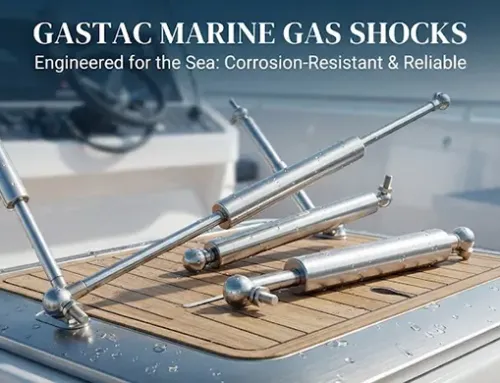
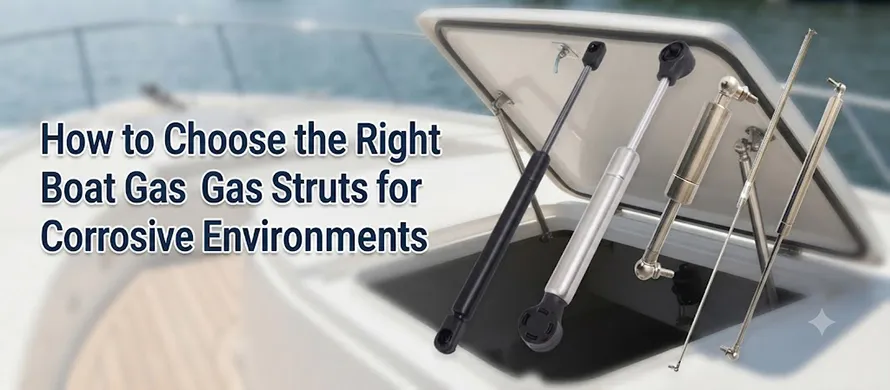
- Marine Equipment: In the marine industry, gas struts are commonly used to support boat hatches, storage compartments, engine covers, and access panels. They help ensure smooth opening and secure holding even in demanding marine environments.
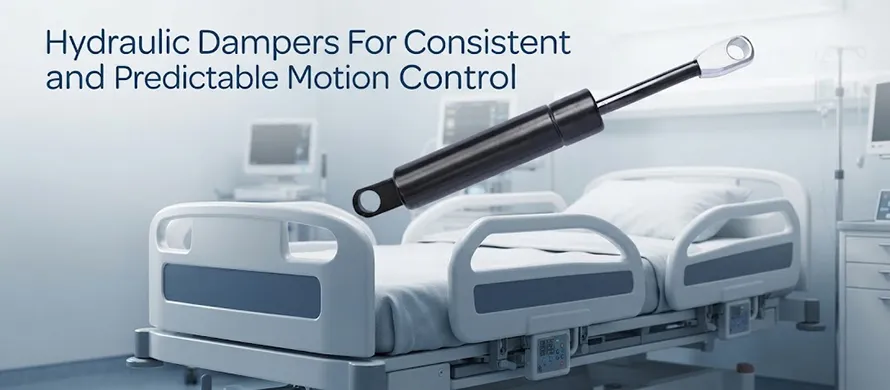
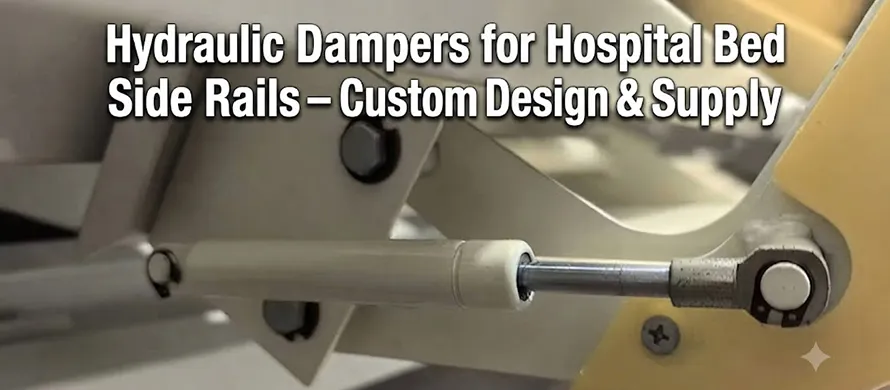
- Medical Equipment: Gas struts are widely used in medical devices where smooth and adjustable movement is required. Common applications include hospital beds, medical carts, examination tables, and adjustable equipment supports.
- Furniture Equipment: Modern furniture often uses gas struts to improve convenience and usability. Typical applications include lift-up storage beds, cabinet doors, toy boxes, and adjustable furniture components.
- Automotive: Gas struts are extensively used in the automotive industry to assist with lifting and holding heavy panels. Common examples include car hoods, tailgates, trunk lids, and truck tool boxes.
- Office Equipment: In office environments, gas struts support ergonomic and adjustable products such as height-adjustable desks, monitor arms, office chairs, and standing desk converters.
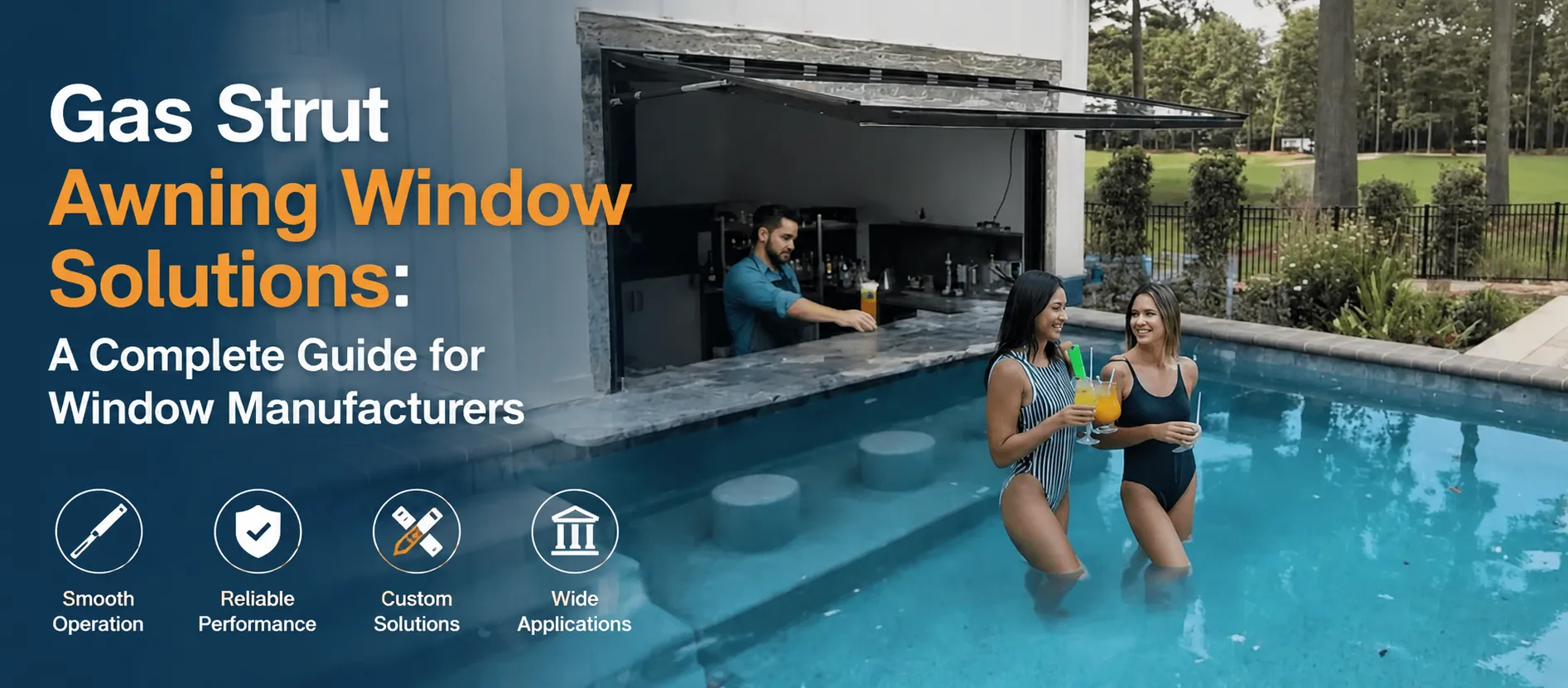
- Leisure and Recreational Equipment: Gas struts are also widely used in recreational products. Examples include camper shells, RV storage compartments, awning windows, tanning beds, and various outdoor equipment covers.






Gas Spring Types for Different Applications
Because gas struts are used in many types of equipment, manufacturers produce a wide range of gas spring types designed for different loads, sizes, and environments. Different applications require different specifications, including:
- force rating (Newton force)
- stroke length
- extended length
- mounting configuration
- material and surface treatment
Gas Spring Types Available at the GASTAC
As a professional gas spring manufacturer, GASTAC provides a comprehensive range of gas springs designed for different industries and equipment types. At the GASTAC online store, you can find gas struts for applications such as:

GASTAC Automotive Gas Struts are designed to provide reliable lifting and controlled motion for vehicle components such as hoods, trunks, tailgates, and truck tool boxes. Built with durable materials and precise force control, they ensure smooth operation, long service life, and consistent performance in demanding automotive environments.
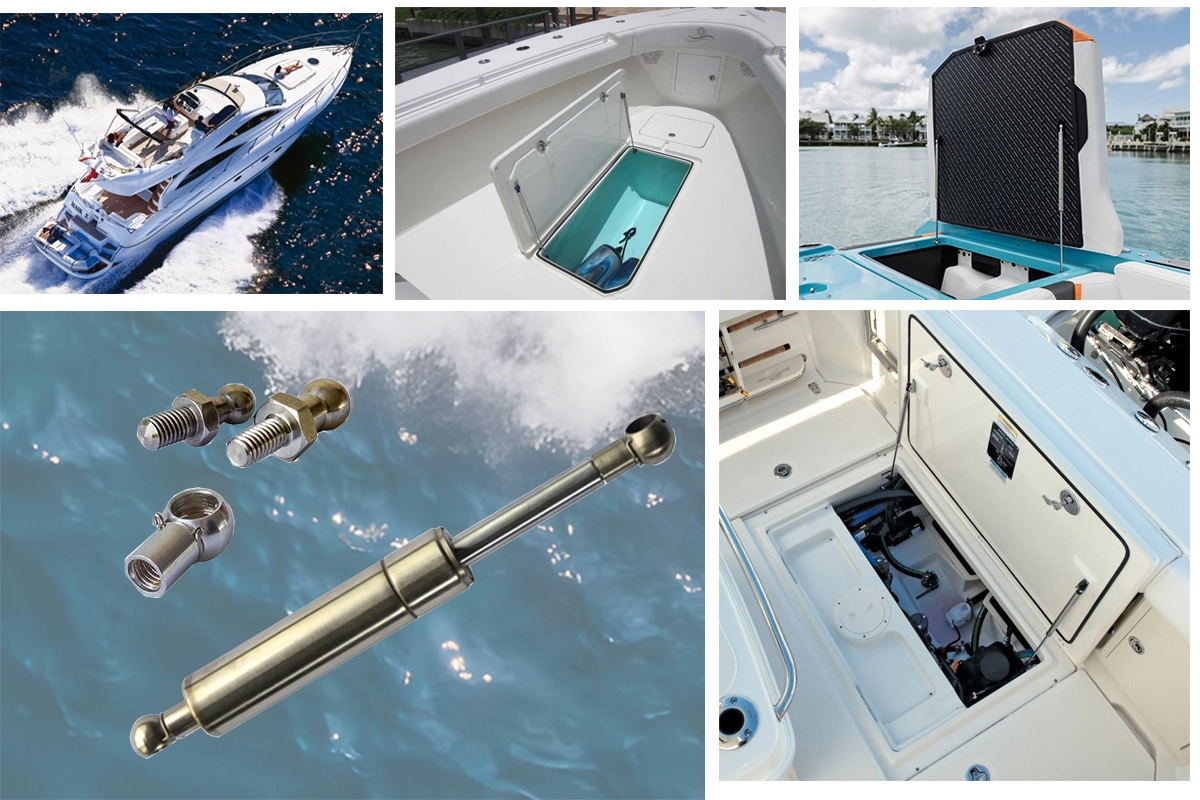
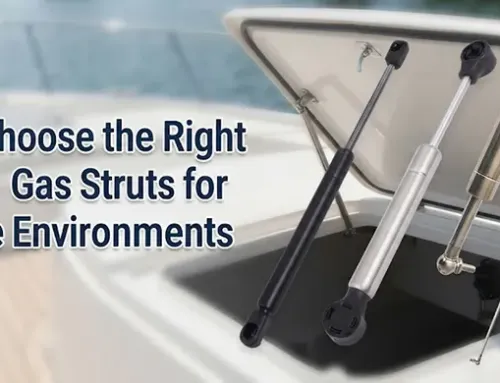
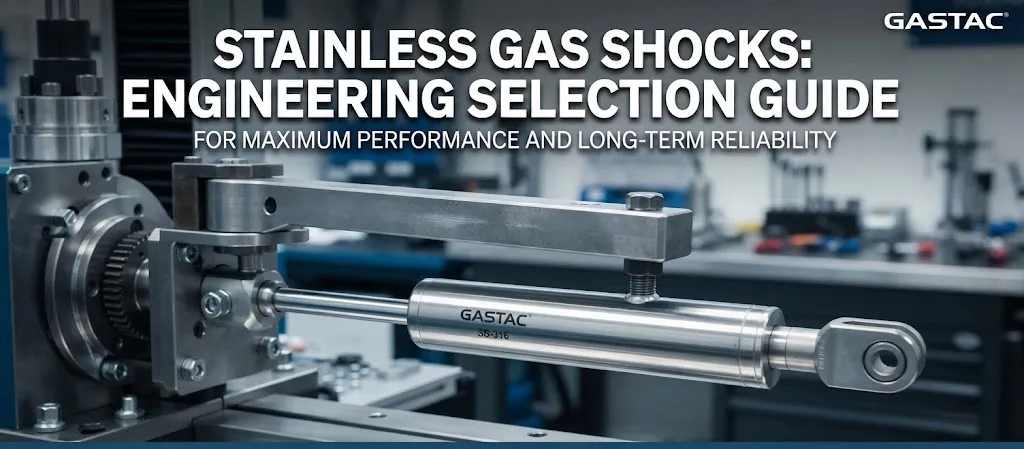
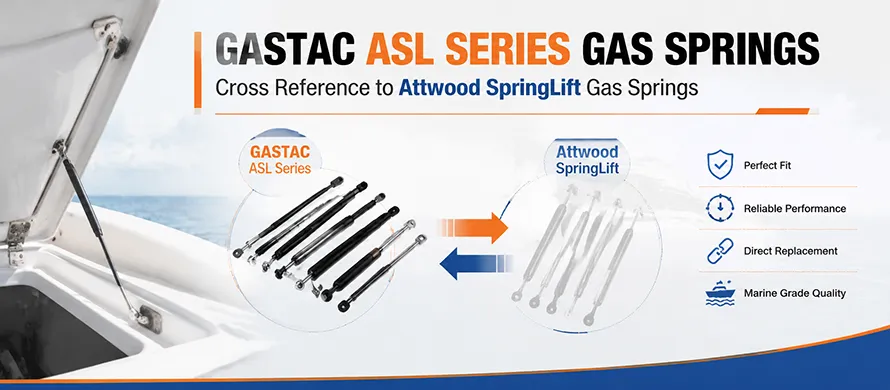
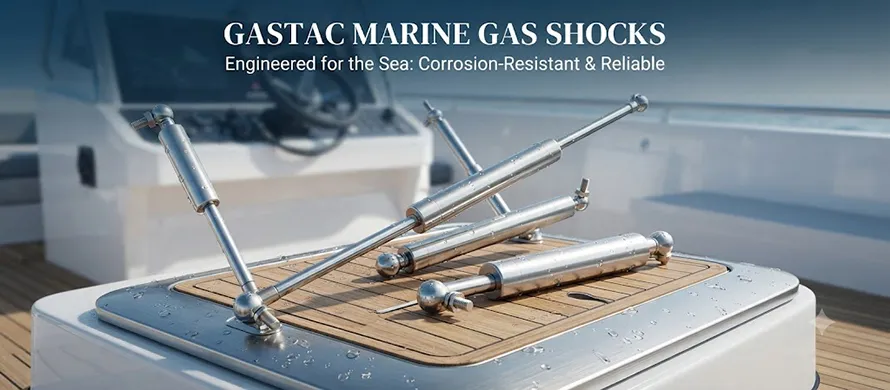
GASTAC Marine Gas Struts are designed for reliable performance in harsh marine environments. Built with corrosion-resistant materials and sealed construction, they provide smooth lifting and controlled motion for boat hatches, storage compartments, and engine covers, ensuring safe, stable operation and long service life on marine equipment.
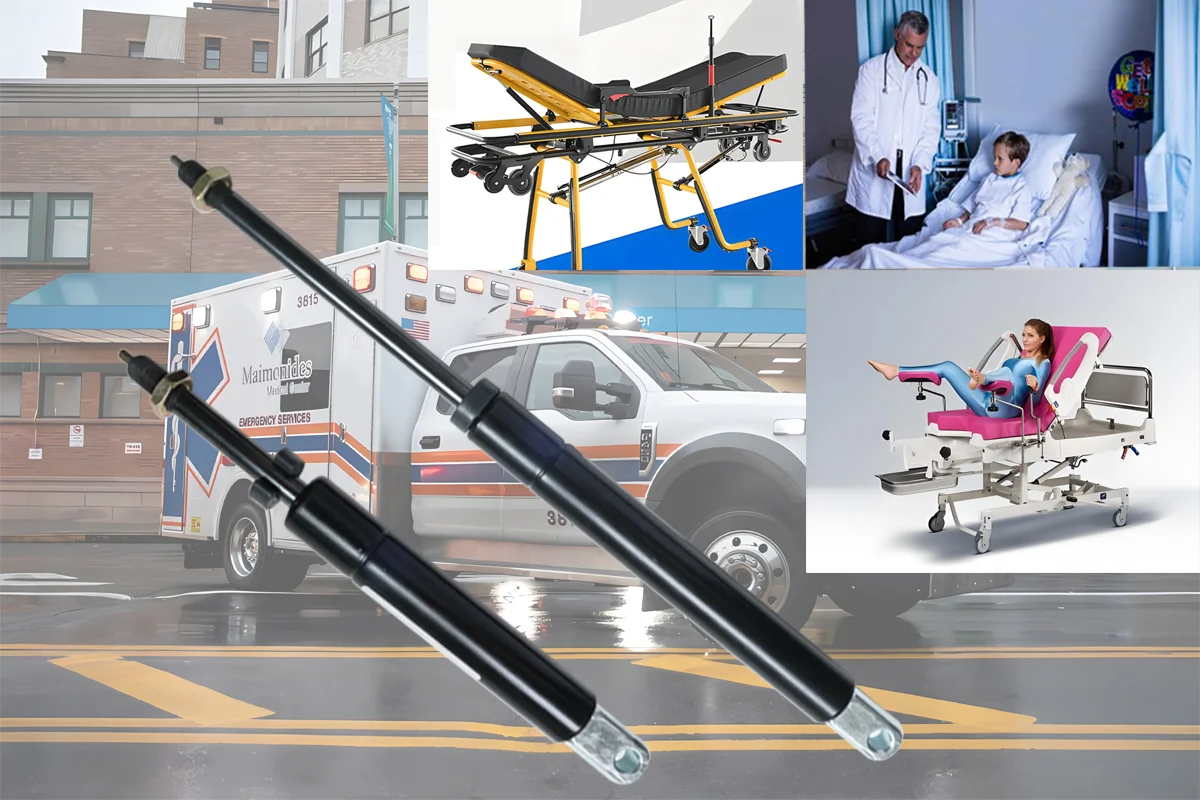
GASTAC Locking Gas Springs are designed to provide controlled movement with the ability to lock in any desired position. Using an internal locking mechanism, they hold loads securely without drifting. These gas springs are ideal for adjustable furniture, medical equipment, industrial machinery, and ergonomic workstations where stability, safety, and precise positioning are required.

GASTAC tanning bed shocks are high-quality gas struts designed to provide smooth, controlled lifting and reliable support for tanning bed lids. They reduce opening effort while ensuring stable positioning and safe closing. Built with durable materials and precise damping, GASTAC shocks offer long service life and consistent performance for commercial and home tanning equipment.
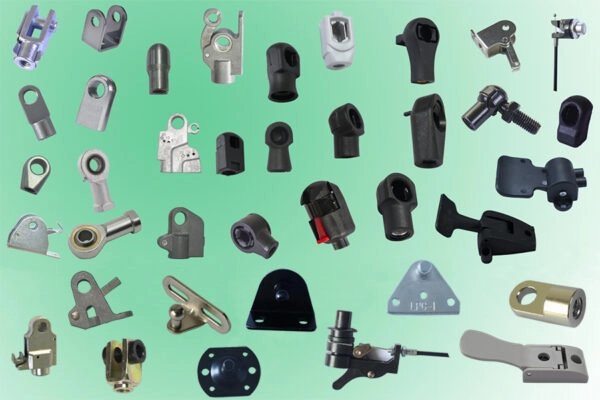
GASTAC Gas Strut End Fittings are designed to provide secure mounting and flexible installation for gas springs in various applications. Available in ball sockets, eyelets, clevis forks, and brackets, they ensure stable connections, smooth movement, and reliable support. Made from durable materials, they offer long service life in automotive, furniture, industrial, and equipment lifting systems.

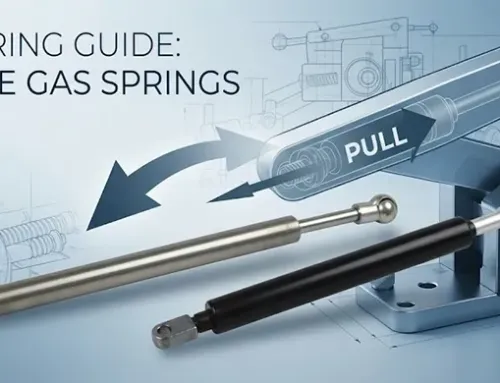
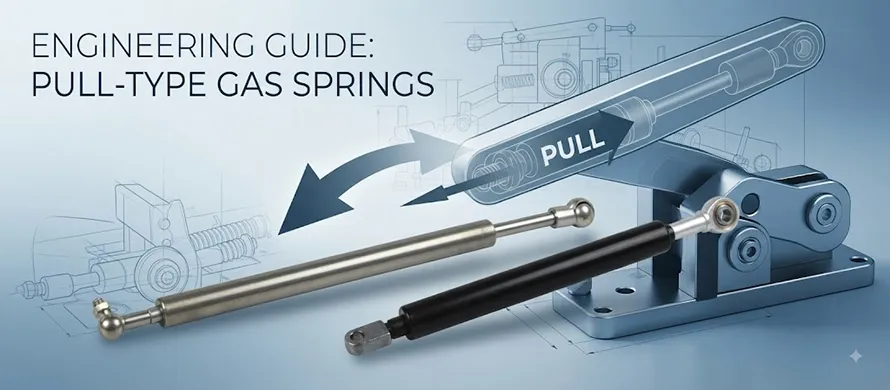
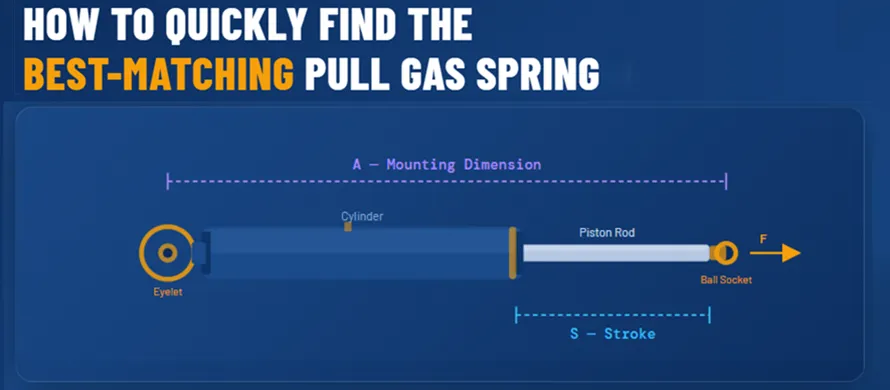
Tension Gas Struts are gas springs designed to provide a controlled pulling force instead of the pushing force produced by standard compression gas struts. The rod retracts under load, helping keep doors, lids, and panels securely closed. They are widely used in industrial equipment, machinery guards, access panels, and specialized enclosures requiring stable tension and smooth, controlled closing motion.

GASTAC Camper Trailer Gas Struts are designed to provide reliable lifting support for camper trailers, RV compartments, and outdoor storage lids. They make it easier to open and hold heavy panels such as camper doors, roof hatches, and storage compartments. Built with durable materials, GASTAC gas struts deliver smooth operation, stable support, and long-lasting performance in demanding outdoor environments.
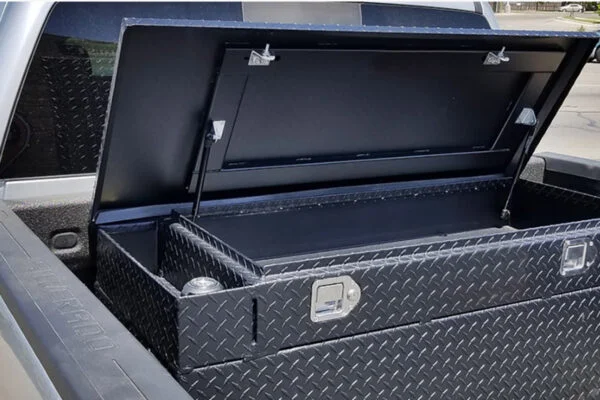
GASTAC Tool Box Shocks are designed to provide smooth lifting and reliable support for truck tool box lids and storage compartments. They reduce the effort needed to open heavy lids while ensuring controlled movement. Built with durable materials and sealed gas spring technology, they deliver stable performance and long service life.
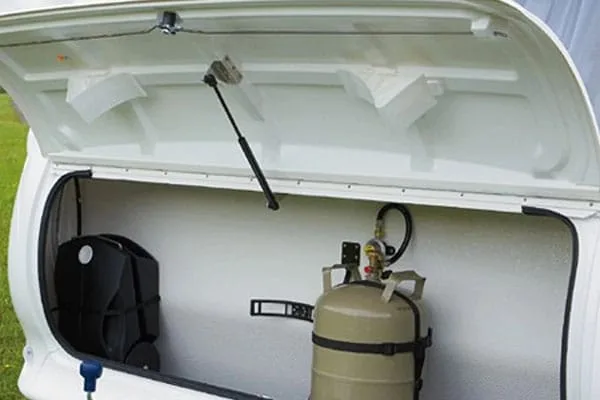
Caravan Gas Struts are designed to provide smooth lifting and secure support for caravan doors, windows, and storage compartments. They help users easily open and hold panels in place while ensuring controlled and stable movement. Built with durable materials, caravan gas struts offer reliable performance and long service life for travel and outdoor environments.

Hydraulic Gate Closers are designed to automatically close gates in a smooth and controlled manner. Using hydraulic damping technology, they regulate closing speed to prevent slamming and improve safety. Commonly used for residential, commercial, and industrial gates, they provide reliable operation, durability, and long-term performance in outdoor environments.
Frequently Asked Questions About Gas Struts
Most gas struts are designed to operate for tens of thousands of cycles. The actual lifespan depends on factors such as load, installation angle, environmental conditions, and product quality.
Over time, small amounts of gas may escape through seals due to wear or environmental factors. Extreme temperatures, corrosion, or excessive load can also reduce the lifespan of a gas strut.
In most cases, sealed gas struts are not designed for repair. When the internal gas pressure is lost or the seals wear out, the recommended solution is to replace the strut with a new one of the correct specification.
Selecting the correct gas strut typically involves considering:
required lifting force
extended length
stroke length
mounting type
weight and geometry of the load
Using the correct specifications ensures safe operation and optimal performance.
When a gas strut fails, it loses internal pressure or damping ability. As a result, the strut can no longer support or control the movement of the lid, panel, or door. The component may drop suddenly, become difficult to lift, or fail to stay open, which can create safety risks and require replacement.
Stay in the loop