





















Table of contents
Share Post

Selecting the right gas struts size is the key to smooth lifting, controlled motion, and long-term durability. Whether you’re designing cabinets, truck tool boxes, camper shells, or industrial equipment, choosing the correct size ensures safety, stability, and performance.

In this guide, we’ll break down everything you need to know about gas strut sizes, dimensions, and how to read a size chart correctly.

Gas Struts by Size Specifications

The specifications of gas struts are typically determined by four core dimensions: rod and tube diameter, extended length, stroke and force (Newtons).Standard sizes are often categorized by the rod-to-tube ratio, such as 6-15, 8-18, 10-23, and 14-28.

Series Stroke Range Force Range (N) Application
6-15 Series  60 – 200mm 50 – 400 N Light cabinet doors
8-18 Series  60 – 300mm 100 – 650 N Car hoods, office chairs
10-22 Series 60 – 400mm 150 – 1200 N SUV tailgates, truck covers
14-28 Series 60 – 500mm 200 – 2500 N Heavy industrial lids

Why Gas Struts by Size Matter

Not all gas struts are created equal. Even small differences in length or force can dramatically affect how your application performs.Choosing the wrong size can result in:

  • Doors that won’t stay open
  • Excessive closing force
  • Misalignment or premature wear
  • Safety risks

That’s why understanding gas strut sizes is more than just measuring length — it’s about matching stroke, force, and mounting geometry.

Gas Strut Dimensions Selection Guidelines

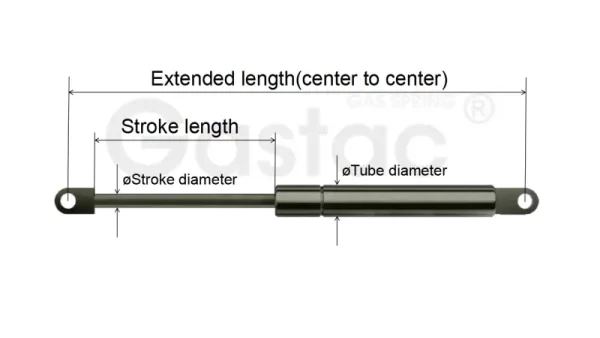
When evaluating gas strut dimensions, there are three primary measurements to consider:

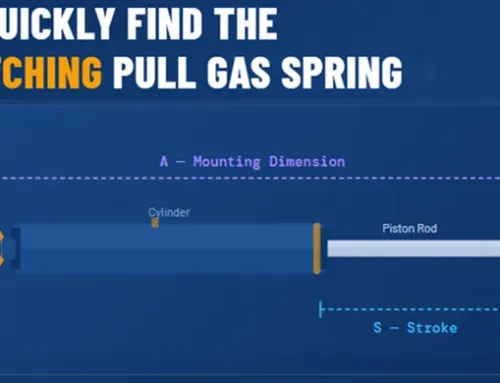
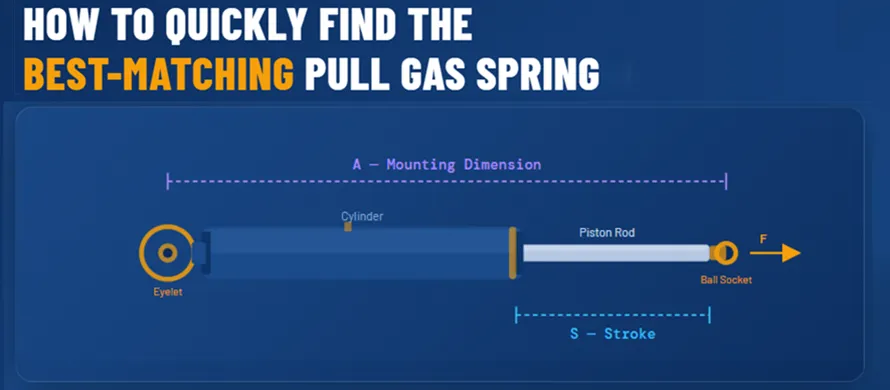
  • Extended Length: The total length of the gas strut when fully extended, measured from center to center of mounting points.
  • Stroke Length: The distance the rod travels from closed to fully extended.
  • Rod and Tube Diameter: Common combinations include 6/15, 8/18, 10/22, and 14/28 mm. Larger diameters typically provide higher force capacity and durability.
  • Force (N): Force is measured in Newtons (N). A basic conversion for estimation is 1kg = 10N. For a 10lb door, a strut between 50N and 100N is typically required.
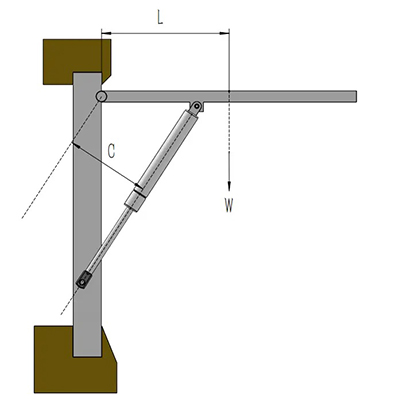
how to measure gas springs 2

Gas Strut Size Chart for Quick Reference

The GASTAC gas strut size chart offers a clear and organized overview of rod and tube diameters, extended length, stroke, and force ranges. Designed for engineers, distributors, and OEM buyers, it simplifies model selection, speeds up replacement matching, and reduces sizing errors, ensuring precise fit and reliable performance in every application.

6-15 Gas Struts Size Chart

GASTAC Code Stroke Length  (mm) Extended Length (mm) Compressed Length C (mm) Rod/Body Diameter  (mm) Force Range F1 (N)
GTS61515550 40 155 115 6/15 50-400
GTS61519550 60 225 165 6/15 50-400
GTS61523550 80 235 155 6/15 50-400
GTS61525550 80 255 175 6/15 50-400
GTS61527550 100 275 175 6/15 50-400
GTS61531550 120 315 195 6/15 50-400
GTS61533050 125 330 205 6/15 50-400
GTS61537550 150 375 225 6/15 50-400
GTS61539050 160 390 230 6/15 50-400
GTS61543050 175 430 255 6/15 50-400
GTS61550550 210 505 295 6/15 50-400

8-18 Gas Struts Size Chart

GASTAC Code Stroke Length  (mm) Extended Length (mm) Compressed Length C (mm) Rod/Body Diameter  (mm) Force Range F1 (N)
GTS818310650 120 310 190 8/18 100-650
GTS818390650 160 390 230 8/18 100-650
GTS818410650 170 410 240 8/18 100-650
GTS818510650 215 510 295 8/18 100-650
GTS818525650 225 525 300 8/18 100-650
GTS818585650 255 585 330 8/18 100-650
GTS818610650 265 610 345 8/18 100-650
GTS818630650 280 630 350 8/18 100-650
GTS818710650 315 710 395 8/18 100-650

10-22 Gas Struts Size Chart

GASTAC Code Stroke Length  (mm) Extended Length (mm) Compressed Length C (mm) Rod/Body Diameter  (mm) Force Range F1 (N)
GTS10225851200 255 585 330 10/22 150-1200
GTS10227001200 305 700 395 10/22 150-1200
GTS10228201200 360 820 460 10/22 150-1200
GTS10229001200 400 900 500 10/22 150-1200
GTS102210001200 450 1000 550 10/22 150-1200
GTS102211001200 500 1100 600 10/22 150-1200

10-22 Gas Struts Size Chart

GASTAC Code Stroke Length  (mm) Extended Length (mm) Compressed Length C (mm) Rod/Body Diameter  (mm) Force Range F1 (N)
GTS142811002500 500 1100 600 14/28 100-2500
GTS142812002500 545 1200 655 14/28 100-2500
GTS142813002500 600 1300 700 14/28 100-2500
GTS142814002500 650 1400 750 14/28 100-2500
GTS142815502500 700 1550 850 14/28 100-2500
GTS142816502500 750 1650 900 14/28 100-2500
GTS142818002500 800 1800 1000 14/28 100-2500
GTS142819002500 850 1900 1050 14/28 100-2500

Common Applications That Depend on Gas Strut Sizes

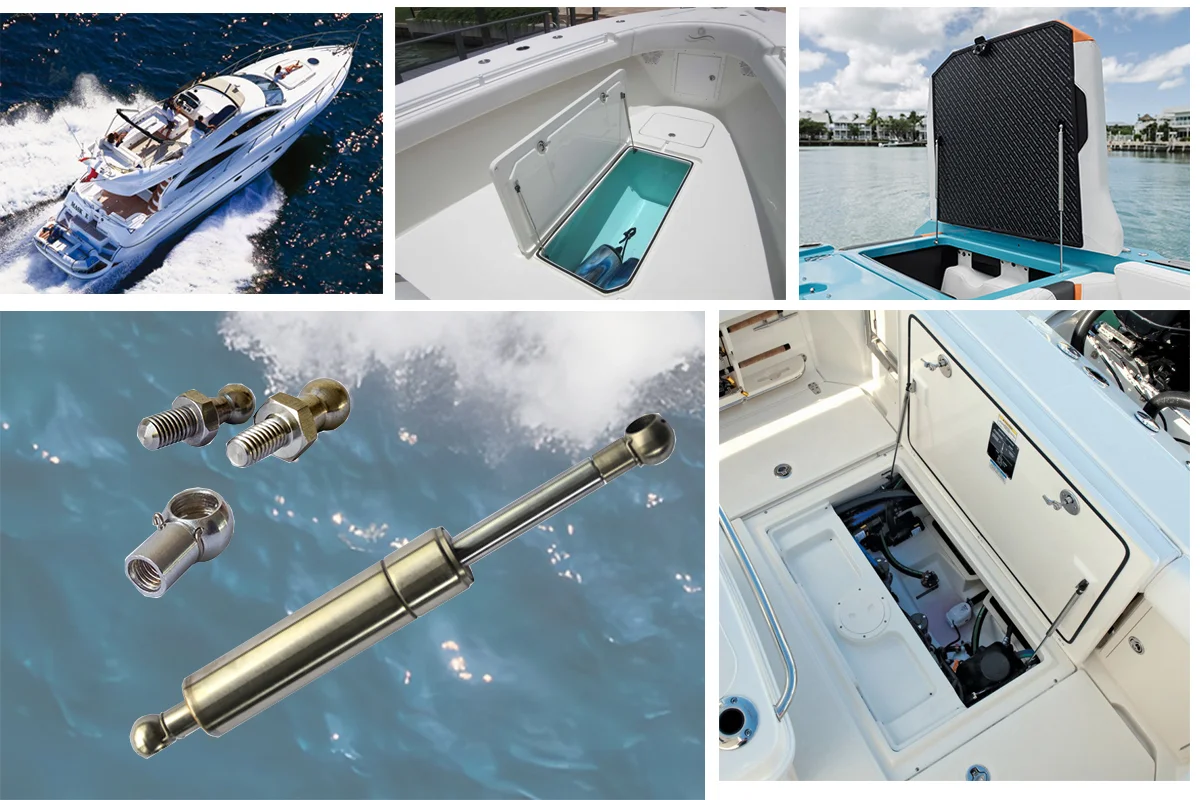
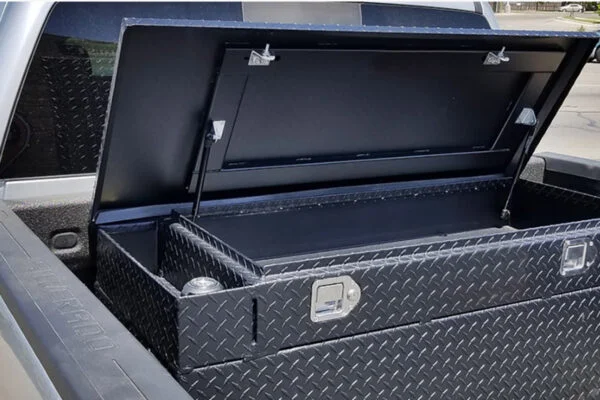
Common applications that depend on accurate gas strut sizes include cabinet doors, truck tool boxes, camper shell windows, RV compartments, medical beds, adjustable desks, and industrial machine covers. Correct rod diameter, extended length, and stroke ensure smooth lifting, controlled motion, and safe support. Proper sizing prevents misalignment, excessive force, and premature wear, guaranteeing long-term stability and user safety.

Stainless Steel Gas Struts

Marine Gas Struts

tanning bed shocks

Tanning Bed Shocks

tool box struts

Tool Box Struts

Bed Lift Kits

Cabinet Gas Struts

window gas struts

Window Gas Struts

Tension Gas Springs

Tension Gas Springs

Engine Hoods for gas spring

Car Gas Struts

locking gas spring 1 600x400 1

Medical Gas Springs

Tension Gas Springs

Tension Gas Springs

Engine Hoods for gas spring

Car Gas Struts

locking gas spring 1 600x400 1

Medical Gas Springs

Bed Lift Kits

Cabinet Gas Struts

window gas struts

Window Gas Struts

Stainless Steel Gas Struts

Marine Gas Struts

tanning bed shocks

Tanning Bed Shocks

tool box struts

Tool Box Struts

Factors to Consider When Choosing Gas Strut Sizes

When choosing gas strut sizes, consider the load weight, mounting angle, required stroke, extended length, and rod and tube diameters. Proper force rating ensures smooth operation, safety, and longevity. Accounting for application type and space constraints helps achieve precise fit and reliable performance.

1. Weight of the Application

The weight of the object the gas strut will support is the primary consideration. Gas struts come in various force ratings, measured in Newtons (N). Knowing the object’s weight helps determine the appropriate force needed to lift and hold it securely (Gas Struts Cover Weight Calculator).

2. Dimensions of the Gas Strut

Gas struts are offered in different lengths and stroke sizes. To select the right size (Gas Strut Length Calculator):

  • Measure the extended length: the total length of the gas strut when fully extended.
  • Measure the stroke length: the distance the rod travels from the closed to fully extended position.

3. Mounting Points and Angles

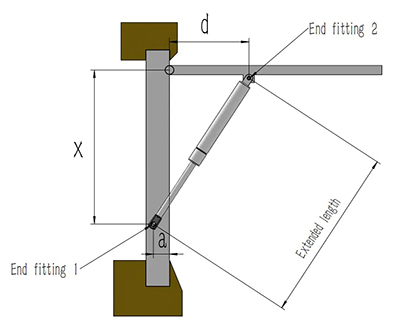
Proper placement of the gas strut’s mounting brackets is essential. Typically (Gas Strut Length Formula):

  • Position the gas strut closer to the hinge to reduce the required force.
  • Ensure the angle allows smooth operation without overextension.

4. Desired Opening Force

Consider how easily the application should open or close. A gas strut with excessive force can make opening difficult, while one with insufficient force may fail to hold the application open (Gas struts Force Calculator).

张航

Stay in the loop

Subscribe to our free newsletter.

Leave A Comment