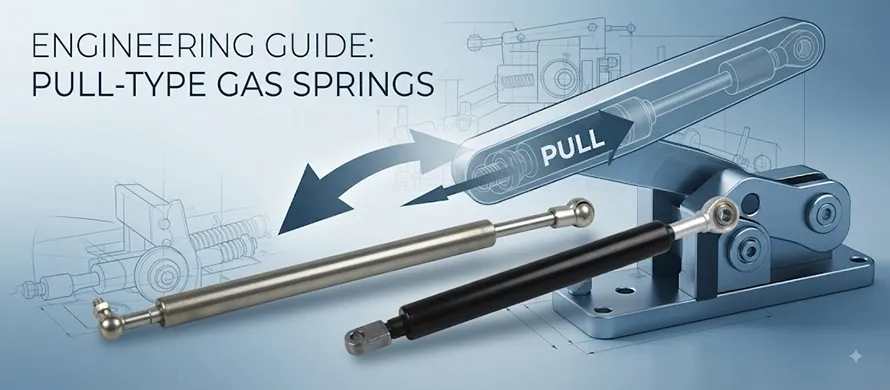
Tool Box Struts – Easy Lift, Secure Hold
Effortless Lid Movement
Toolbox gas struts ensure smooth, controlled opening and closing of tool box lids, preventing sudden drops and reducing user effort.
Durable & Long-Lasting Performance
Built from high-quality materials and tested for repeated cycles, tool box struts deliver reliable support for daily use in automotive, home, or commercial toolboxes.
Easy Installation & Versatility
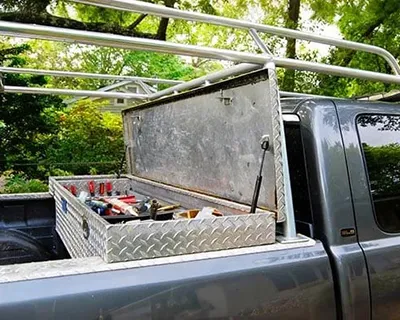
Designed for quick and easy installation, these tool box lift support struts fit a variety of boxes, including automotive, toy, and roof storage boxes.
Are you looking for reliable tool box lid supports that can withstand daily workshop wear and tear? GASTAC is the most cost-effective manufacturer of tool box struts. Designed to OEM specifications, our tool box gas springs offer seamless compatibility with brands like Weather Guard. They match or even exceed the quality of gas spring brands like Dee Zee.
GASTAC offer direct factory supply of heavy-duty tool box struts and lift support shocks for truck toolboxes, commercial utility vehicles, and industrial storage lids. Our toolbox gas springs are available in custom lengths, force values, and mounting accessories to meet various OEM requirements.
Tool Box Struts


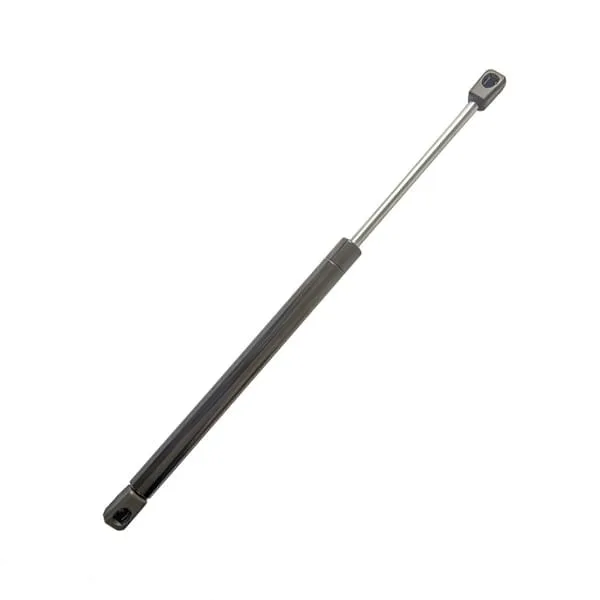


Toolbox Gas Struts Customization Capability
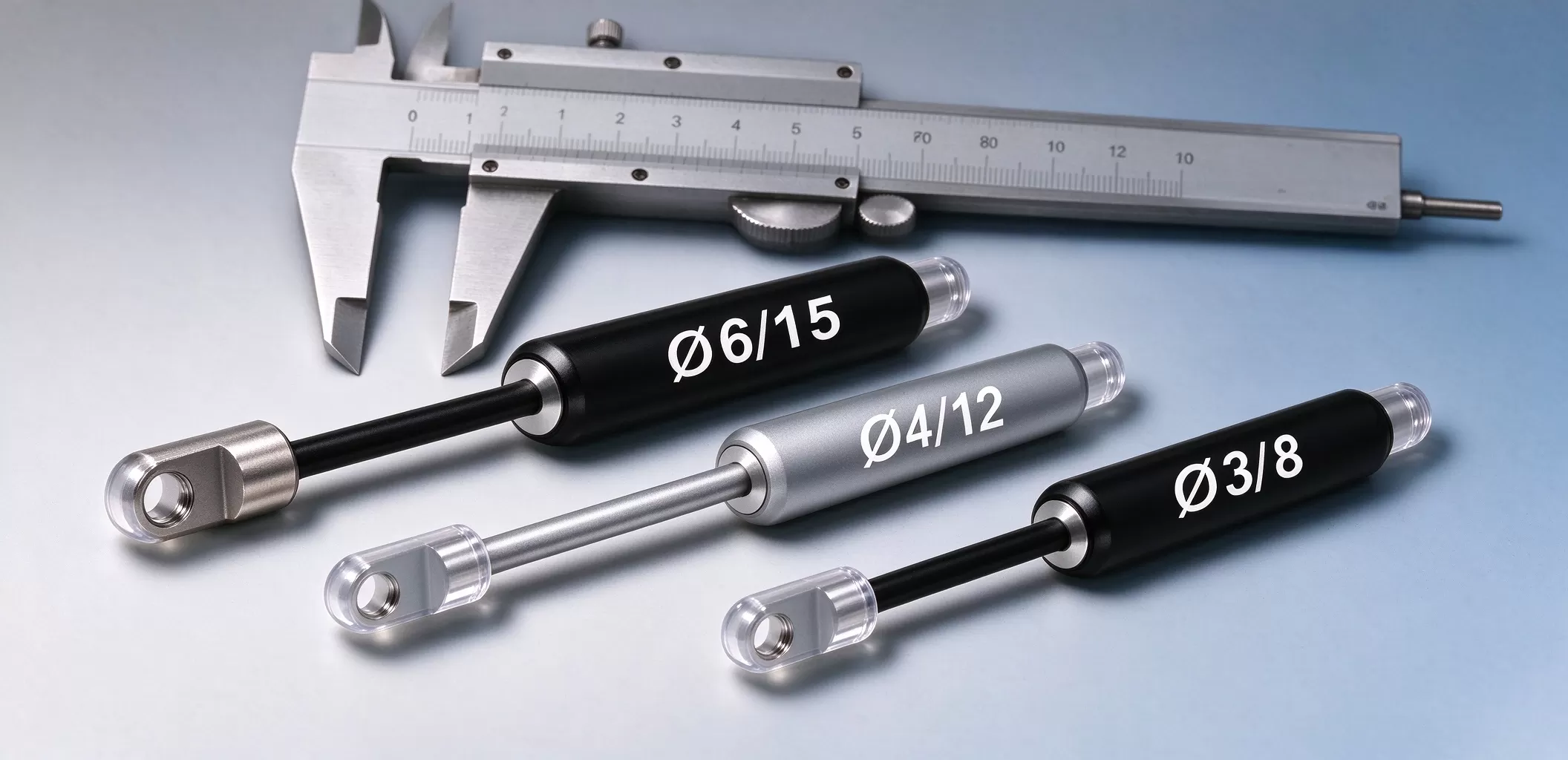
Gastac toolbox gas struts are available in four common tube/rod diameter combinations — 6/15, 8/18, 10/22 and 14/28 mm — with stroke ranging from 60 to 500 mm and force from 50 to 2500 N. Tube/rod diameter and end fitting dimensions are matched flexibly within each combination. Beyond the standard ranges, force, stroke, extended length and end fittings can all be adjusted to drawings or original parts.
| Tube/Rod Diameter | Stroke Range | Extended Length Range | Force Range | End Fitting Size |
|---|---|---|---|---|
| 6/15 mm (0.24/0.59 in) | 50 – 150 mm (1.97 – 5.91 in) | 130 – 330 mm (5.12 – 12.99 in) | 50 – 400 N (11 – 90 lbs) | M6 |
| 8/18 mm (0.31/0.71 in) | 50 – 300 mm (1.97 – 11.81 in) | 138 – 638 mm (5.43 – 25.12 in) | 100 – 650 N (22 – 146 lbs) | M6, M8 |
| 10/22 mm (0.39/0.87 in) | 10 – 450 mm (0.39 – 17.72 in) | 65 – 945 mm (2.56 – 37.20 in) | 150 – 1100 N (34 – 247 lbs) | M8, M10 |
| 14/28 mm (0.55/1.10 in) | 100 – 550 mm (4.33 – 21.65 in) | 250 – 1150 mm (9.84 – 45.28 in) | 200 – 2000 N (45 – 450 lbs) | M8, M10, M12 |
Extended Length is calculated as 2 × Stroke + fixed value, with fixed values of +30 mm for 6/15, +38 mm for 8/18, +45 mm for 10/22 and +50 mm for 14/28. Actual length is confirmed by drawing or original part measurement.
Tool Box Struts Specifications
Looking for specific force ratings, stroke lengths, or direct replacements for major brands like Stabilus, Suspa, or Bansbach? Check our standard reference table below. Force ratings measured at room temperature (20°C). Custom force ratings, lengths, and end fittings available upon request. Contact GASTAC engineering team for custom solutions.
Tool Box Struts Size Chart
| Specification | Extended Length (in.) | Stroke (in.) | Compressed Length (in.) | Force Rating (lbs) | Buyer Struts Reference |
|---|---|---|---|---|---|
| GTQ139354335 | 13.93 | 5.43 | 8.5 | 35 | 3028786 |
| GTQ12440 | 12 | 4 | 8 | 40 | 3045508 |
| GTQ1716397 | 17.1 | 6.3 | 10.8 | 97 | 3040770 |
| GTQ19638250 | 19.63 | 8 | 11.63 | 250 | 3023460 |
| GTQ12460 | 12 | 4 | 8 | 60 | 3045512 |
| GTQ12480 | 12 | 4 | 8 | 80 | 3045514 |
GASTAC Tool Box Struts Specifications
How to Measure Toolbox Struts
When selecting or replacing a gas spring, it is important to measure the key dimensions accurately. Start with the Rod Diameter(d) and Body Diameter(D), which determine the strength and load capacity of the gas spring. Next, measure the Stroke(S), which is the distance the rod can travel between the fully compressed and fully extended positions. Finally, record the Extended Length(L), which is the total length of the gas spring from the center of one end fitting to the other when fully extended. By following these steps, you can ensure the correct specifications for your application and achieve reliable performance.