Hood Lift Supports
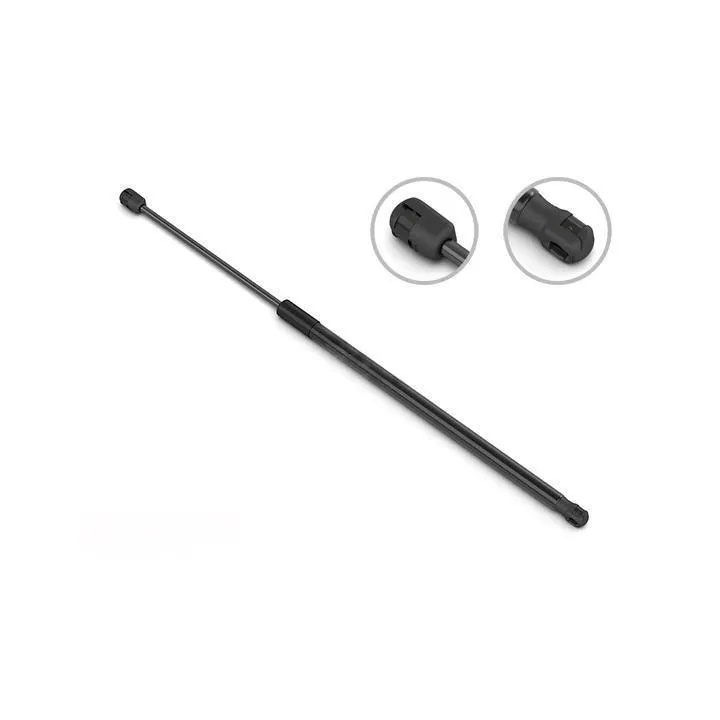
Hood lift supports are pressurized cylinders that are used to support hoods, hatches and rear window glass in automotive applications. Lift supports are also used in many non-automotive applications. Lift supports should be replaced in pairs to ensure safe, reliable support of your hood, hatch, or liftgate.
When your front hood won’t stay open, drops down slowly without warning, or slams down unexpected on your head, your vehicle is telling you its factory gas struts have failed. A single failing or broken hood shock forces massive, asymmetric twisting stress onto your vehicle’s hinges, which can quickly warp your hood panel alignment. Don’t rely on a dangerous, outdated manual prop rod or a worn-out set of fluid-leaking factory dampers. Upgrading to a premium, high-pressure hood lift support kit instantly restores effortless, safe counterbalancing control every single time you open the engine bay.
What Are Hood Lift Supports?
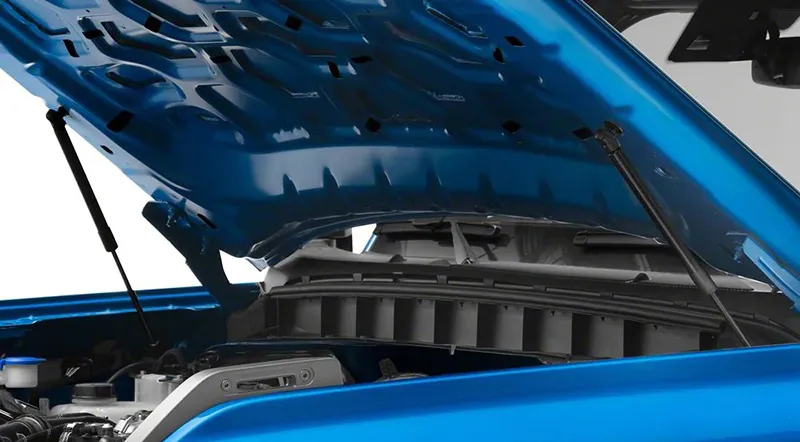
Hood lift supports (also commonly referred to as hood struts, gas springs, or hood shocks) are pressurized pneumatic cylinders that automatically lift, support, and dampen the vehicle’s hood when opened. They act as an effortless, hands-free counterbalancing system, completely replacing the need for a primitive, manual metal prop rod.
Common Signs Your Hood Lift Supports Are Failing
If your vehicle exhibits any of the following warning signs, your gas struts have suffered internal seal degradation or pressure loss and require immediate replacement:
- The Hood Drifts Downward Slowly: The front panel initially stays open but gradually loses elevation, creeping down without warning and creating a severe head-injury hazard during routine maintenance.
- Complete Loss of Holding Power: The hood refuses to stay fully extended at its maximum height, requiring a makeshift prop rod or secondary brace to keep the engine bay accessible.
- Asymmetric Hinge Wear (One Weak Side): One support fails before the other, forcing a single strut to carry the entire physical workload. This uneven distribution introduces severe twisting stress that can permanently warp your hood alignment.
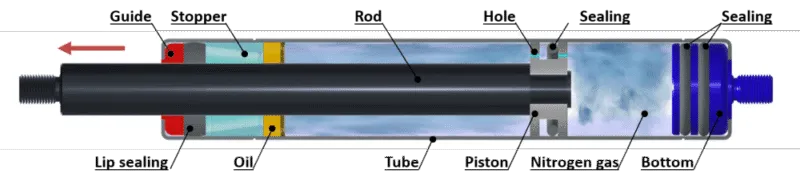
- Excessive Manual Lifting Effort: The hood feels exceptionally heavy or physically straining to open, proving that the internal nitrogen gas has fully depleted and is no longer providing pneumatic assistance.
- Visible Hydraulic Oil Leaking: Greasy, wet fluid is weeping down the shiny steel piston rod or pooling around the cylinder caps, confirming a catastrophic failure of the internal multi-lobe seals.
- Sudden Failure in Cold Weather: The hood holds perfectly fine during summer but immediately slams shut on freezing winter mornings, a direct result of cold-weather temperature drops contracting the internal gas boundary.
Why Hood Lift Supports Fail?
A hood lift support relies on a pressure differential to hold up hundreds of pounds of steel. When it fails, it is almost always the result of predictable internal degradation caused by the punishing environment of your engine bay:
- Rod Friction Wear: Coarse, unpolished piston rods act like sandpaper, tearing up the internal rubber seals during everyday compression until the gas leaks out.
- Thermal Seal Contraction: Freezing winter temperatures cause the rubber seals to shrink and harden, losing their grip and letting the pressurized nitrogen escape instantly.
- Internal Seal Fatigue: Low-grade manufacturing materials degrade rapidly under heavy use, blowing out the internal pressure boundaries long before hitting standard service life.
- Chemical & Salt Corrosion: Road salt, moisture, and engine grime pit and rust the cylinder body, destroying the airtight seal lips and causing complete structural failure.
- Asymmetric Hinge Binding: Operating with one failed strut forces the remaining support to twist and bind, bending the rod and rapidly killing the component.
Hood Lift Supports OEM Specification Sheet
| OEM | Photo | Rod / Tube Ø | Stroke | Extended Length | Force | Year |
|---|---|---|---|---|---|---|
| 51231906286 | 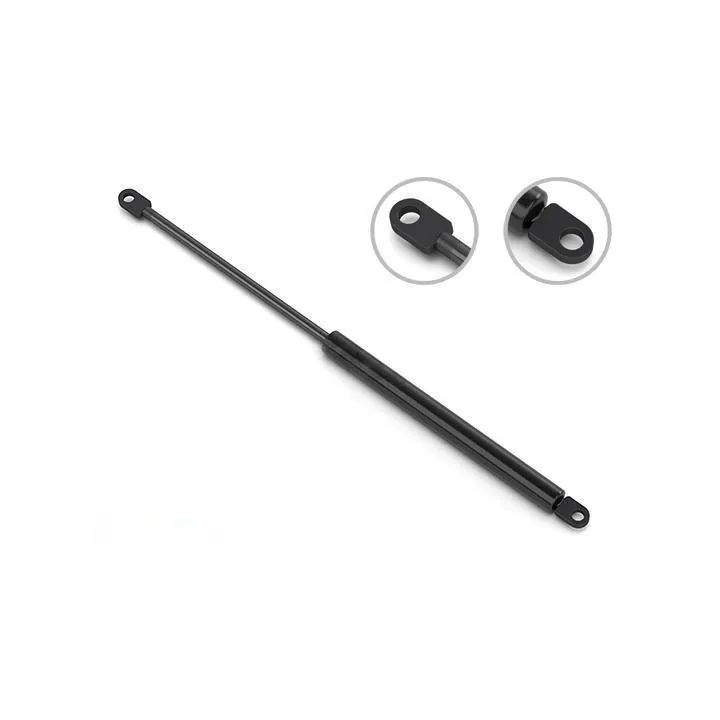 |
8 / 18 mm | 95 mm | 255 mm | 350N | BMW 3 1982 – 1994 |
| 51231944119 | 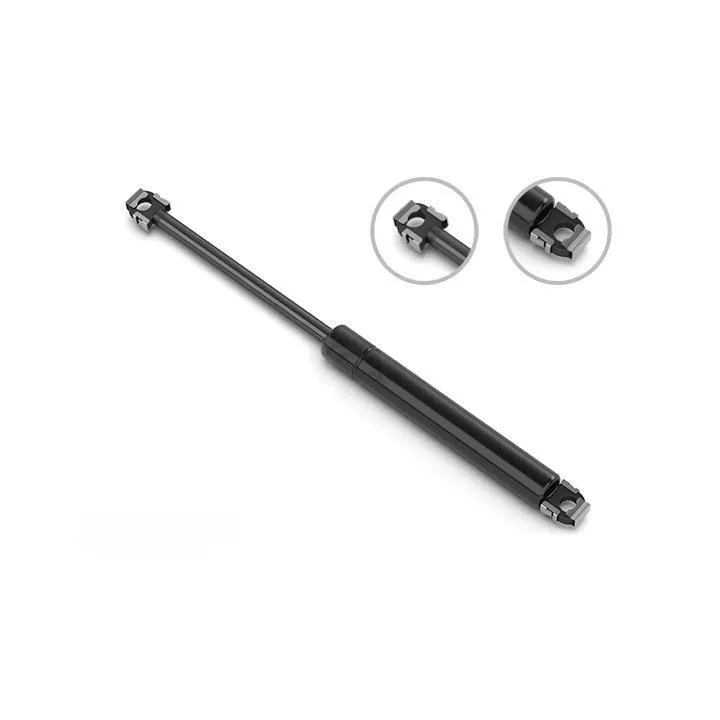 |
8 / 18 mm | 85 mm | 240 mm | 380N | BMW 5 1987 – 1996 |
| 1J0823359C | 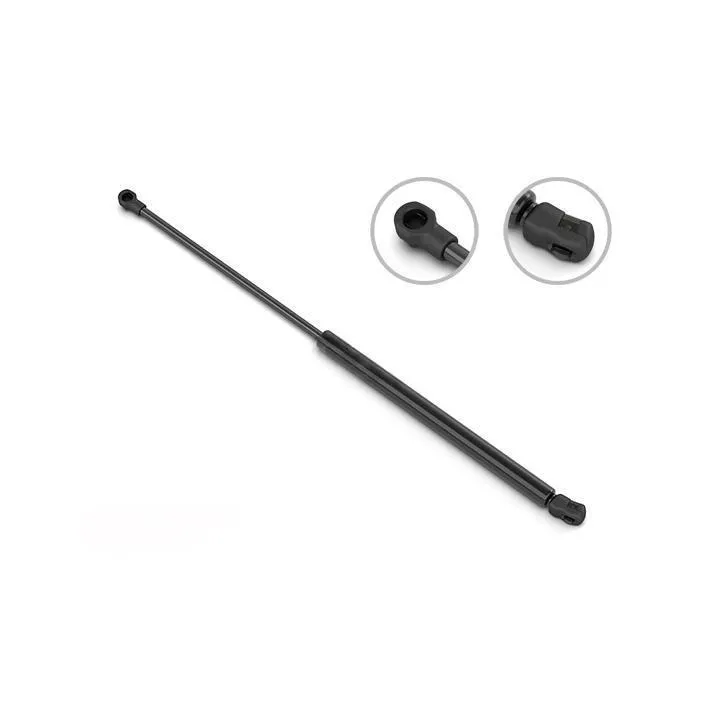 |
8 / 18 mm | 205 mm | 500 mm | 350N | VW GOLF 1993 – 2007 |
| 4D0823359F | 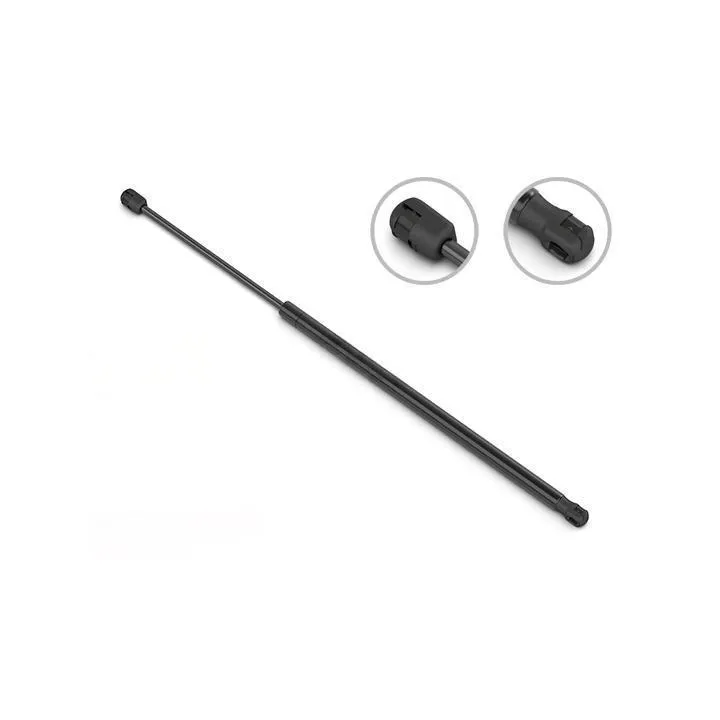 |
8 / 18 mm | 210 mm | 530 mm | 245N | AUDI A8 1994 – 2002 |
If you need OEM replacement supports for other vehicle models or require standard gas springs for industrial applications, please visit the GASTAC Online Store to complete your purchase.
Interior Technology
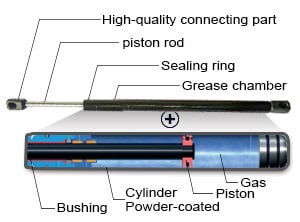
- Highest corrosion resistance achieved through powder coated cyclinders and special treated piston rod surfaces.
- Minimal friction for the production of lowest extension forces.
- Great life cycles.
- Protection against vibration and light side forces.
- Integrated grease chamber.
- Low break away forces.
- Installation and storage in any position.
OEM vs Aftermarket Hood Lift Supports
| Feature | OEM Hood Lift Supports | GASTAC Premium Aftermarket | Budget Aftermarket Struts |
|---|---|---|---|
| Pricing & Value | Heavy dealership markup; expensive single-unit pricing. | Factory-direct pricing; elite tier quality. | Dirt cheap; high failure risk. |
| Piston Rod Finish | Standard OEM spec (Ra≤0.20μm). | Micro-polished (Ra≤0.15μm). | Rough surface, seal damage risk. |
| Climate Resilience | Standard climate use. | −30°C to +80°C full protection. | Cold weather pressure loss. |
| Lifespan & Quality | ~50,000 cycles. | 100,000 cycles tested. | No testing. |
| Corrosion Resistance | Basic coating. | Salt-spray tested finish. | Rust prone. |
| Supply Flexibility | Dealer limited stock. | Low MOQ paired supply. | Random bulk units. |
How to Replace Hood Lift Supports?
You don’t need to pay expensive shop labor fees. Our snap-on, pre-tensioned hardware allows for a seamless driveway installation that takes less than 10 minutes using only a small flat-head screwdriver.
- Step 1: Secure the Hood (Absolute Safety First): Before touching any hardware, use a sturdy prop rod, broom handle, or locking pliers on the old strut rod to lock the heavy hood fully open. A heavy steel hood will drop instantly the moment you disconnect a single support, posing a severe crush hazard.
- Step 2: Release the Metal Retaining Clips: Locate the spring-steel band clip wrapping around the ball joint socket at both ends of the old strut. Insert your flat-head screwdriver directly underneath the clip and pry it outward about 2 millimeters to back off the locking tension. (Do not remove the clip entirely; just back it off).
- Step 3: Pop Off the Old Struts & Clean the Hardware: With the tension released, pull the worn socket straight off the vehicle’s factory ball studs. Take a clean rag and wipe away any accumulated road grime, rust, or old grease from the exposed factory ball studs before proceeding.
- Step 4: Snap the New GASTAC Support Into Place: Position the new lift support with the main cylinder body at the top and the rod pointing downward (this keeps the internal hydraulic oil resting against the main seals for constant lubrication). Align the ball sockets over the vehicle’s studs and press firmly inward until you hear a solid, metal-on-metal click. Give it a firm tug to verify it is locked completely.
How to Choose the Right Hood Lift Supports?
To eliminate all fitment anxiety and ensure you get a tier-1 performance upgrade that outlasts factory specs, choosing the right hood lift support comes down to 5 critical verification steps:
- Vehicle Fitment: Never guess. Verify your exact Year, Make, Model, and Trim to ensure the strut physically fits your car.
- OEM Part Number: Match the stamped code on your original factory strut body with our catalog for a guaranteed, error-free Length & Lifting Force: Ensure the extended length and
- pressure match perfectly. Too weak and the hood drops; too strong and it will bend your hood hinges.
- Premium Climate Specs: Choose struts built for extreme weather. Look for heavy-duty internal seals and rust-resistant coatings that won’t fail on freezing winter mornings or rust out from road salt.
- Order in Pairs: Always replace both sides at once. Changing only one side creates uneven, twisting pressure that permanently warps your hood alignment.

Contact Us
Interested in our products, pricing, MOQ, or customized solutions? Fill out the form below to submit your inquiry or request a quote, and our team will get back to you within 24 hours.