Tension gas springs work by using compressed gas sealed inside a cylinder to generate a controlled pulling force. When the spring is stretched, the internal piston moves, adjusting the gas pressure and creating resistance. This interaction allows for stable motion control with built-in damping.
Detailed Working Principle of Tension Gas Springs
Tension gas springs, also known as tension gas struts, operate through a sealed system that combines compressed gas and a piston mechanism to deliver controlled pulling force and motion stability.
-
When an external force is applied, the piston rod moves inside the cylinder, changing gas volume and pressure
-
This pressure variation generates a controlled pulling force that resists movement
-
Gas flows through internal passages, creating a damping effect for smooth operation
-
When the force is removed, stored gas pressure returns the system to its original position
Overall, a tension gas spring controls motion by balancing internal gas pressure and mechanical force, ensuring precise and stable performance.
Monotube vs Twin-Tube Tension Gas Springs
| Aspect | Monotube | Twin-Tube |
| Structure | Single cylinder | Dual cylinder |
| Advantage | Simple, fast response, good heat dissipation | Better damping control, stronger support |
| Application | Light-duty tension | Heavy-duty, precision control |
- 1
Monotube Tension Gas Spring
A monotube tension gas spring uses a single-cylinder structure filled with nitrogen gas and oil, where the piston rod moves within one sealed tube. This design is simple, offers fast response, and provides efficient heat dissipation, making it suitable for applications that require quick reaction and stable pulling force, such as mechanical tensioning systems and lightweight equipment.
- 2
Twin-Tube Tension Gas Spring
A twin-tube tension gas spring features an additional outer cylinder surrounding the inner tube, forming a dual-layer structure. This design allows smoother oil flow, better damping control, and more stable rebound performance. It also improves resistance to lateral forces, making it suitable for heavy-duty applications such as automotive systems and industrial equipment.
- 3
How to Choose
If your application requires fast response and lower load, a monotube tension gas spring is usually sufficient. If better damping control, higher stability, or heavy-duty performance is needed, a twin-tube tension gas strut is the more appropriate choice.
Tension vs Compression Gas Springs
The main difference between tension and compression gas springs lies in force direction. Compression gas springs generate a pushing force, while tension gas springs generate a pulling force.
Tension gas strut are used to pull components together, making them suitable for applications where parts must remain closed, secured, or balanced under tension. Compression gas springs are more commonly used because many applications require lifting or supporting functions. However, when controlled pulling force is required, a tension gas strut is the better choice.
| Feature | Tension Gas Spring | Compression Gas Spring |
| Force Direction | Pull | Push |
| Typical Use | Securing / closing | Lifting / supporting |
| Motion Type | Retraction control | Extension control |
| Application Frequency | Less common | More common |
Common Applications of Tension Gas Springs
Tension gas springs are widely used in applications that require controlled pulling force and stable positioning across different industries.
-
Automotive systems such as hoods, trunk lids, and doors for balance and safety
-
Furniture structures like wall beds and folding tables for controlled movement
-
Medical equipment for stable support and precise adjustment
-
Door and window systems to ensure smooth and controlled operation
Buying Guide of Tension Gas Springs
When selecting a tension gas spring, several key factors must be considered:
- 1
Material: Steel, stainless steel, and alloy steel are common options. Stainless steel is recommended for corrosive environments.
- 2
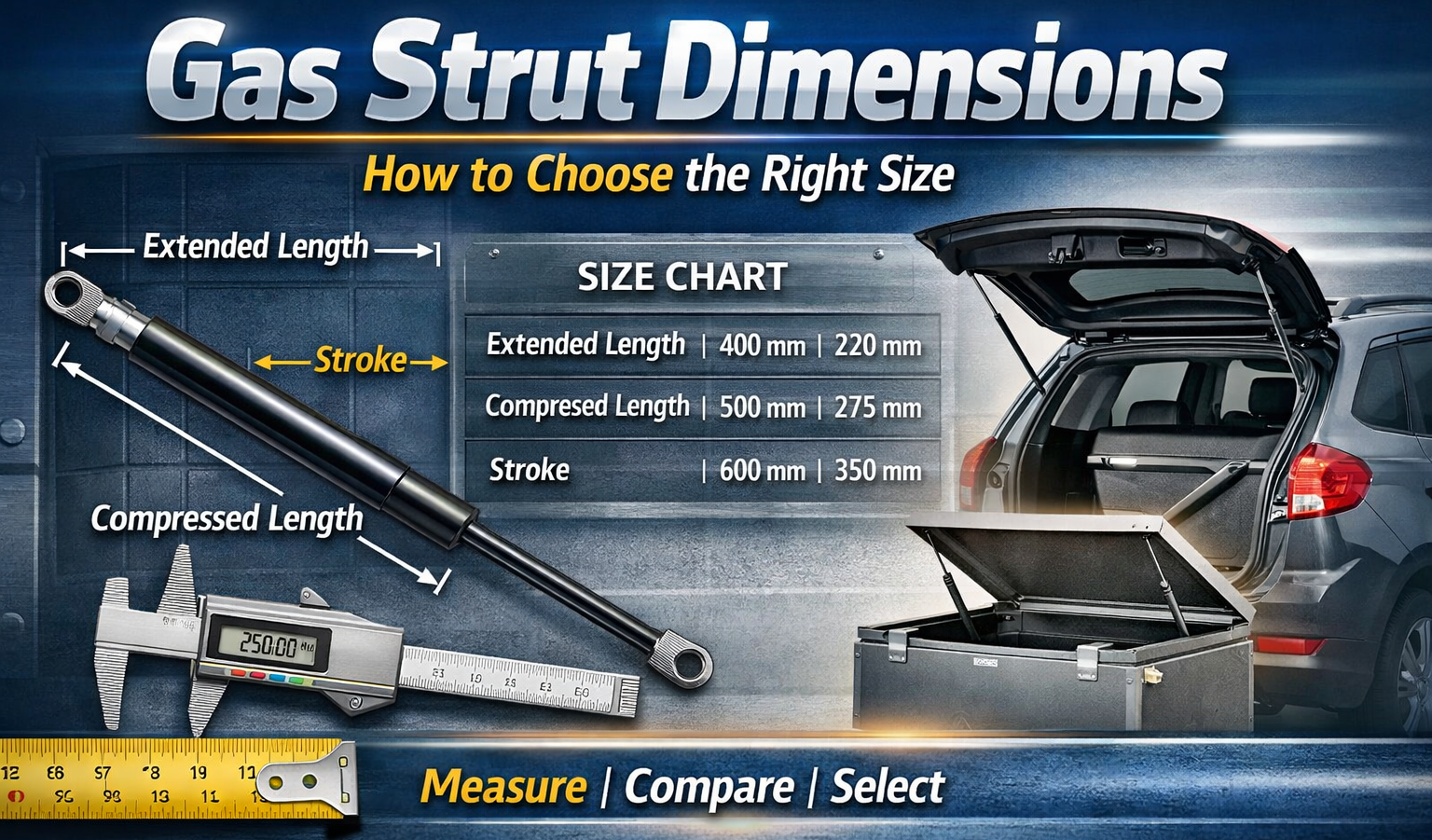
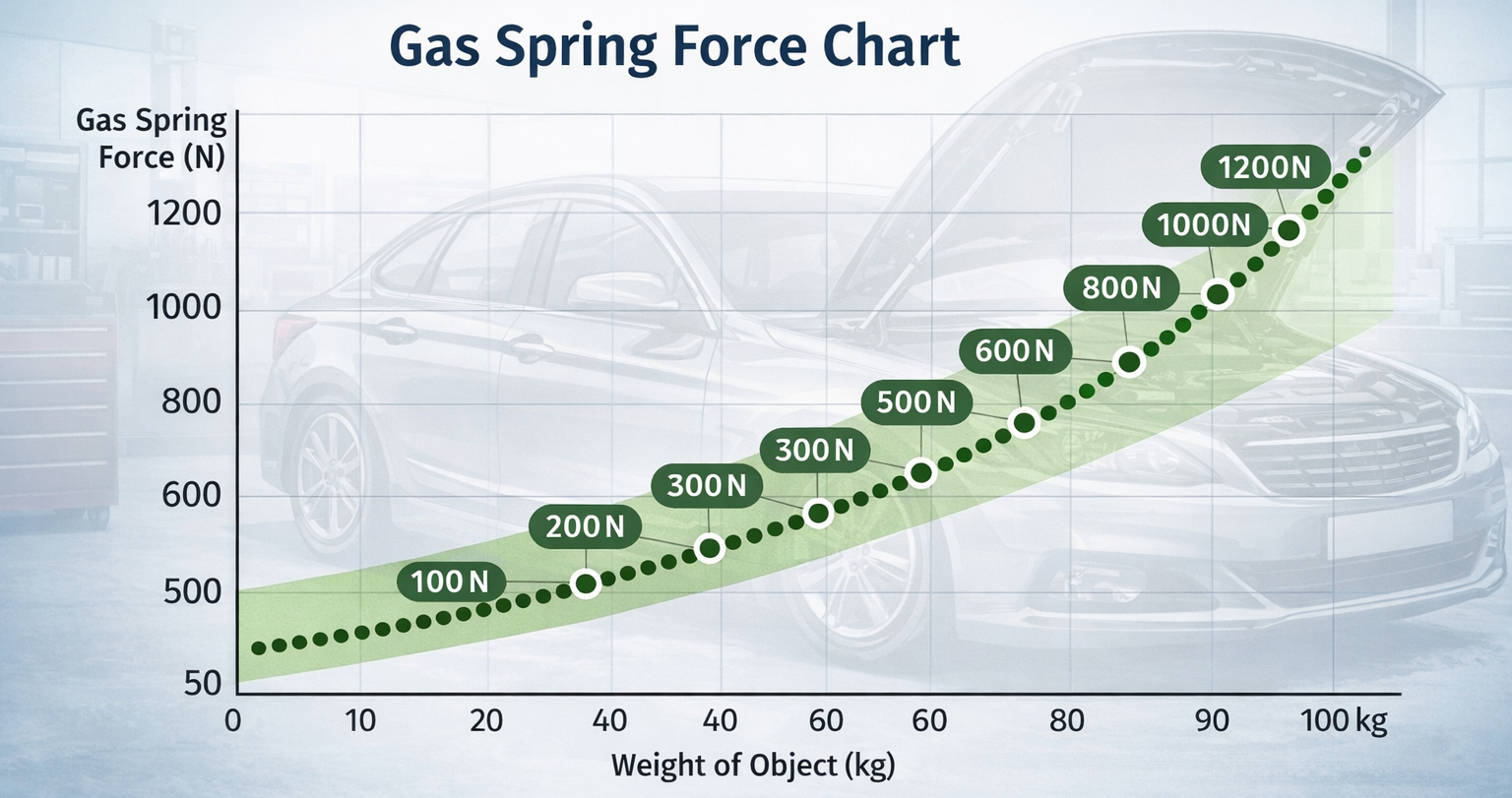
Spring Parameters: Length, stroke, and force must match the application requirements.
- 3
Durability: High-quality products provide stable performance and longer service life.
- 4
Supplier Reliability: Choosing a trusted manufacturer helps avoid performance issues and failures.
As a professional gas springs manufacturer and supplier since 2007, Gastac offers stable quality, competitive pricing, and OEM customization support. Our products meet IATF 16949 and ISO 9001:2015 standards and include a two-year warranty.
Conclusion
Tension gas springs provide reliable pulling force and controlled motion in various applications. Their compact design and damping capability make them essential for precise mechanical systems.If your application requires controlled tension and stability, selecting the right solution is critical.
Contact Gastac or explore our gastac gas spring solutions to find the best fit.