Hood Strut
Hood struts are no-drill hood strut that’s functional, rugged, stylish and ridiculously easy to install. Replacing the flimsy factory prop rod with this sturdy lift support improves garage safety while adding a performance look that is sure to impress at racetracks and car shows.
A reliable hood strut—alternatively cataloged as a hood lift support, hood gas strut, or engine hood shock—is a critical safety and convenience component in modern automotive design. These counterbalancing devices eliminate the need for outdated, manual metallic prop rods, allowing hands-free access to the engine compartment during routine maintenance, oil inspections, and fluid top-offs.
However, because these hydro-pneumatic lifting cylinders are subjected to extreme thermal cycles from the engine block and constant mechanical compression, they inevitably degrade over time. When your engine hood lift support fails, the heavy steel or aluminum panel becomes a direct safety hazard.
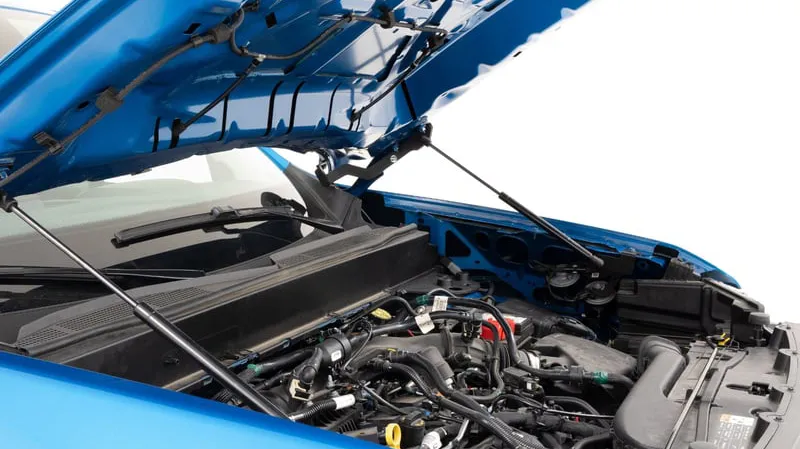
What Are Hood Struts?
An automotive hood strut—also commonly called a hood lift support or hood gas shock—is a hydro-pneumatic lifting device that supports your vehicle’s engine cover. Positioned on the sides of the engine bay, these compact cylinders replace old-fashioned manual metal prop rods, holding the heavy hood open completely hands-free for safe maintenance.
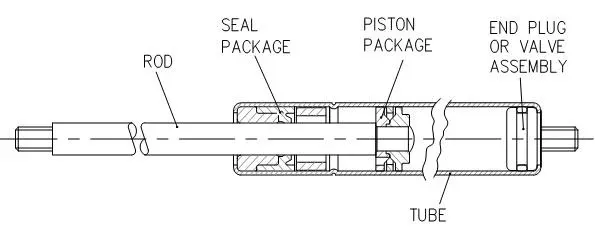
How Do Hood Struts Work?
A hood gas strut operates through a simple pressure balance. When the hood is closed, the internal piston compresses nitrogen gas inside the cylinder, locking in a massive amount of lifting energy. The moment you release the hood latch, that trapped gas expands naturally, pushing the piston rod outward to raise the heavy steel panel automatically, while internal hydraulic oil cushions the motion right at the top to protect the hinges.
Common Signs of Failed Hood Struts
Because hood shocks lose internal pressure gradually rather than failing instantaneously, recognizing the early warning signs of physical seals degradation can prevent unexpected injuries.
- The Hood Slowly Sags: The hood lifts open initially but gradually creeps down because worn internal seals are letting the pressurized nitrogen gas leak out under load.
- Complete Loss of Support: The hood feels extremely heavy and drops down instantly the moment you let go, meaning the vital lifting gas has completely escaped the cylinder.
- Cold Weather Dropping: The struts fail to hold the hood up only on freezing mornings because low temperatures cause the internal gas to contract, dropping the lifting pressure.
- Visible Hydraulic Oil Leaks: Greasy oil residue coats the metal piston rod, confirming a blown main gasket that will quickly lead to total gas loss and strut failure.
Root Causes of Hood Strut Failure
Automotive hood struts are sealed, high-pressure kinetic systems. Over time, a combination of internal pressure loss, material fatigue, and environmental wear breaks down the cylinder, causing the strut to lose its lifting force. The complete reasons behind this failure include:
- Repetitive Mechanical Cycling: Every open-and-close cycle causes friction between the moving piston and the cylinder walls, gradually wearing down the internal sealing rings until they can no longer hold pressure.
- Natural Gas Permeation: Nitrogen gas molecules are so microscopic that they naturally seep through the rubber seals and steel walls over time, leading to a slow, inevitable drop in lifting force even without use.
- Abrasive Contamination: Road grit and dust settle on the extended metal rod, tearing the rubber gaskets as the piston slides back inside.
- Internal Fluid Degradation: The internal hydraulic oil degrades and loses its viscosity over years of thermal cycles, destroying the strut’s ability to cushion the movement and protect internal valves.
- Corrosion and Rust: Moisture and road salt rust the metal shaft, creating a rough surface that rapidly rips the airtight seal during use.
Structural Fatigue: Heavy or bent hood hinges place uneven lateral stress on the piston rod, bending the shaft slightly and creating an instant gap in the main seal.
Hood Struts OEM Specification Reference Table
To ensure a direct fit and safe operation, replacement hood struts must match the precise engineering dimensions and force calibrations of the original equipment. The reference table below outlines standard OEM specifications across major vehicle segments to guide your selection:
| OEM | Photo | Rod / Tube Ø | Stroke | Extended Length | Force | Year |
|---|---|---|---|---|---|---|
| 534400W340 | 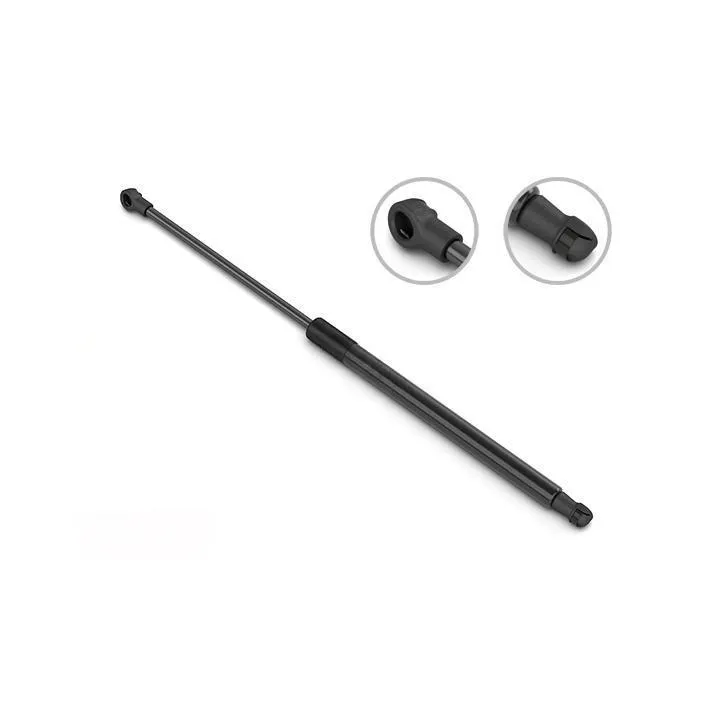 |
8 / 18 mm | 220 mm | 625 mm | 260N | TOYOTA LAND 2008 – … |
| 8R0823359A | 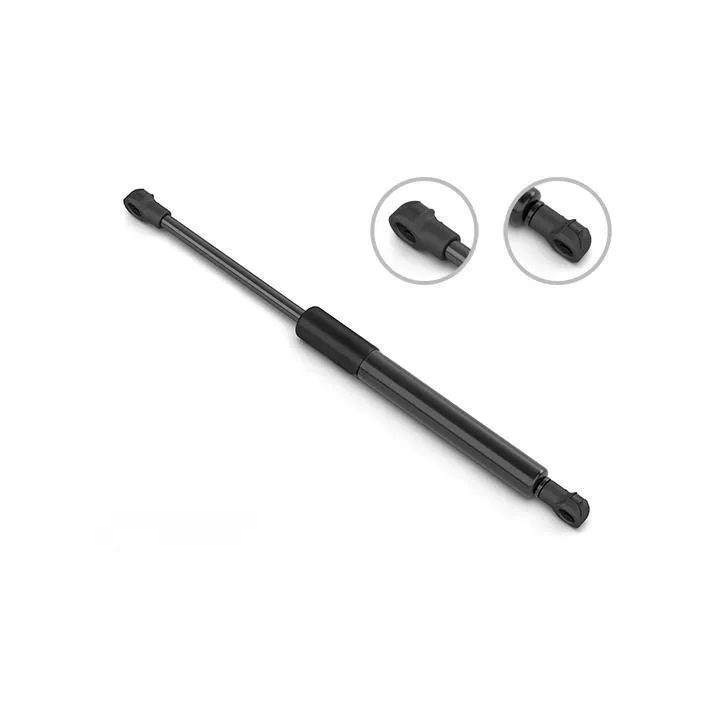 |
8 / 18 mm | 95 mm | 305 mm | 380N | AUDI Q5 2008 – 2017 |
| 51237129190 | 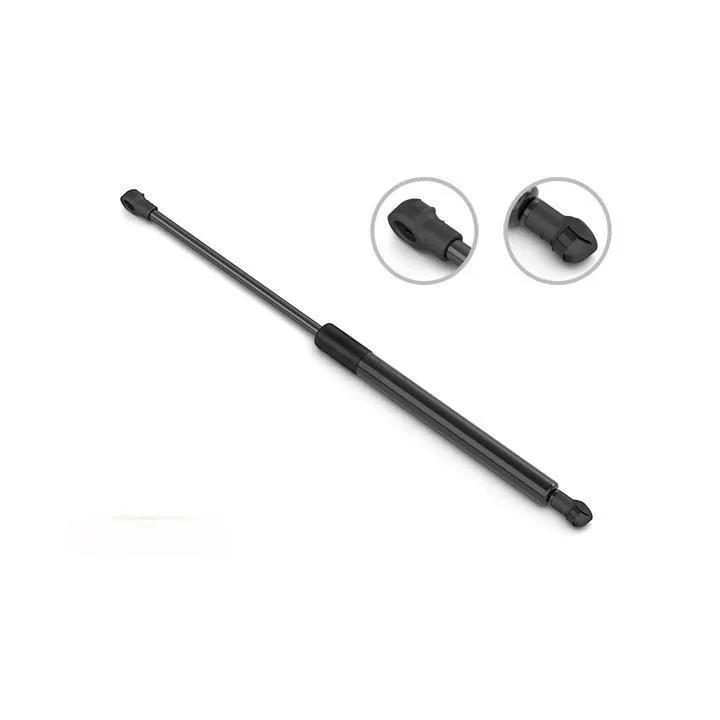 |
8 / 18 mm | 150 mm | 400 mm | 330N | BMW 3 2004 – 2013 |
| 99751155101 | 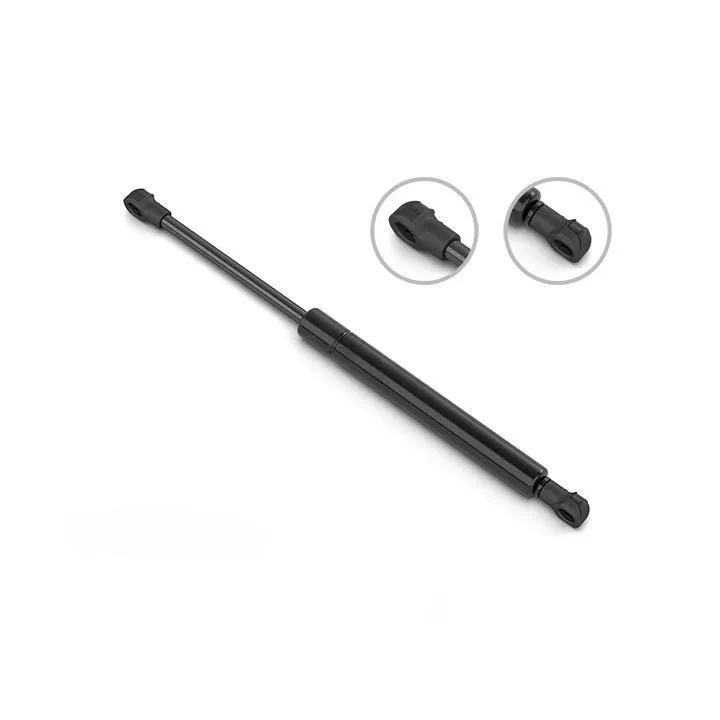 |
8 / 18 mm | 70 mm | 240 mm | 380N | PORSCHE 911 2004 – 2012 |
| 654701CA0A | 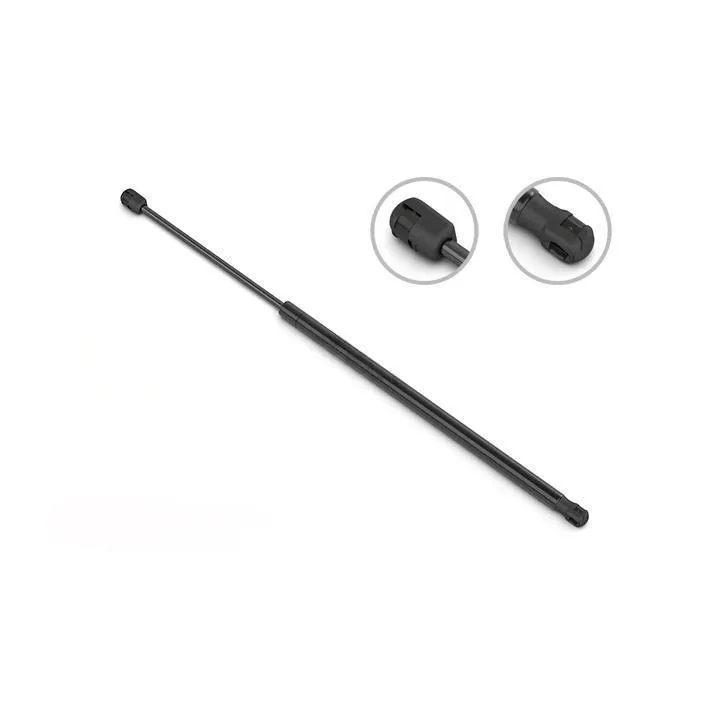 |
8 / 18 mm | 100 mm | 315 mm | 260N | INFINITI QX70 2013 – … |
Can’t find your specific model? GASTAC offers a full range of gas springs for other vehicle segments and custom OEM applications. Visit our official online store to discover more solutions and request a custom quote today!
Interior Technology
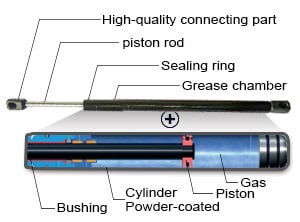
- Highest corrosion resistance achieved through powder coated cyclinders and special treated piston rod surfaces.
- Minimal friction for the production of lowest extension forces.
- Great life cycles.
- Protection against vibration and light side forces.
- Integrated grease chamber.
- Low break away forces.
- Installation and storage in any position.
DIY Installation Hood Struts Guide
Replacing worn hood lift supports is a straightforward, 10-minute garage project that requires only basic hand tools. Following the correct sequence ensures a safe installation and prevents the heavy hood panel from dropping unexpectedly.
Required Tools & Preparation
- A flat-head screwdriver or small pry tool
- A reliable prop rod or a helper to hold the hood open
- New vehicle-specific replacement struts
Step-by-Step Replacement Hood Struts Procedure
- Secure the Hood: Prop the hood securely open using a sturdy wooden pole or have an assistant hold it. Never rely on the old, failing struts to support the weight while you are working.
- Release the Retention Clips: Locate the metal band clips on the ball joints at both ends of the old strut. Insert a flat-head screwdriver under the clip and pry it outward just enough to unlock the tension.
- Pop off the Old Hood Strut: Pull the old cylinder away from the vehicle’s ball studs. Work on one side completely before moving to the opposite side to maintain structural balance.
- Snap on the New Hood Strut: Align the socket joints of the new strut with the vehicle’s ball studs. Push firmly until you hear a distinct click, confirming the internal spring clip has locked securely into place.
- Test the Operation: Remove the manual prop rod and gently cycle the hood up and down a few times to ensure smooth dampening and stable hands-free support.
Why Partner with GASTAC?
For global automotive parts distributors, commercial wholesalers, and large-scale e-commerce brands, GASTAC is a premier industrial-grade manufacturing partner rather than a mere aftermarket trading company. We stand behind our B2B clients with robust corporate capabilities:
- IATF 16949 & ISO9001 Certified: Our facility operates under strict automotive quality management systems, ensuring absolute precision and trace-level tracking across high-volume production batches.
- Automated Production & Scale: Advanced automated assembly lines and computerized force calibration systems guarantee stable high-volume output and resilient bulk supply chain security.
- All-Weather Performance Integration: Utilizing temperature-stable hydraulic oils and Viton seals, our gas springs function from -40°C to 80°C, lowering customer warranty return rates to near zero.
- OEM/ODM Engineering Support: Our in-house R&D team offers complete technical customization, including bespoke Newton force calibrations, private labeling, and custom packaging.
- Strict Internal Testing Standards: Every production batch undergoes rigorous cycle-life testing and continuous pressure retention checks to guarantee long-term field reliability.
- Global Logistics & Compliance: We provide streamlined international shipping compliance, localized packaging optimization, and reliable order fulfillment for major global markets.

Contact Us
Interested in our products, pricing, MOQ, or customized solutions? Fill out the form below to submit your inquiry or request a quote, and our team will get back to you within 24 hours.